
Reviewed · ANCIENT FORTRESSES TOURS
Daytrip from Khiva to Five Ancient Fortresses
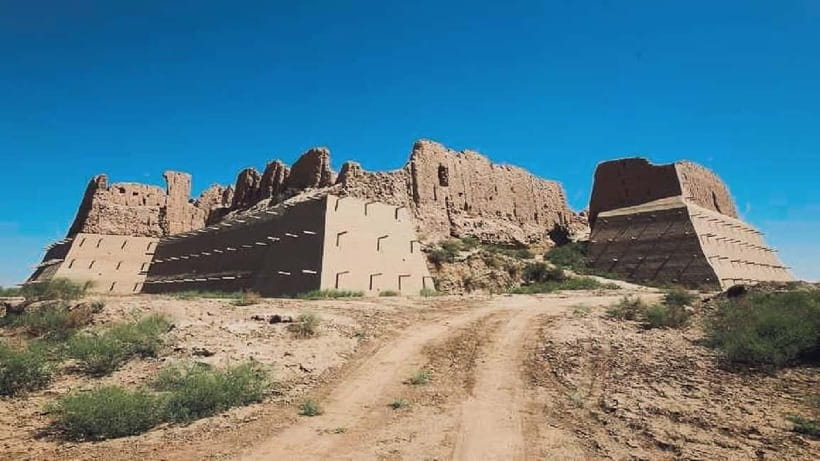
The striking thing about this seven-hour private trip is the scale of ancient Khorezm. You leave Khiva’s tiled streets behind and cross the dry Karakalpakstan countryside to a chain of old mud-brick fortresses, some dramatic and well preserved, others little more than low ruins. I like the flexible departure time and the chance to see places that are hard to reach without a car.
I also like the private vehicle for up to three people, with hotel, airport, or train-station pickup in Khiva or Urgench. The main caution is that this is transport with sightseeing stops, not a full guided archaeology tour. English can be limited, and one driver received a serious complaint for driving too fast, so it is sensible to discuss speed and lunch plans before setting off.
Key points at a glance
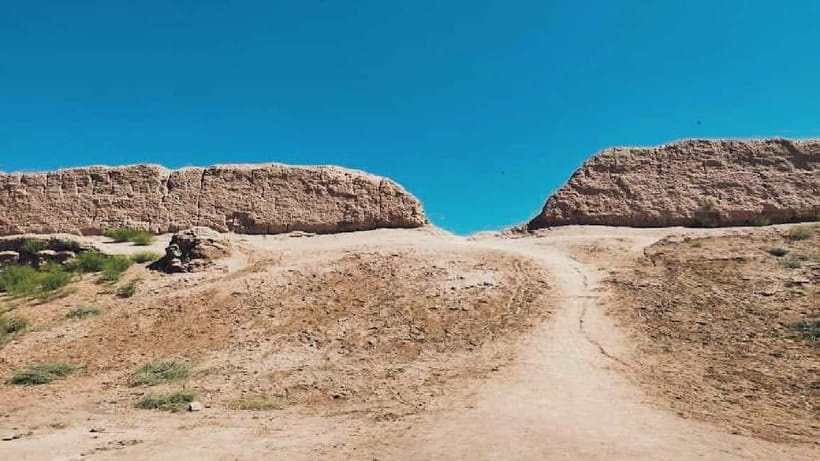
- Five fortresses in one day: Visit Guldursun-Kala, Ayaz-Kala, Kavat-Kala, Toprak-Kala, and Kyzyl-Kala.
- Best-known stop: Ayaz-Kala is the most visually impressive site, with three fortresses grouped around a hill.
- Private value: The $115 price covers a group of up to three, not each person, plus round-trip air-conditioned transport.
- Mostly self-guided: Your driver takes you between sites, but detailed explanations are not guaranteed.
- Bring cash for entry: Tickets are not included, and separate fees may apply at several locations.
- Plan lunch carefully: Lunch is optional and not included. Agree on the restaurant before you leave.
Why these five fortresses matter
Khorezm was an old oasis civilization on the lower Amu Darya, protected by wide belts of desert and a network of fortified settlements. These citadels were not simply military outposts. They could contain homes, estates, temples, government buildings, storage areas, and water systems.
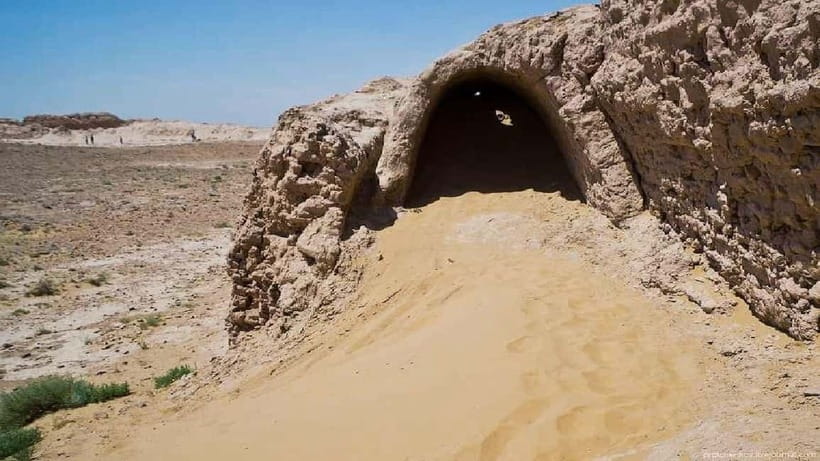
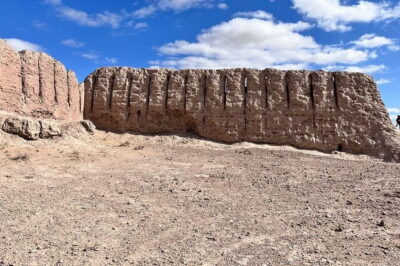
The five stops show different sides of that world. Some were large settlements with thick defensive walls. Others served as royal centers or refuges during raids. Their adobe construction is also part of the story. Sun-dried brick can survive for centuries in a dry climate, but wind, rain, neglect, and foot traffic slowly soften the walls.
I would not treat the sites as five equal attractions. Ayaz-Kala and Toprak-Kala offer the clearest visual payoff. Guldursun-Kala is also substantial, while Kavat-Kala and Kyzyl-Kala can feel more specialized or less immediately readable. That unevenness is normal for archaeological sites, but it matters when you are deciding how much time to give the day.
More desert fortresses near Khiva:
- Transfer: Bukhara – Khiva via Ancient Fortresses
★ 4.5 · 101 reviews - Private Daytrip to 7 Ancient Fortresses of Khorezm
★ 5.0 · 25 reviews - Guided Tour To Old Fortresses
★ 5.0 · 25 reviews
Leaving Khiva for Guldursun-Kala
Pickup is available from a hotel in Khiva, or from Urgench airport or train station. You can also finish in either Khiva or Urgench, which is useful if your itinerary moves on after the visit.
The ride is in a private air-conditioned vehicle. That matters here. The fortresses are spread across a broad area, and the roads can be rough. Air conditioning is not a small luxury in this part of Uzbekistan, especially when you are climbing exposed walls with little shade.
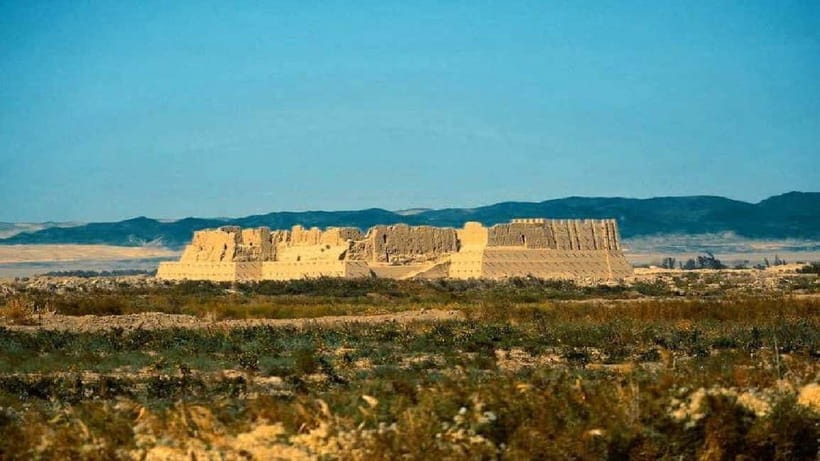
Guldursun-Kala is the first major stop. The fortress dates from the second or first century BC and covers about 35 hectares. Its rectangular walls were built with two rows of adobe and included narrow openings for defense.
The scale is the key point. You are not looking at a single small tower. You are seeing the remains of a large fortified settlement, with walls that once enclosed a sizable community. Archaeological evidence suggests it was occupied as late as about 1220, during the rule of Shah Ala ad-Din Muhammad, before the Mongol invasion of the Khwarezmian Empire.
The site was also abandoned at earlier points, and the reasons are not fully known. That uncertainty adds interest, but it also means your driver may not be able to explain the story in detail. Take time to walk, photograph the wall lines, and look at how the fortress rises from the open ground.
Ayaz-Kala, the day’s strongest visual stop
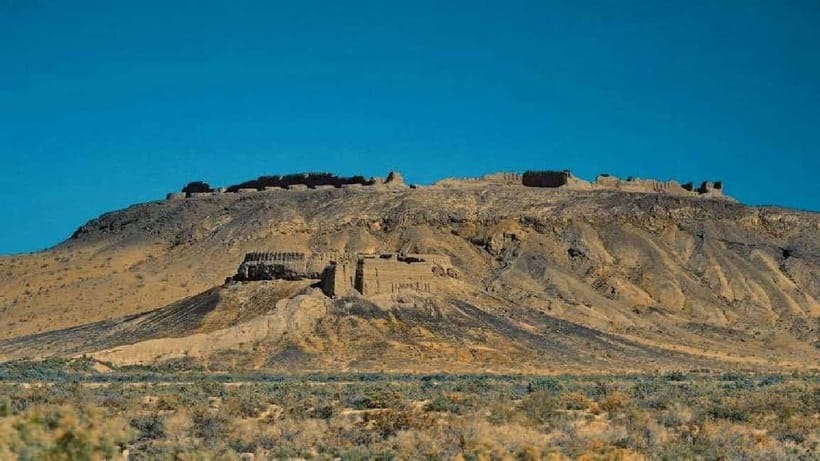
Ayaz-Kala is usually the highlight of the route. The name is linked to a Turkic word meaning frosty or cold, and the site sits near the Sultan Uizdag ridge, about 96 kilometers from Khiva.
It is easy to think of Ayaz-Kala as one fortress, but it is actually a group of three fortifications arranged around a hill. That arrangement gives the visit a sense of place and purpose. You can see how separate defensive positions worked together across the open country.
The upper fortress is the most dramatic sight. Its walls rise above the surrounding ground, giving you wide views across the dry country. The setting is part of the appeal: there are few distractions, and the fortress shape is easy to understand from a distance.
This is a self-guided visit, so you should expect time for walking and photos rather than a formal lecture. Wear shoes with a firm sole. The ground around ancient walls can be uneven, and there is no promise of paved paths or extensive visitor facilities in the tour details.
If you want the best photographs, give Ayaz-Kala more time than the less distinct stops. The itinerary allows free time, and the driver can wait while you explore. Confirm the waiting arrangement at the start so you do not feel rushed.
Kavat-Kala and the problem of uneven ruins
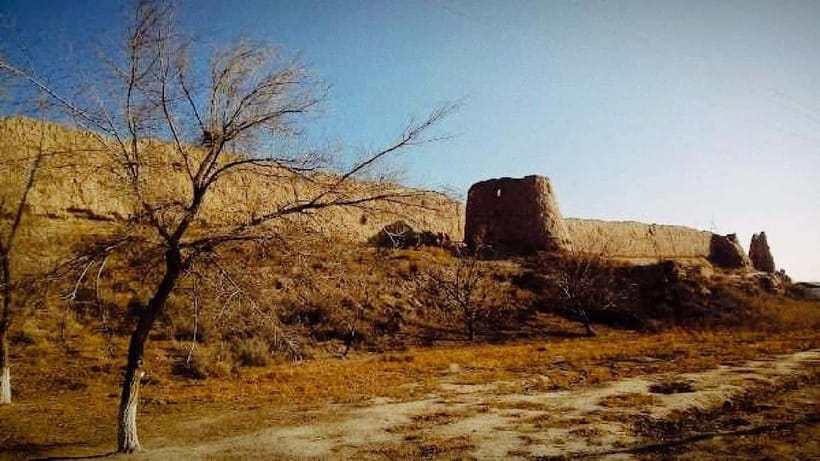
Kavat-Kala is a different kind of stop. The wider site stretches for about 15 kilometers along the Gavhore Channel and is 2 to 3 kilometers wide. The central fortress measures roughly 160 by 190 meters.
From the 12th to 13th centuries, this area was heavily populated. It once contained about 90 estates, along with residential and clay buildings. Much of that settlement is now difficult to recognize, and the area is still being studied.
That makes Kavat-Kala valuable for people who enjoy archaeology and settlement patterns. You can think beyond a single citadel and picture a whole oasis community spread along a water channel. But if you want an instantly recognizable fortress with tall walls, this may be the least satisfying stop.
I would use Kavat-Kala as a chance to slow down and ask your driver what can still be seen. Since English may be limited, have the question written down or use a translation app. The site’s importance is easier to appreciate when you know you are looking at a large medieval settlement rather than a single isolated ruin.
Same city, a different kind of day:
- Khiva: Historical City Highlights Guided Walking Tour
★ 4.8 · 156 reviews - Aral Sea Adventures (2 day)
★ 5.0 · 30 reviews - Khiva Historical City Highlights Guided Walking Tour
★ 5.0 · 30 reviews - Tranfer Khiva – Bukhara via Ancient Fortresses
★ 4.8 · 24 reviews
Toprak-Kala, the former royal center
Toprak-Kala is one of the most rewarding stops because its role is easier to understand. Built in the third century, it served as a residence for the Khorezmian rulers until around AD 305.
The city later declined, in part because repeated aggressive wars forced the rulers to leave. Excavations found coins, Zoroastrian ossuary fragments, fine ceramics, wool and silk textiles, gold ornaments, and a necklace made with 300 beads of glass, paste, amber, and coral.
Those objects help you picture Toprak-Kala as a place of power and craft, not merely a defensive wall in the desert. The ruins may not look polished, but the site has a strong story: royal residence, artistic production, religious practice, war, and abandonment.
Allow time to walk around rather than treating this as a quick photograph stop. The itinerary includes a break, sightseeing, and walking. As at the other sites, entry is not included, so keep local currency available.
Kyzyl-Kala and the fortress as refuge
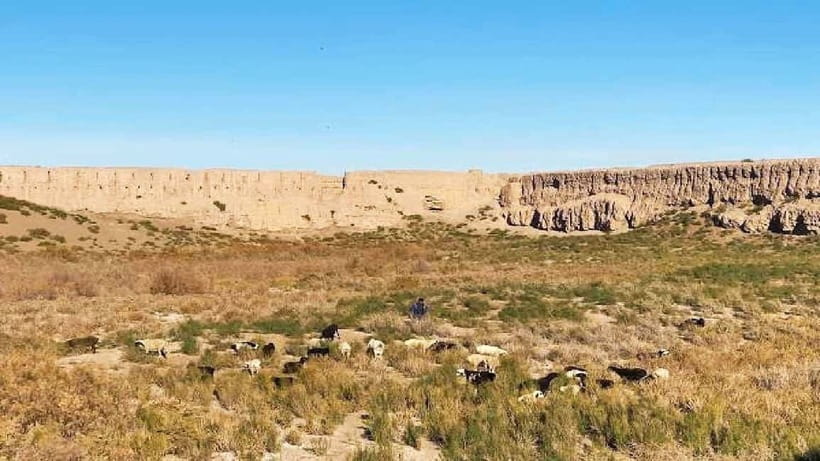
Kyzyl-Kala was built to protect local people during raids by nomadic groups. Its defensive plan included a double wall, corner watchtowers, and a citadel where people could seek shelter.
The site also had a practical water system. Ceramic pipes were installed to carry a continuing water supply into the fort. That detail says a great deal about how these settlements worked. A fortress could not depend only on thick walls. It needed water, warning systems, storage, and enough space for people to survive an attack.
Smoke signals helped announce the approach of enemy forces. From the right viewpoint, you can imagine how a chain of watchpoints might pass news across the open country.
Kyzyl-Kala includes time for walking, photos, and a safety briefing. Pay attention to the safety advice, especially near worn walls and uneven ground. The ruins can be rewarding, but they may not be as immediately impressive as Ayaz-Kala or Toprak-Kala.
What the driver does, and what the driver does not do
The driver is the backbone of the day. You get private transport, hotel or station pickup, parking fees, and a return to Khiva or Urgench. A friendly driver can also make the long hours on the road much more pleasant.
Izzat received especially warm praise for being helpful, patient, and willing to share aspects of local culture despite the language barrier. Another driver was described as friendly, funny, flexible, and willing to stop when requested. Those qualities matter because this is a road-based day with several stretches between sites.
At the same time, do not book this expecting a professional historian at your side. Drivers may give some background, but English ability varies. One person specifically found the language barrier meant there were no useful explanations, and another praised the driver’s effort to communicate but still noted that his English was limited.
I would prepare in advance. Download notes about each fortress, save the names in your phone, and bring a translation app. You will get more from Kavat-Kala and Toprak-Kala if you know what you are seeing.
Driving style is another practical point. One complaint described very fast driving on poor roads, while another called the driver a skilled pilot. Experiences can vary by driver, so politely request a comfortable speed before departure. You are entitled to enjoy the view without gripping the door handle.
Lunch, entry fees, and the real cost
The price is $115 per private group of up to three people. For three people, that is about $38 each before entrance tickets and lunch. For two people, it works out to about $57.50 each. Solo visitors pay the full group price, so this option makes the most financial sense when shared.
The fee includes:
- Pickup from a Khiva hotel or Urgench airport or train station
- Drop-off in Khiva or Urgench
- Private round-trip transport
- Air conditioning
- Flexible departure time
- Parking fees
It does not include fortress admission, a guide, or lunch. One practical account put ticket charges at 20,000 Uzbek som at three sites, although you should confirm the current fees and carry cash. The tour information itself does not give a fixed total for admissions.
Lunch needs a little care. The driver may suggest a restaurant, but you should agree on the plan before setting out and check prices before ordering. One account described a poor restaurant recommendation and a second place with a menu that did not show prices. You can avoid much of that trouble by asking to see a priced menu and choosing the restaurant yourself.
Bring water and a snack even if you plan to eat lunch on the road. The schedule covers five sites, and an unexpected delay can make the day feel long.
Is seven hours enough?
Seven hours is workable, but it is an ambitious schedule. You are fitting five archaeological sites, driving time, walking, photography, and possible meal stops into a single day.
The flexible departure time helps. You can start early to avoid the worst heat, or choose a later departure if sunset photography matters more to you. The itinerary lists sunset as an option at several stops, but exact light and timing depend on the day and the driver’s route.
I would not expect a slow archaeological study of every wall. This is a broad introduction to the fortresses of Khorezm. If you want to examine pottery, masonry, and settlement plans in detail, five sites in one day will feel rushed.
For most people, the route works best as a sampler. You see the grand scale of Guldursun-Kala, the dramatic position of Ayaz-Kala, the broad settlement area at Kavat-Kala, the royal past of Toprak-Kala, and the defensive design of Kyzyl-Kala.
Who should book this trip?
I recommend it most strongly for independent sightseers who want private transport and do not mind learning as they go. It is also a good fit for couples or small groups who can split the $115 cost and want control over the departure and return points.
It suits photographers, history fans, and anyone who wants a full day beyond Khiva’s historic center. The open setting and adobe ruins provide a sharp contrast to the city’s restored mosques, madrasas, and blue tile.
I would hesitate if you need detailed English commentary at every site, dislike rough roads, or want a carefully planned food experience. In those cases, arrange a dedicated English-speaking guide separately or ask in advance if one can join the vehicle.
The overall rating is 4.4 from 15 ratings, with particularly strong praise for friendly drivers, flexible stops, and the beauty of the fortresses. The weaker experiences focus on limited English, rushed driving, disappointing restaurant advice, and the fact that one or two of the five sites may feel too fragmentary for some people.
Should you book it?
Book this tour if you want to see the wider Khorezm region without arranging several transfers yourself. Ayaz-Kala and Toprak-Kala alone can justify the outing, while Guldursun-Kala adds scale and Kavat-Kala adds a broader sense of how settlements once spread through the oasis.
Before you go, confirm the driver’s language ability, ask for a moderate driving speed, carry cash for admissions, and agree on lunch. If you set the right expectations, this is a useful and memorable day outside Khiva. If you want expert interpretation rather than convenient transport, treat the $115 as a vehicle service and arrange the guiding separately.
FAQ
How long does the fortress trip last?
The activity lasts seven hours, including transport between the sites and time for sightseeing and walking.
Where can pickup take place?
Pickup is available from hotels in Khiva, as well as Urgench airport or train station.
Where can I be dropped off?
Drop-off is available in Khiva or Urgench.
How many people can join the private group?
The price covers one private group of up to three people.
Which fortresses are included?
The route includes Guldursun-Kala, Ayaz-Kala, Kavat-Kala, Toprak-Kala, and Kyzyl-Kala.
Is a guide included?
No. A guide is not included. The driver takes you between the sites, but English ability may be limited and the visits are mainly self-guided.
Are entrance tickets included?
No. Entrance tickets are separate from the tour price.
Is lunch included?
No. Lunch is optional and must be paid for separately.
Just added in Khiva
- Khiva Walking Tour★ 4.7 · 22 reviews
- Khiva: Historical City Highlights Guided Walking Tour★ 4.8 · 156 reviews
- Private Daytrip to Muynak and Nukus★ 5.0 · 10 reviews
- Khiva day tour★ 5.0 · 8 reviews
- Transfer from Khiva to Bukhara by Fortresses★ 5.0 · 11 reviews
- Private Transfer & Photo‑Stops: Ayaz‑Kala & Toprak‑Kala”★ 4.6 · 6 reviews
- Ayaz Kala & Toprak Kala private fortress daytrip from Khiva★ 3.5 · 6 reviews
- Best of Khiva: Exclusive Private Tour!★ 5.0 · 9 reviews
Ancient Fortresses Tours, compared.

Private Bukhara-Khiva Transfer via Ancient Fortresses
Read our review →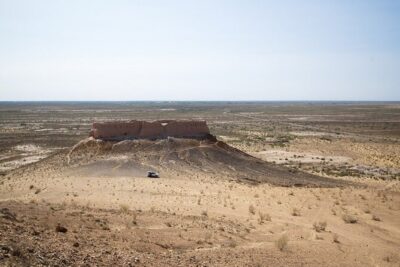
Ayaz Kala & Toprak Kala private fortress daytrip from Khiva
Read our review →Browse the lists this tour appears in