
Reviewed · CITY TOURS
Samarkan City Tour From Tashkent
Samarkand’s great monuments are packed into one long day, from the blue-tiled Registan to the narrow ceremonial lanes of Shah-i-Zinda. This private tour lets you see the city without arranging trains, transfers, or a local guide yourself.
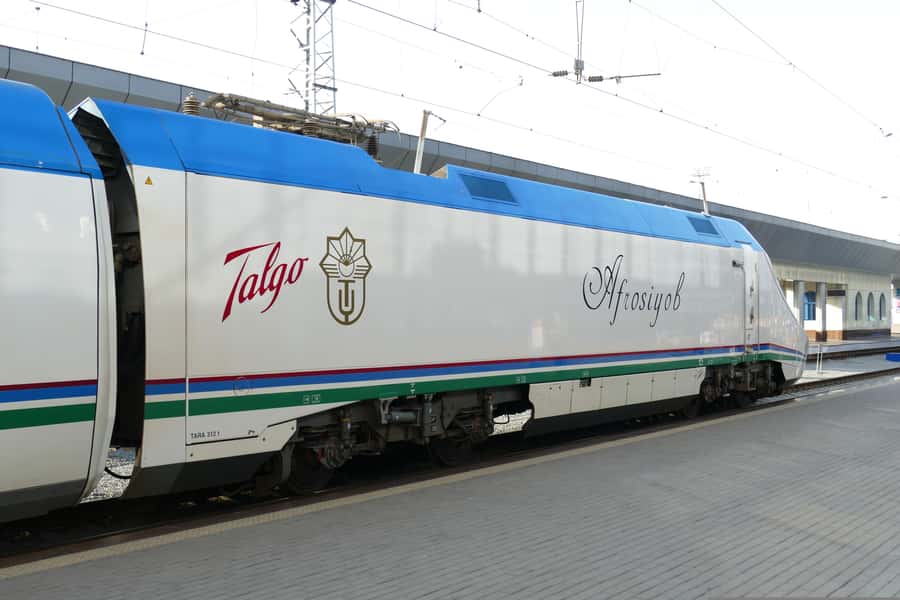
I like the planned Afrosiyob train, which cuts the Tashkent to Samarkand journey to about 2 hours and 10 minutes each way. I also like the mix of grand monuments and everyday life at Siab Bazaar. The tradeoff is simple: this is a fast, full day, and entrance fees and lunch cost extra.
- Fast rail plan: The Afrosiyob train is the preferred way to cover the 320-kilometer journey between Uzbekistan’s two major cities.
- Five major sights: You visit Gur Emir, Registan, Ulugbek’s Observatory, Shah-i-Zinda, and Bibi-Khanym Mosque.
- A taste of local life: Siab Bazaar adds bread, produce, and market energy after the formal monuments.
- Private touring: You have a private group and a live guide in English, Russian, or French.
- Flexible transport backup: A private air-conditioned car, or on rare occasions a comfortable regular train, replaces Afrosiyob if seats are unavailable.
- Compact schedule: About 6.5 hours in Samarkand leaves little room for wandering beyond the planned stops.
Why this Tashkent to Samarkand day trip works
Samarkand is too important to skip, yet getting there from Tashkent can look awkward when you are building an Uzbekistan itinerary. This tour solves the practical problem. Your hotel pickup, train arrangements, local transport, and guide are bundled into one day.
The price is $199 per person. That is not a bargain-basement excursion, especially since you still pay for monument admission, lunch, and personal purchases. But the value improves if you want a private group, hotel pickup and drop-off, a guide, and a carefully timed return to Tashkent without handling the rail details yourself.
The day is best for you if Samarkand is a priority but you have no spare night for an overnight stay. It is less suitable if you prefer slow travel, long café breaks, or time to photograph every tile. Six and a half hours in the city sounds generous until you count five major sights, the bazaar, meals, and movement between them.
Taking the train from Tashkent
The planned transport is the high-speed Afrosiyob train. The listed journey takes about 2.17 hours in each direction, making rail far more sensible than spending the whole day on a road transfer. You should arrive in Samarkand with enough energy for the monuments rather than beginning the sightseeing already worn out.
The train is also a key part of the value. A private guide can make the city easier, but arranging a same-day return independently requires attention to departure times and ticket availability. Here, the transport plan is built into the tour.
There is an important caveat. Afrosiyob seats may not be available for your date. In that case, the operator may use a private, air-conditioned car with a professional driver, or, on rare occasions, the most comfortable class of a regular train. The program is intended to remain the same, but the ride may feel different. One piece of feedback specifically described the outgoing train ride as poor, so I would confirm the transport type before booking if rail comfort matters greatly to you.
Bring your passport. You should also wait in your hotel lobby about 10 minutes before the scheduled pickup. Drones and see-through clothing are not allowed.
More City Tours in Samarkand
- Private Samarkand City Tour With Transportation
★ 5.0 · 149 reviews - A City Tour Of Samarkand: The Pearl Of The East
★ 5.0 · 133 reviews - Samarkand Historical City Highlights Guided Walking Tour
★ 5.0 · 22 reviews
Gur Emir, where Timur’s family rests
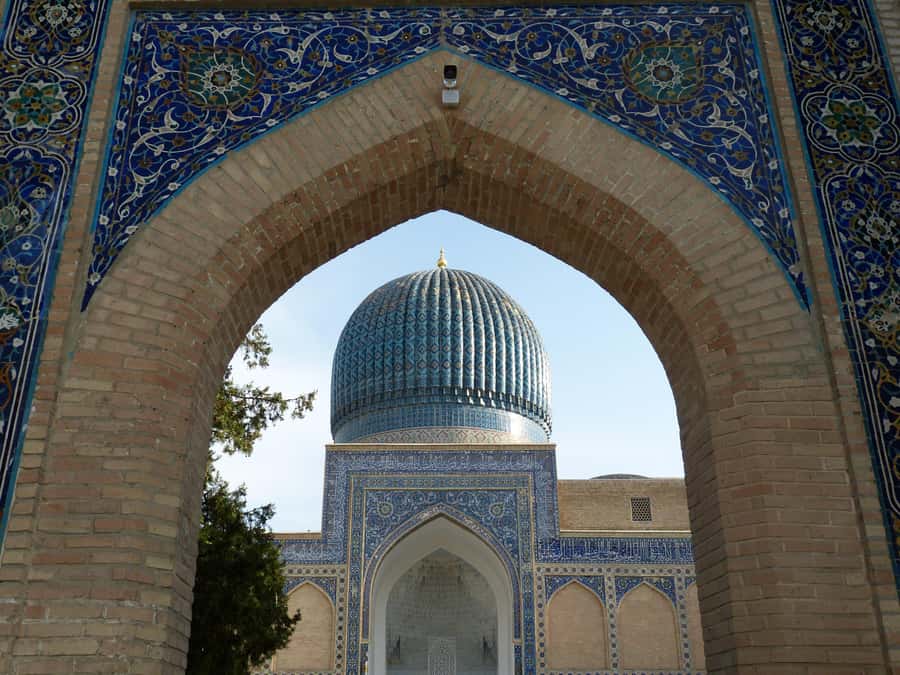
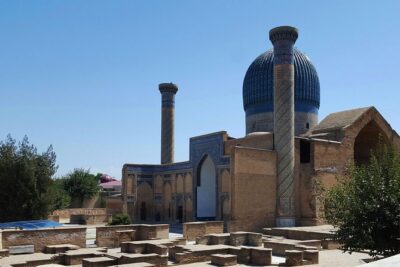
The first major monument is Gur Emir Mausoleum, the burial place linked to Amir Timur and his dynasty. Its form is easier to appreciate than to describe: a relatively simple structure crowned by a striking fluted dome.
The site began after the unexpected death of Muhammad Sultan, Timur’s heir. It later became the family crypt for Timur’s line, giving the building a clear dynastic role rather than making it only another decorated monument.
You have about 40 minutes here. That is enough for a guided explanation and a close look at the architecture, but not an invitation to linger at every detail. Admission is not included, so keep extra cash or payment arrangements ready for the separate entrance charges.
Gur Emir works well early in the day because it gives you a quick introduction to Samarkand’s Timurid period before the larger Registan complex. If your guide connects the people buried here with the monuments that follow, the city’s grand projects begin to make better sense.
Registan, Samarkand’s grand public square
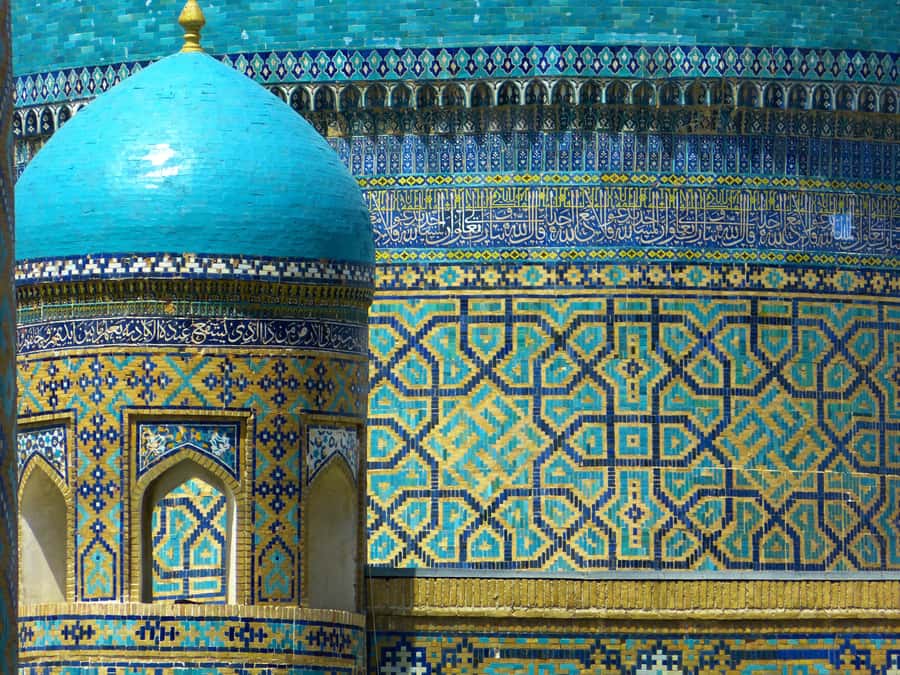
Registan receives the longest scheduled visit, about 1 hour and 30 minutes, and rightly so. This was not merely a pretty square. It served as a center for learning, literature, and the arts, and its three monumental madrasas create one of Central Asia’s most recognizable urban spaces.
Give yourself time to look upward and outward. The tiled surfaces can overwhelm you at first, but a guide helps separate the repeating patterns, inscriptions, domes, and large entrance portals. The scale also matters. Photographs flatten the square, while standing inside it gives you a clearer sense of how public and ceremonial the space was.
This is the tour’s main event, but it can also be the busiest stop in your mind simply because there is so much to take in. Admission is extra. Since the scheduled visit is long, you should have time for photographs and questions, though the overall day still moves at a brisk pace.
I would listen carefully here rather than treating Registan as a quick photo stop. Its importance comes from what happened there as much as from its decoration. The square links Samarkand’s political power with its intellectual life.
Ulugbek’s Observatory and the science of the sky
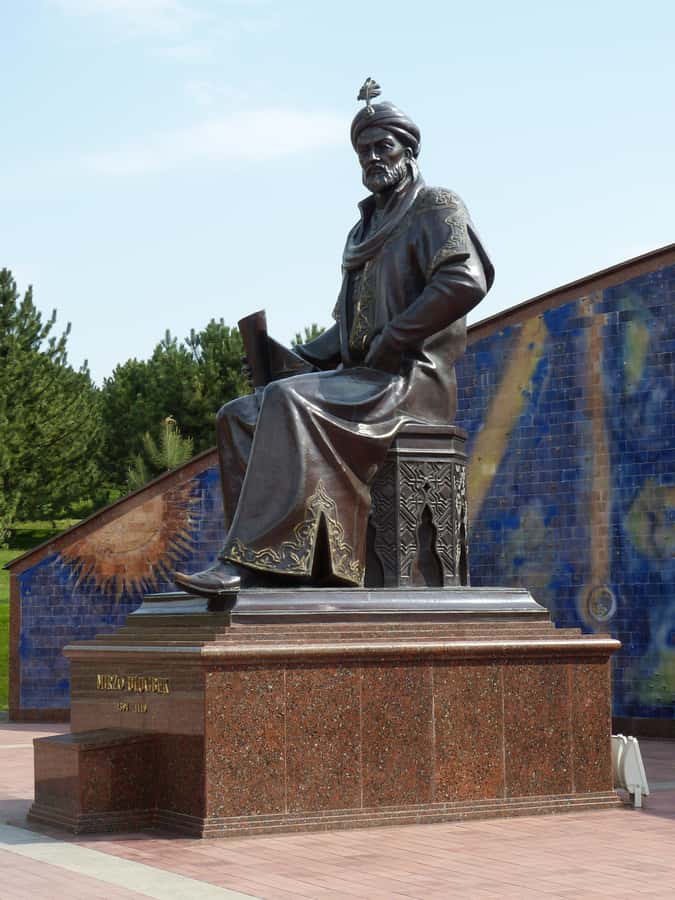
At Ulugbek’s Observatory, the tour shifts from imperial architecture to astronomy. Ulugbek was a ruler and a serious student of the heavens, and his observatory became one of the finest in the Islamic world.
At its height, between 60 and 70 astronomers worked there. They studied eclipses, calculated the hour of sunrise, and measured the altitude of celestial bodies. Those achievements give this stop unusual weight: Samarkand was not only a city of mosques and tombs, but also a place where careful scientific work shaped the understanding of the sky.
The visit lasts about 40 minutes. That is enough time to grasp the observatory’s purpose and hear how its research was used. I would not expect a long, hands-on museum session. This is a focused historical stop, and its value depends heavily on how clearly your guide explains the surviving remains and the work once done there.
Admission is not included. If you enjoy science, mathematics, or the less obvious parts of Central Asian history, this may be one of the day’s most rewarding stops.
Other city tours in Samarkand:
- Private Guided Tour Samarkand city history and culture
★ 5.0 · 22 reviews - Samarkand City Tour with a Professional Photographer
★ 4.5 · 18 reviews - Samarkand City Tour
★ 4.5 · 17 reviews - Private Samarkand City Tour With Transport
★ 5.0 · 11 reviews
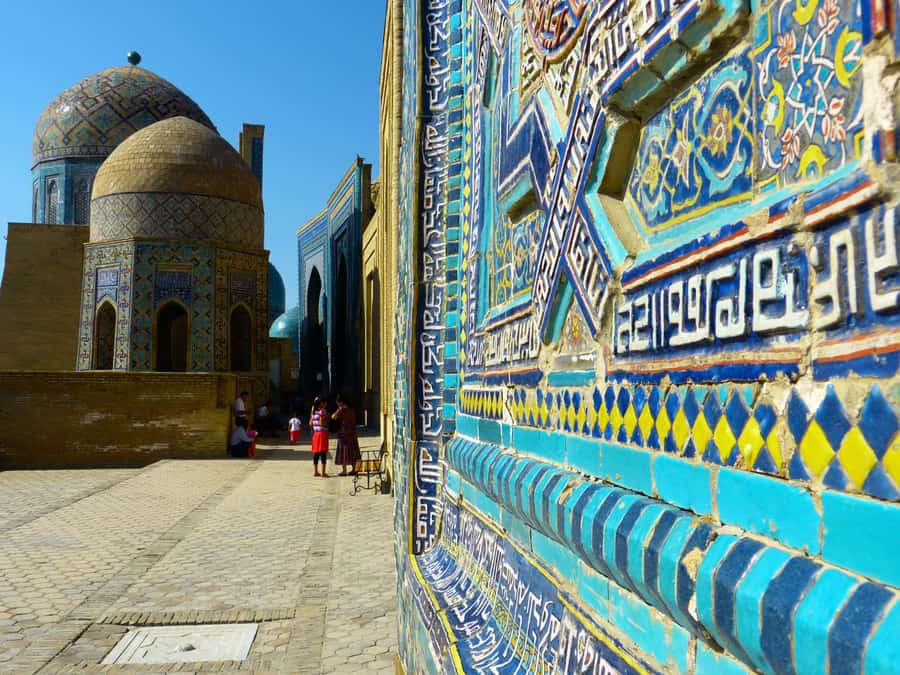
Shah-i-Zinda, Samarkand’s most detailed walkway
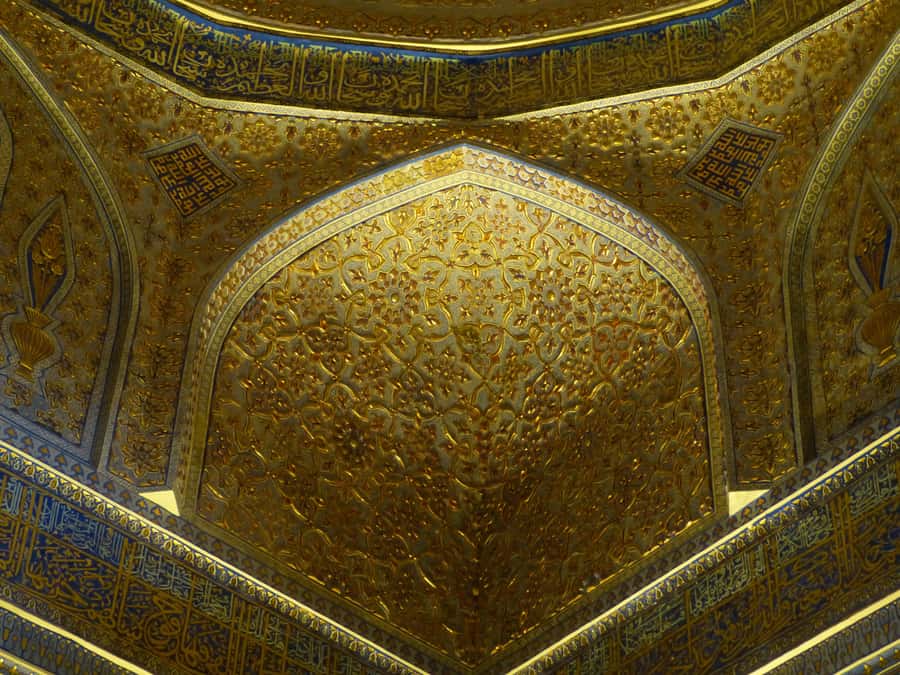
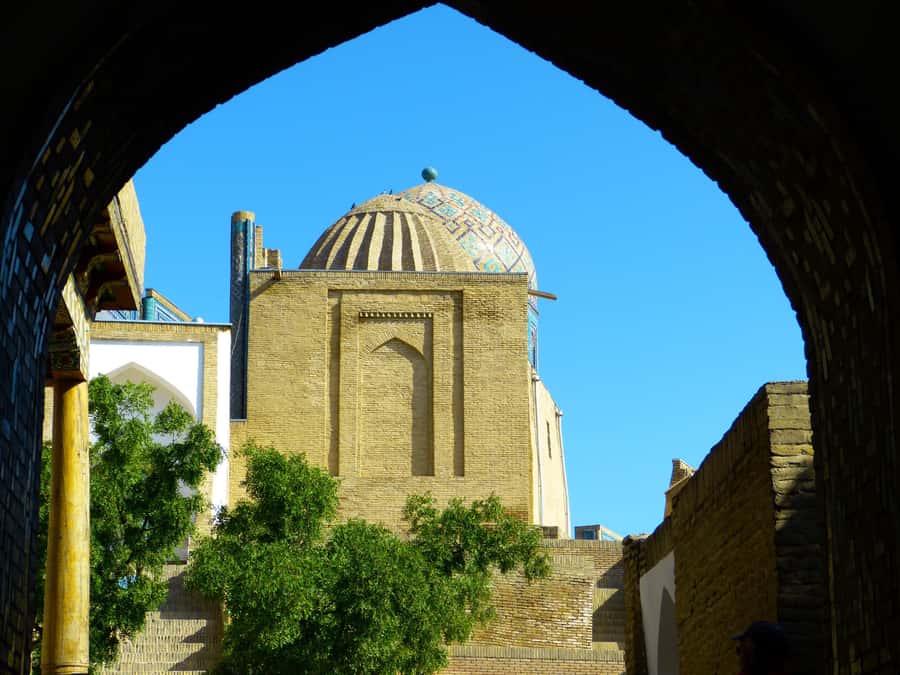
Shah-i-Zinda means The Living King, a name tied to the legend of Kusam ibn Abbas, a cousin of the Prophet Muhammad. The complex is a necropolis, but the practical experience is more like walking through a narrow line of richly decorated buildings, each competing for your eye.
This is where you see mosaics, majolica, and terracotta used with great precision. Blue, turquoise, cream, and patterned tile cover the façades, while the close spacing of the structures creates a very different mood from the open Registan.
You have about one hour here. Wear comfortable shoes and expect some walking. The tour data does not specify the exact surface or number of steps, so you should be ready for an active monument visit rather than a level museum stroll.
Shah-i-Zinda rewards patience. Look at doorways and lower wall panels, not only the largest domes. The details are close to you, which makes this complex feel more intimate than Samarkand’s broad squares. Admission is extra.
Bibi-Khanym Mosque and Timur’s bold ambition
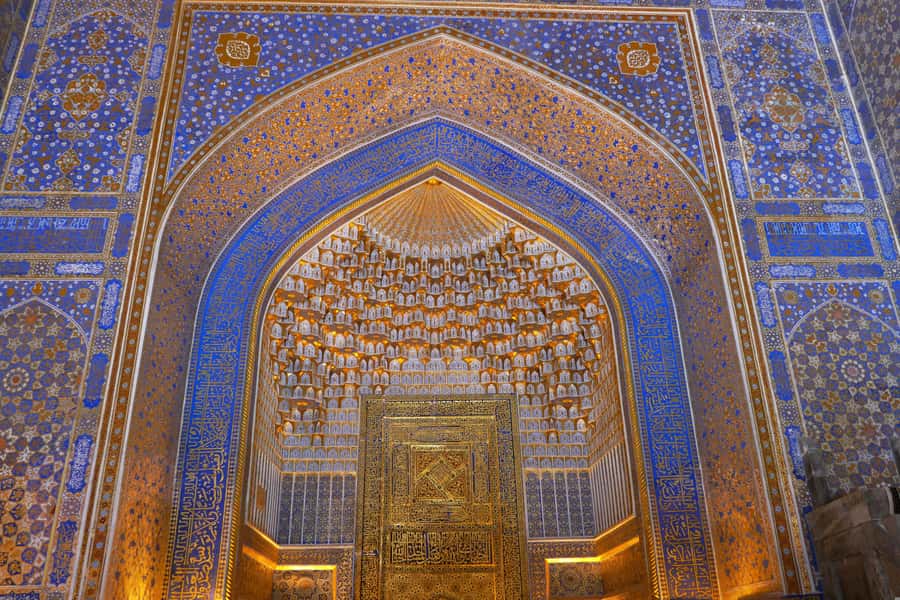
Bibi-Khanym Mosque was one of the largest and most magnificent mosques in the Islamic world during the 15th century. Its origin is tied to Timur’s return from his 1399 campaign in India, when he ordered an ambitious mosque for his capital.
The stop lasts about 40 minutes. That is enough to understand the mosque’s scale and purpose, though you may want more time if you are drawn to architectural detail. Like the other main monuments, entry is not included in the $199 price.
Bibi-Khanym helps explain Timur’s approach to Samarkand. This was not modest city planning. The mosque was meant to project power and make the capital memorable. After the more enclosed forms of Gur Emir and Shah-i-Zinda, the large open scale here gives the day another visual rhythm.
Your guide’s explanation matters because a huge façade can become just another grand photograph without context. Ask about the building’s connection to Timur’s campaign and his plans for Samarkand.
Siab Bazaar, the useful break from monuments

Siab Bazaar is scheduled for about 30 minutes and is the only major stop with free admission. That short visit is worthwhile because it changes the pace of the day.
Bazaars once played a central role in the commercial life of the Silk Road. Here, you get a look at the practical side of Samarkand: food, shopping, movement, and local trade rather than royal burial places and formal squares.
Do not expect half a day for browsing. Thirty minutes gives you a quick walk and perhaps time to buy something, but the schedule keeps you moving. One useful food note from the tour feedback is the mention of good local cuisine at Afrosiab, though lunch itself is not included. You should budget for your own meal and any market purchases.
Siab Bazaar is also a good place to ask your guide what is typical in Samarkand. Monument explanations tell you about the past. A market visit gives you a small connection to the city as it functions now.
What the guide and private format add
The tour includes a live guide in English, Russian, or French, and the group is private. No guide names are provided, so you cannot request a particular person from the information available.
The strongest praise in the supplied feedback focuses on the guide. Subhon described the guide as kind and humorous, while Sibat highlighted a professional guide who made the trip enjoyable. Arnab also called the tour informative, detailed, and well managed. Those comments point to the most important benefit of the private format: a good guide can keep a demanding day understandable instead of turning it into a procession of names and dates.
A guide can also help with queues and avoid expensive outlets. That point came up in the feedback and is useful for a day with limited time. Still, do not assume every departure will have identical timing or the same guide. The service is offered in three languages, but the individual guide is assigned by the operator.
The real cost of a $199 day
At $199 per person, this is a convenience purchase. You pay for the transport plan, hotel pickup and return, private touring, and a local guide. The train, particularly Afrosiyob when available, is a major part of the appeal.
You still need money for all admission tickets, lunch, and personal expenses. Travel insurance is also excluded. Add those costs before comparing this tour with a self-arranged day.
For a solo visitor or couple who values help with logistics, the price may be reasonable. For a larger private group, the per-person cost may feel easier to justify. If you are comfortable booking your own train, hiring a guide locally, and arranging city transport, you may spend less, but you will take on the timing risk yourself.
The overall rating is 4.3 from five ratings, with praise concentrated on the guides and organization. The one clear concern is transport quality on an outgoing train. That is a small sample, but it is enough reason to ask which train or vehicle is planned for your date.
Who should book this Samarkand tour
I would choose this tour if you have only one day available from Tashkent and want the essential monuments covered in a private setting. It suits first-time visitors who would rather hear the story of each site than navigate a new city alone.
It also suits people who value a return to Tashkent the same day. The schedule is efficient, but you should be comfortable with early pickup, train travel, sustained sightseeing, and limited free time.
I would think twice if your ideal Samarkand visit includes slow meals, extended market shopping, or quiet time at each monument. An overnight stay would give you a calmer rhythm, though that option is not part of this experience.
The activity is not suitable for people over 95, according to the stated restrictions. Everyone else should bring a passport, sensible shoes, and a plan for entrance fees and lunch.
Should you book it?
Book it if you want Samarkand’s major sights in one organized day and place a high value on a private guide and transport planning. The Registan, Shah-i-Zinda, Gur Emir, Bibi-Khanym, and Ulugbek’s Observatory make a strong first visit, while Siab Bazaar keeps the day from becoming only a parade of monuments.
Before paying, confirm whether Afrosiyob is available and ask how the backup transport will work. If you accept the brisk pace and extra entrance costs, this is a practical way to see one of Uzbekistan’s most important cities from Tashkent.
FAQ
How long does the tour last?
The advertised duration is 10 hours. The plan includes about 2.17 hours by train each way and approximately 6.5 hours of guided touring in the Samarkand Region.
What transportation is planned?
The tour is planned primarily around the high-speed Afrosiyob train between Tashkent and Samarkand. If tickets are unavailable, transportation may be provided by private air-conditioned car, or on rare occasions by the most comfortable class of regular train.
Are entrance fees included?
No. Admission tickets for Gur Emir, Registan, Ulugbek’s Observatory, Shah-i-Zinda, and Bibi-Khanym Mosque are not included.
Is lunch included?
No. Lunch is not included, and personal expenses are also separate.
Which languages are available for the guide?
Live guides are available in English, Russian, and French.
Is hotel pickup provided?
Yes. Hotel pickup and drop-off are included. You should wait in the hotel lobby 10 minutes before the scheduled pickup time.
What should I bring, and what is not allowed?
You must bring your passport. Drones and see-through clothing are not allowed.
Just added in Samarkand
- Samarkand City Tour: Ancient Domes & Timeless Stories★ 5.0 · 5 reviews
- Samarkand Walking Tour History Culture and Hidden Gems★ 5.0 · 9 reviews
- From Samarkand: Day tour to the Tajiksitan Alexander lake.★ 4.8 · 9 reviews
- Cooking Class in the Village with Local Family in Samarkand★ 5.0 · 11 reviews
- Day Tour from Samarkand Explore Panjakent and Seven Lakes★ 5.0 · 6 reviews
- One day tour to Shakhrisabz: Motherland of Amir Temur★ 4.9 · 9 reviews
- Best of Samarkand: City Tour – Inside Visits Included★ 5.0 · 8 reviews
- Private Samarkand City Tour With Transport★ 5.0 · 11 reviews
City Tours, compared.
Private Samarkand City Tour With Transportation
Read our review →
A City Tour Of Samarkand: The Pearl Of The East
Read our review →
Private Guided Tour Samarkand city history and culture
Read our review →
Samarkand City Tour with a Professional Photographer
Read our review →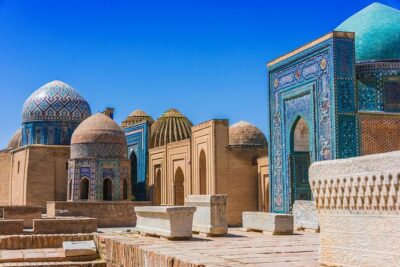
Browse the lists this tour appears in