
Reviewed · HISTORICAL TOURS
Khiva: Historical City Highlights Guided Walking Tour
Khiva’s old city is compact, beautiful, and easy to admire without a plan. It is also a place where a guide can make a real difference. This four-hour walk takes you through Itchan Kala, the walled historic center, with stops at major monuments and quieter corners that are easy to pass by on your own.
I like the way the tour combines the headline sights with stories about daily life in Uzbekistan. I also like the small-group or private format, since guides such as Iroda have adjusted the pace, answered detailed questions, and offered useful restaurant and souvenir tips.
The main catch is cost at the door. The $19 tour price covers the guide and taxes, but entrance tickets are extra, and you should buy them at the start. Four hours on foot can also feel long in hot weather, especially since there is no planned coffee stop.
Key points to know before you book
- Itchan Kala is the main event: Most of the walk takes place inside Khiva’s UNESCO-listed old city, where mosques, madrasahs, minarets, and mausoleums sit close together.
- The guide adds local context: Iroda, Bonu, and Shaxzodabonu have been praised for clear English, storytelling, humor, and useful advice about food and modern Uzbek life.
- You pay admission separately: The $19 covers the professional guide and taxes, not entry to the museums and monuments.
- The itinerary covers the essential sights: Expect Allakuli Khan Madrasah, Islam Khoja Minaret, Pahlavan Mahmoud Mausoleum, Juma Mosque, and wider Itchan Kala.
- The pace can be adapted: Private and small-group options allow more room for questions, photographs, or a shorter stop at places that interest you most.
- Wear proper walking shoes: The tour is on foot, flash photography is forbidden in some sites, and the experience is not suitable for wheelchair users or people with mobility impairments.
Why a guide helps in Khiva’s walled old city
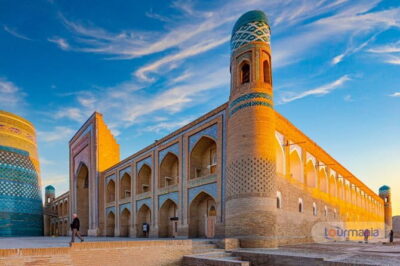
Itchan Kala is the sort of place that looks made for wandering. Mud-brick walls, turquoise tile, carved doors, and tall minarets fill a small area, and the main sights are close enough to reach on foot.
The trouble is that beauty alone does not explain Khiva. A minaret is more than a tall tower, and a mausoleum is more than a decorated room. A good guide gives you the dates, names, religious meaning, legends, and links to present-day Uzbek life that turn a series of pretty buildings into a city you can understand.
That is where this tour earns its keep. The guides are not limited to memorized dates. Iroda has been especially praised for speaking clear English, connecting old stories to modern life, and answering questions without rushing. Bonu and Shaxzodabonu have also led tours described as friendly, flexible, and well prepared.
You should still set your expectations correctly. Guide quality can vary, and one assessment found the historical explanation too focused on basic dates. That is a useful warning for history specialists: tell your guide early that you want more detail. For most visitors, though, the mix of facts, legends, cultural explanation, and personal insight should provide a much fuller visit than walking from monument to monument alone.
More Walking Tours in Khiva
- Khiva Historical City Highlights Guided Walking Tour
★ 5.0 · 30 reviews - Khiva Walking Tour
★ 4.7 · 22 reviews - Khiva Walking Tour
★ 4.5 · 15 reviews
Starting at Allakuli Khan Madrasah
The walk begins at either the Caravan monument or the ticket office for Khiva’s old town. Your exact meeting point depends on the option you book, so check the confirmation carefully and include your WhatsApp number when booking. The guide uses it to contact you, and the tour instructions specifically ask you to provide a working number.
The first main stop is Allakuli Khan Madrasah, a 19th-century Islamic school and one of the clearest introductions to Khiva’s architecture. The visit lasts about 20 minutes, with time for photographs and an explanation of the building.
This is a good place to settle into the tour. Rather than trying to cover every corner immediately, you can get a sense of the design language you will see throughout the old city: patterned tile, carefully framed entrances, courtyards, and the close relationship between religious education and civic life.
Admission tickets are handled at the beginning. Your guide assists with the process, but you pay the ticket cost separately. One important practical point: if you do not buy the ticket, access to many of the interiors will be limited, so budget for admission in addition to the tour fee.
Looking up at Islam Khoja Minaret
The Islam Khoja Minaret is the most obvious visual landmark on this walk. It rises above Khiva’s low buildings and gives the old city a strong vertical focus.
The scheduled stop lasts about 30 minutes and includes walking, a guided visit, and photographs. The minaret is a symbol of Khiva, but the visit is not only about taking the classic picture. Your guide can place it within the city’s religious and architectural story, explaining why towers like this mattered and how they shaped the appearance of the old town.
This is also one of the places where the pace may vary. If you enjoy photography, you will want time to look at the tilework and changing views from different angles. If your group is more interested in history, your guide can spend more time explaining the structure and its place in Khiva.
The tour does not promise a climb, so do not book it specifically for a tower ascent. Think of this stop as a guided visit to one of Khiva’s most recognizable monuments, with time to see it properly from the ground.
A quieter pause at Pahlavan Mahmoud Mausoleum
The Pahlavan Mahmoud Mausoleum brings a different mood. This is a sacred site dedicated to Pahlavan Mahmoud, a revered Sufi saint, poet, and wrestler associated with Khiva.
The visit takes about 20 minutes and includes sightseeing, photographs, and a guided explanation. Compared with the broad architectural sweep of the madrasah and minaret, the mausoleum feels more personal and devotional. Your guide can help explain why the site matters to local people and how religious spaces function within the old city.
Please dress and behave respectfully. Photography is allowed, but flash photography is prohibited inside certain sites. The instructions also ask visitors to respect the cultural and religious importance of the places they enter. That means keeping voices low, following local directions, and treating the interior as more than a backdrop for pictures.
More walks around Khiva:
- Samarkand: Historical Monuments Guided Walking Tour
★ 4.8 · 446 reviews - Samarkand One Day Tour: one day walking & group tour
★ 4.4 · 87 reviews - All You Need To Know About Bukhara. A Walk In The Town
★ 4.9 · 31 reviews - Samarkand: Historical Monuments Group Walking Tour
★ 5.0 · 29 reviews
Entering the wooden-column Juma Mosque
The Juma Mosque is one of the tour’s most distinctive stops. It is known for its forest of wooden columns and is described as dating back to the 10th century.
The visit lasts around 20 minutes. This is a place where a guide’s explanation matters because the interior may seem simple at first glance. The columns create a calm, unusual space, and their arrangement is the feature to study rather than expecting the bright tilework seen elsewhere in Khiva.
I would slow down here and look carefully at the wood, the spacing, and the way light enters the mosque. A short stop can pass quickly, so ask questions if this kind of architecture interests you. The itinerary allows walking and a guided visit, but the precise amount of time may depend on the group and the day’s schedule.
The wider walk through Itchan Kala
The final listed section gives you about 40 minutes to explore Itchan Kala itself. In practice, the whole tour takes place within this historic center, but this part allows the guide to connect the individual monuments into one larger picture.
You may pass through lanes, courtyards, and less obvious corners between the major stops. Several guides have been praised for showing quieter areas that visitors might not find alone. That is one of the strongest reasons to choose a walking tour instead of simply buying an entry ticket and following a map.
The old city is not a single museum. It is a living historic district, and the best guides explain both the grand buildings and the ordinary details. Iroda, in particular, has been described as sharing stories about local food, family life, women’s experiences, and modern Uzbekistan. That sort of conversation can give you a more honest sense of the country than a list of rulers and construction dates.
The tour ends at either the old-town ticket office or inside Itchan Kala. You can then continue exploring on your own, return to your hotel, or follow the guide’s suggestions for a restaurant or additional sights.
What the $19 price really covers
At $19 per person, this is an inexpensive way to get a four-hour guided introduction to Khiva. The price includes a professional guide and taxes. It does not include entry tickets.
That difference matters because the monuments and museums are not simply included in the walking fee. One person calculated an additional cost of about 20 euros per person for museum access, though current charges can change and you should confirm the amount when you arrive. The exact total depends on which ticket is required and what is open during your visit.
Even after adding admission, the tour can be good value if you want explanations rather than only photographs. A private or small-group format gives you the chance to ask questions and adjust the pace. You are paying for the guide’s time, language skills, route planning, and local perspective, not transportation or a meal.
The value is weaker if you prefer to explore silently, already know Khiva’s history, or plan to enter only a few sites. In that case, you might prefer to buy the old-city ticket and wander independently. For a first visit, though, the cost is modest compared with the time saved and the added context.
Timing, weather, and walking comfort
The tour lasts four hours and is offered at different starting times depending on availability. It is described as an afternoon walk, though you should confirm your chosen start time before booking.
You will be outdoors for much of the experience. Khiva can be hot, and the tour instructions sensibly recommend water, sunscreen, and a hat in warmer months. Wear comfortable walking shoes. The old city is visited on foot, and the route includes repeated walking between monuments.
One person felt the final two stops were rushed because buildings were close to closing time and suggested starting an hour earlier. That is worth taking seriously. If you book a late departure, ask the guide how much time is available inside each site. A small schedule change may make the difference between a relaxed visit and a hurried finish.
There is no planned coffee break. Bring water and, if you need regular rests, mention that when the tour begins. The guides have adjusted the pace for groups before, but you should not assume that every departure will move at the same speed.
Language, group size, and guide style
Tours are available in English, Uzbek, or Russian. English-speaking visitors have particularly valued guides who explain clearly and avoid overly difficult vocabulary.
Iroda has received repeated praise for being warm, patient, funny, and easy to understand. Several accounts also describe her as flexible, stopping longer when a subject interested the group and offering suggestions for food, souvenirs, and further sightseeing. Bonu has been praised for adapting the route and finding less obvious places, while Shaxzodabonu has been described as friendly, funny, and well prepared.
These names may not guarantee who leads your departure, so treat them as examples of the local guide team rather than a promise. Private and small-group choices are available, and the smaller format is likely to suit you if you want to ask many questions or discuss modern Uzbek life.
The tour’s current score is 4.8 from 156 ratings, with especially strong praise for guide communication, cultural insight, and value. The occasional criticism concerns uneven historical depth, separate admission fees, and a rushed ending. Those are manageable concerns if you clarify your interests and timing at the start.
Who should book this Khiva walk?
I would recommend it most strongly to first-time visitors who want to understand what they are seeing. It suits couples, solo visitors, and small groups who enjoy walking, asking questions, and mixing architecture with local conversation.
It is also useful if you have only half a day in Khiva. The route covers the city’s key sights without requiring you to organize a sequence of ticket offices, religious sites, and historic buildings yourself.
You may want a different plan if you use a wheelchair, have significant mobility limits, or dislike four-hour walks. The activity is not suitable for wheelchair users or people with mobility impairments. It is also less suitable for anyone looking for a slow café-based experience, since the focus is on walking and monument visits.
Should you book it?
Book this tour if you want the main sights of Itchan Kala explained by a local guide, with room for questions and practical advice about the rest of your stay. The strongest reason to go is not simply the list of monuments. It is the chance to connect Khiva’s architecture with Uzbek customs, food, stories, and present-day life.
Before you reserve, budget for separate entrance tickets, bring water, and choose a start time that leaves enough daylight and opening time for the final stops. If possible, request a private or small-group departure and tell the guide whether you prefer detailed history, photography, or cultural conversation.
For $19, this is a sensible first look at Khiva. You will still need to pay at the monuments, but the guide can help you get much more from the old city than a bare ticket and a quick walk.
FAQ
How long does the Khiva walking tour last?
The tour is scheduled for four hours. One recorded experience lasted about three and a half hours, so the exact duration can vary slightly.
What sights are included?
The route includes Allakuli Khan Madrasah, Islam Khoja Minaret, Pahlavan Mahmoud Mausoleum, Juma Mosque, and Itchan Kala in Khiva’s old city.
Are entrance tickets included in the $19 price?
No. The $19 price includes a professional guide and taxes, but entrance tickets are paid separately at the start of the tour.
Where does the tour begin?
There are two possible starting points: the Caravan monument or the ticket office for Khiva’s old town. The meeting point depends on the option booked.
Where does the tour finish?
Drop-off is at either the ticket office for Khiva’s old town or inside Itchan Kala.
Which languages are available?
The live guide can conduct the tour in English, Uzbek, or Russian.
Is the tour private or shared?
Private and small-group options are available. The exact group arrangement depends on the option selected when booking.
What should I bring?
Wear comfortable walking shoes and prepare for changing weather. Water, sunscreen, and a hat are recommended in warm months. Flash photography is not allowed inside certain sites.
More Historical Tours in Khiva
- Samarkand Historical City Highlights Guided Walking Tour
★ 5.0 · 22 reviews - Private Guided Tour Samarkand city history and culture
★ 5.0 · 22 reviews - Bukhara Historical City Highlights Guided Walking Tour
★ 4.5 · 16 reviews - Samarkand Walking Tour History Culture and Hidden Gems
★ 5.0 · 9 reviews
Just added in Khiva
- Khiva Walking Tour★ 4.7 · 22 reviews
- Best of Khiva: Exclusive Private Tour!★ 5.0 · 9 reviews
- Private Daytrip to Muynak and Nukus★ 5.0 · 10 reviews
- Khiva day tour★ 5.0 · 8 reviews
- Transfer from Khiva to Bukhara by Fortresses★ 5.0 · 11 reviews
- Private Transfer & Photo‑Stops: Ayaz‑Kala & Toprak‑Kala”★ 4.6 · 6 reviews
- Ayaz Kala & Toprak Kala private fortress daytrip from Khiva★ 3.5 · 6 reviews
- Daytrip From Khiva to Aral Sea Cemetery Of Ships . All In One★ 4.5 · 18 reviews
Historical Tours, compared.
Khiva Historical City Highlights Guided Walking Tour
Read our review →
Private Guided Tour Samarkand city history and culture
Read our review →
Samarkand Walking Tour History Culture and Hidden Gems
Read our review →Browse the lists this tour appears in