
Reviewed · HISTORICAL TOURS
Bukhara in a Day History, Culture, and Local Insight Private Tour
Bukhara’s best sights sit close together, and this private walk links them in one useful sweep. You begin at the Nasreddin Afandi statue, then pass through old markets, madrasas, mosques, and the Ark fortress, ending near the citadel. It is a good way to get your bearings without wasting time on transport.
I like the private format, which lets you set the pace with guide Yulduz, and I like the unusual craft angle: silk carpet weaving, puppets, ceramics, local bread, tea, and classic Uzbek dishes all add life beyond the monuments. The main caution is that meals, several admission fees, and possibly some craft or food experiences are not included, so confirm exactly what you want before booking.
Key things to know before you book
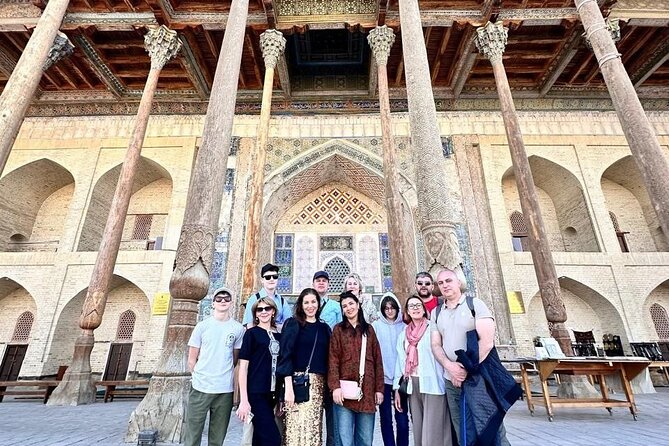
- Yulduz is the named guide, and the strongest praise centers on her clear explanations, flexible pace, and ability to connect buildings with Bukhara’s culture.
- The route covers major old-city sights, including Lyab-i-Hauz, the trading domes, Poi Kalyan, the Ark, and Bolo Hauz Mosque.
- Silk carpets, puppets, and ceramics add local character, but the supplied details do not clearly say that every workshop visit is guaranteed.
- The $80 price covers up to six people, making it good value for a small group, especially when shared among several people.
- Admission fees are extra, with the listed estimate at $7 per person for several major sites.
- The walking route ends at the Ark, not at the starting point, so plan your next move from Afrosiab Street.
Why this compact Bukhara walk works
Bukhara can feel like a history book laid open in the sun. The old center gathers religious schools, covered markets, courtyards, minarets, and fortress walls within a walkable area. That makes a private half-day tour more useful here than in a spread-out city.
You get about four hours and 20 minutes, beginning at 9:00 in the morning. The listed stops add up to less than the full tour time, leaving room for walking between sites, explanations, questions, and short pauses. Still, this is a brisk introduction rather than a slow, museum-heavy day.
The guide is listed as licensed, and Yulduz is the guide name connected with the experience. Her role matters because Bukhara’s buildings can blur together if you only collect photographs. A good explanation can show how a madrasa differs from a mosque, why the trading domes mattered, and how the Ark shaped political life.
The private setup is the biggest practical advantage. Your group can ask about architecture, religion, food, or crafts without waiting for a large party. You can also ask Yulduz to spend more time at a favorite site or keep moving if the morning heat begins to wear you down.
A few more things worth doing in Bukhara
- Bukhara Historical City Highlights Guided Walking Tour
★ 4.5 · 16 reviews - Samarkand: Historical Monuments Guided Walking Tour
★ 4.8 · 446 reviews - Khiva: Historical City Highlights Guided Walking Tour
★ 4.8 · 156 reviews
Starting beside Nasreddin Afandi at Lyab-i-Hauz
Meet at the Nasreddin Afandi Monument, the statue dedicated to the famous comic figure of Central Asian folklore. It is a clear meeting point in the old city, and the tour then moves into Lyab-i-Hauz.
Lyab-i-Hauz is built around a historic pond and a public square lined with old buildings. The setting helps you understand Bukhara as a place of daily life, not only grand monuments. People gathered around water, shade, tea houses, and trading streets, and the area still gives you a natural first look at the city’s social side.
The stop is scheduled for about 40 minutes. Admission is listed as free for this part, although another section of the tour information lists an entrance charge connected with Lyabi Hauz among several site fees. Because the fee details are not perfectly consistent, ask Yulduz or the provider what is currently included before you arrive.
The food theme begins here in spirit, with Bukhara’s cuisine described as part of the experience. You may hear about plov, shashlik, manti, flatbread, and green tea. Meals are not included, however, so treat this as cultural introduction unless you have arranged a meal separately.
Under the trading domes of the Silk Road
The covered trading domes take about 40 minutes. These 16th and 17th-century markets once organized trade in the center of Bukhara, and their rounded roofs offered shade for merchants and shoppers.
The main domes include Toqi Sarrafon, associated with money changers. The market network also reflects how specialized trade once worked. You are not simply walking through a shopping arcade. You are following the footprint of a commercial city connected to the wider Silk Road.
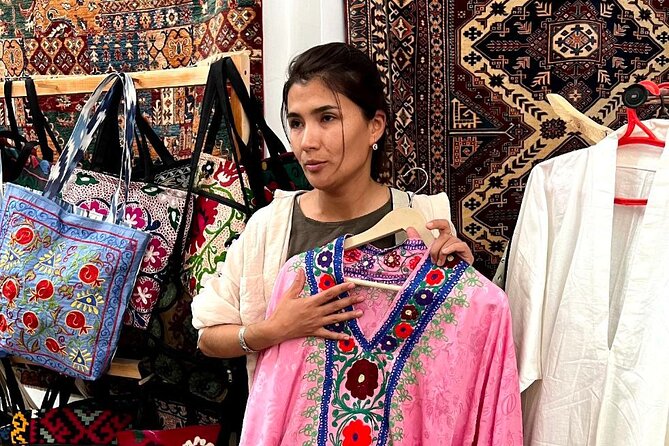
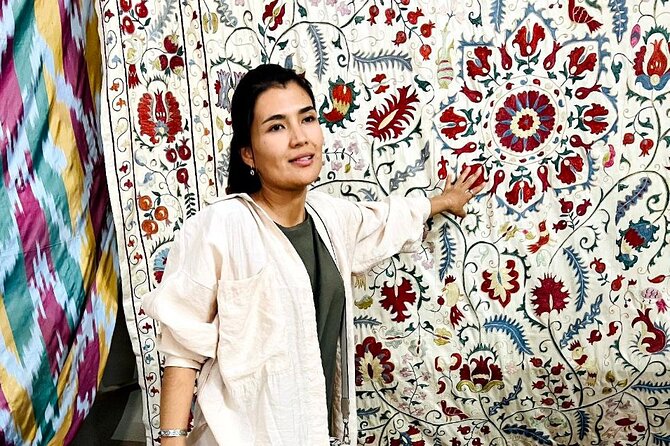
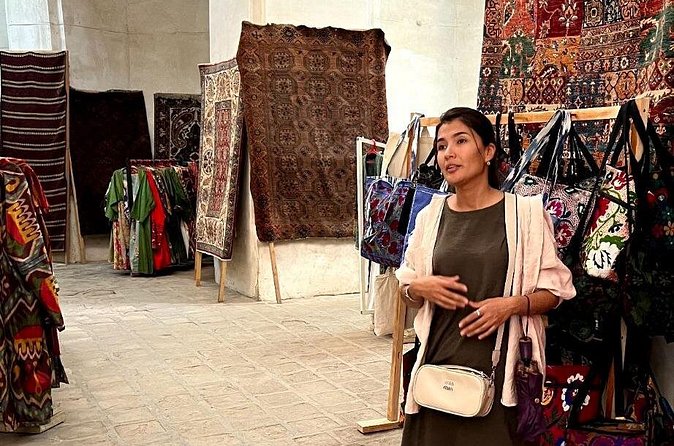
This is one of the better places to ask questions about buying crafts. The tour’s cultural focus includes the difference between handmade and machine-made silk carpets. Handmade carpets show individual knots, natural dyes, and small variations. Machine-made examples tend to look more even and uniform, but lack the same individual character.
Keep your buying hat on, not your spending hat. The purpose of the visit is to understand workmanship and materials, not to assume every carpet is a good purchase. If you want to shop, ask about knot count, dye sources, silk content, and how the carpet was made before discussing price.
Magoki Attori and the carpet tradition
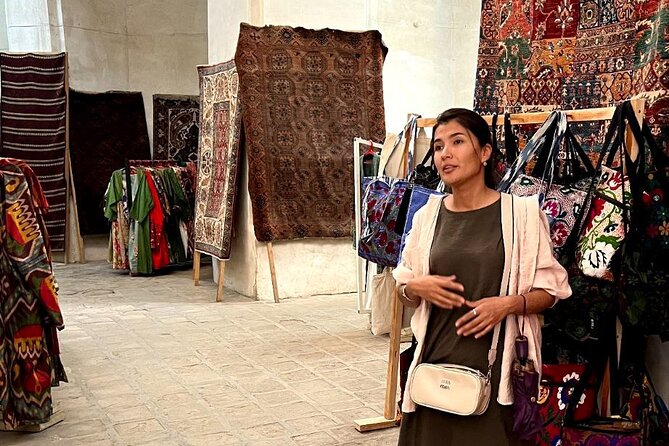
Magoki Attori Mosque is described as one of Bukhara’s oldest surviving religious sites, with origins preserved from the 12th century. The stop lasts about 20 minutes and is paired with a carpet museum.
This pairing makes sense. The mosque gives you a view of early architecture, while the carpet display connects old trade routes with a craft that remains important in Uzbek culture. You can look for changes in brickwork, ornament, and scale, then shift your attention to the fine labor behind silk carpets.
The entrance is not included. Since the tour information gives different admission notes for several sites, check the current total rather than relying only on the advertised $7 estimate. Carry some local currency if needed, and allow extra time if a ticket desk is operating slowly.
Same city, a different kind of day:
- Best of Bukhara: All Day Private Old Town Tour
★ 5.0 · 66 reviews - Best of Bukhara: All Day Private Old Town Tour
★ 4.9 · 62 reviews - City Tour Around Bukhara
★ 5.0 · 55 reviews - Bukhara Full Day Old City Private Tour
★ 5.0 · 46 reviews
Timurid learning at Ulugbek Madrasa
Ulugbek Madrasa receives about 15 minutes. It was commissioned by Ulugbek, the Timurid ruler and astronomer, and dates from the 15th century.
This is a short stop, so you should expect an exterior-focused explanation rather than an extended visit. The building offers a useful reminder that Bukhara was not only a place of worship and commerce. It was also a center of study, with religious and intellectual life tied to the madrasa system.
Admission is listed as free. The brief timing works well if you want a broad city introduction, but anyone especially interested in Timurid architecture may want to return later for a slower look.
The unfinished grandeur of Abdulaziz Khan Madrasa
The Abdulaziz Khan Madrasa gets about 10 minutes. It began in the 17th century under Khan Abdulaziz and was never fully completed, which gives the building a different feel from a polished monument.
Look for the contrast between grand intention and unfinished work. Decorative details can tell you what the builders wanted the madrasa to become, while incomplete areas show that monumental projects depended on money, politics, and time.
The entrance is not included. Ten minutes is enough for a sharp explanation and photographs, but not enough for a detailed architectural study. If your main interest is ornament, tell Yulduz early so she can judge how much time the group can spare.
Poi Kalyan, Bukhara’s great visual pause
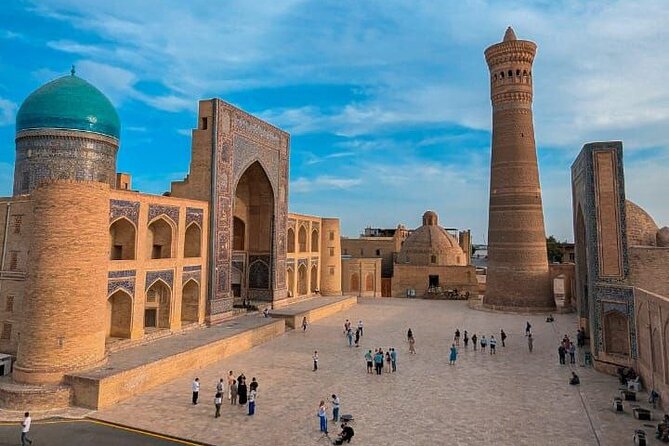
The Poi Kalyan complex receives about 30 minutes and brings several important sights together. The Kalon Minaret rises above the square, with patterned brickwork and a history tied to both the call to prayer and city watch duties.
The minaret is the visual anchor, but the surrounding complex matters just as much. The Kalon Mosque and related buildings help you see how religious architecture organized public space. Take a moment to look up, then step back and consider the full arrangement rather than viewing the minaret as an isolated tower.
Admission to the Poi Kalyan Mosque is listed as extra. The fee estimate names Poi Kalon among the sites included in the $7 per-person admission calculation, but the stop details also say admission is not included. Confirm the current policy before booking, especially if your budget is tight.
Thirty minutes will give you a strong first impression. It will not satisfy someone who wants to study every tile, inscription, and courtyard. For that, plan a separate return visit.
Inside the Ark of Bukhara
The Ark is the longest stop, at one hour, and the tour ends here. This massive citadel served as the residence and seat of power for Bukhara’s rulers and is described as more than 2,000 years old.
The Ark is not just a thick wall around a palace. It represents the political center of the city, a place where administration, authority, and court life operated behind defensive walls. That makes it a useful finale: after seeing markets, schools, and mosques, you finish at the institution that controlled much of the city.
Admission is not included. The supplied fee information places the Ark among the sites covered by the $7 per-person estimate, but you should verify the amount and what it covers. The hour-long visit gives you the best chance to ask questions and follow the story at a sensible pace.
The tour ends on Afrosiab Street near the citadel. This is convenient if you want to continue exploring the Ark area, but it is not a loop back to the Nasreddin Afandi statue. Plan your next stop from the ending point.
Bolo Hauz Mosque and its carved columns
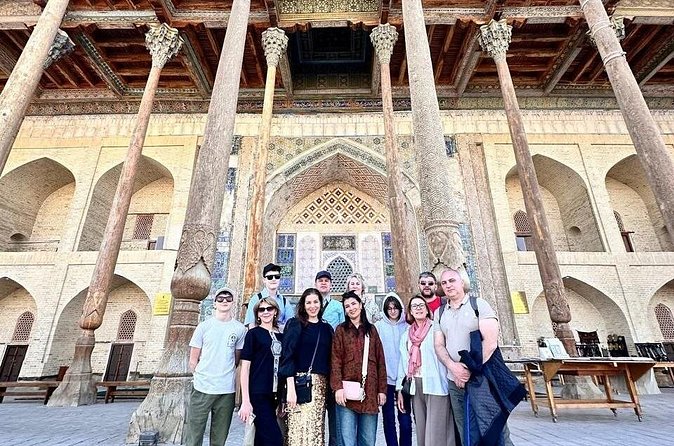
Bolo Hauz Mosque is the final listed sight, with about 15 minutes near the Ark. Built in the early 18th century, it is known for its carved wooden columns, which support the mosque’s roof and create a strong contrast with Bukhara’s brick domes and fortress walls.
The stop is short, but the columns reward careful attention. Look at the woodwork, the proportions, and the way the mosque fits into the area around the Ark. It is a quieter architectural counterpoint to the larger complex nearby.
Admission is listed as free. Since the stated end point is the Ark area, clarify the exact order of Bolo Hauz and the Ark when you meet. The supplied schedule places Bolo Hauz after the Ark, but the meeting information says the tour ends near the citadel. A quick check will prevent confusion.
Food, crafts, and the parts to clarify
The tour description reaches beyond monuments. It introduces plov, shashlik, manti, flatbread, green tea, silk carpet weaving, puppet making, and ceramic decoration. That is a welcome idea because a city is easier to remember when you connect its buildings with what people eat and make.
The carpet discussion sounds particularly useful. You can learn how handmade silk carpets differ from machine-made ones, including the role of knots and natural dyes. The puppet workshop offers another window into local storytelling, while the ceramic section explains how Bukhara’s famous blue color is made using a desert plant.
The important practical point is that the route details do not clearly assign a separate stop or duration to each workshop and food activity. Meals are specifically excluded, and the information does not promise a cooking class or tasting. Ask before booking if you want a guaranteed workshop visit, meal, or carpet demonstration.
What the $80 group price really buys
The price is $80 per group of up to six people, not $80 per person. That works out to about $13.33 each for six people, $20 each for four, or $40 each for two, before entry fees and meals.
For a full private group, the value is strong. You receive a professional guide, bottled water, a focused route through major sights, and the freedom to ask questions without sharing the guide with strangers. For one person, the same flat price is a larger commitment, although the private attention may still justify it if your time in Bukhara is short.
The cost does not include food or admission fees. The stated estimate is $7 per person for entry to Lyabi Hauz, Abdulazizkhan, Poi Kalon Mosque, and the Ark, but the individual stop notes do not match perfectly. Budget for extra tickets and confirm the exact total.
Pickup is offered, yet the listed meeting point is the Khodja Nasreddin statue at 9:00. The practical reading is that you should confirm whether pickup means hotel pickup or simply assistance reaching the meeting point. Bottled water is included, but there is no restroom on board, and this is a walking tour rather than a vehicle-based excursion.
Who should book this private tour?
I would choose this tour if you want to see Bukhara’s key old-city sights in one morning and prefer a guide who can adjust the pace. It suits couples, families, and small groups of up to six, especially if you care about local crafts as much as monuments.
It also fits a first visit. The route gives you a solid map of the old center, and the ending near the Ark makes it easy to continue sightseeing afterward. The private format is useful if one person in your group wants more architecture while another wants food, carpets, or folklore.
I would hesitate if you want a relaxed, meal-centered cultural outing with guaranteed workshop visits. The route is packed, several entry fees are extra, and the food and craft elements are not laid out with the same precision as the monument stops. In that case, ask for a customized plan before paying.
The strongest reason to book is the guide. Yulduz is associated with explanations that make Bukhara’s monuments easier to understand, a flexible pace, and answers that connect architecture with local culture. That matters more than checking every stop off a list.
Should you book it?
Book this experience if you want a private, efficient introduction to Bukhara with a named guide, major landmarks, and some attention to food and traditional crafts. The $80 group rate is particularly attractive for four to six people.
Before confirming, ask three questions: which guide will lead the tour, exactly which admission fees are due, and whether the carpet, puppet, ceramic, or food elements are included visits or simply topics discussed along the walk. If those details suit your plans, this is a practical way to see the old city without losing the human side of Bukhara.
The tour allows free cancellation up to 24 hours before the 9:00 start for a full refund. Changes or cancellations made within 24 hours are not refunded, so keep that deadline in mind.
FAQ
Where does the Bukhara tour start?
It starts at the Khodja Nasreddin statue, also called the Nasreddin Afandi Monument, at QCFC+5FM in Bukhara.
What time does the tour begin?
The start time is 9:00 am.
Where does the tour end?
The tour ends on Afrosiab Street near the Ark of Bukhara, at QCH5+6W6.
How long does the experience last?
The stated duration is approximately 4 hours and 20 minutes.
How many people can join the private tour?
The $80 price covers one private group of up to six people.
Is a guide included?
Yes. A professional licensed guide is included, and Yulduz is the named guide associated with the experience.
Are entrance fees included?
No. Entrance fees are not included. The supplied estimate lists $7 per person for Lyabi Hauz, Abdulazizkhan, Poi Kalon Mosque, and the Ark, but you should confirm current charges.
Is food included?
No. Meals are not included. The experience discusses local dishes such as plov, shashlik, manti, flatbread, and green tea.
Can I cancel for a full refund?
Yes. You can cancel at least 24 hours before the start time for a full refund. Cancellations or changes made less than 24 hours before the start are not refunded.
Just added in Bukhara
- Full-Day Private Guided Tour to Islamic 7 Saints of Bukhara★ 4.5 · 3 reviews
- Bukhara Walking Tour★ 5.0 · 4 reviews
- A Complete Chapter To Old Bukhara★ 5.0 · 5 reviews
- 2 Day Ukhum Hiking Tour from Bukhara★ 5.0 · 4 reviews
- Uzbekistan 8 Days Private Guided Tour★ 4.6 · 3 reviews
- Bukhara: Full-Day Guided Tour with English-Speaking Guide★ 5.0 · 4 reviews
- 9 Days Private Guided Tour to Uzbekistan★ 5.0 · 3 reviews
- 2 – Days Guided Tour of Samarkand and Bukhara from Tashkent★ 5.0 · 5 reviews
Historical Tours, compared.
Private Guided Tour Samarkand city history and culture
Read our review →
Samarkand Walking Tour History Culture and Hidden Gems
Read our review →Browse the lists this tour appears in