
Reviewed · SEVEN LAKES TOURS
Full Day Private Tour in Seven Lakes from Samarkand
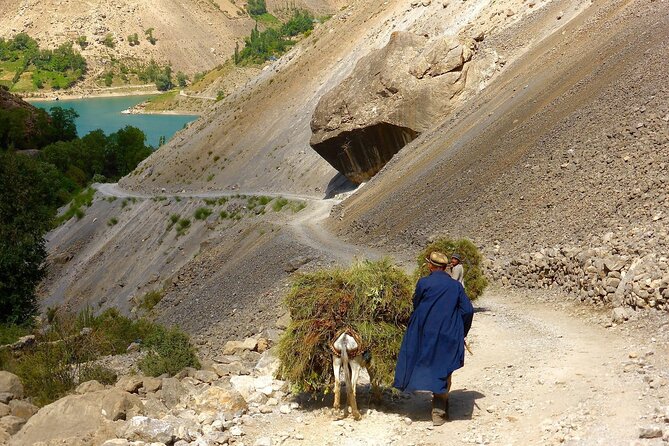
The best part of this trip is the quick change of scene: one morning you leave Samarkand, and after a border crossing you are winding through Tajikistan’s Fann Mountains toward seven high mountain lakes. I like the chance to see remote village life in the same day as spectacular mountain scenery, and I like that the Tajik guide takes over at the border rather than leaving you to arrange mountain transport yourself.
The main catch is the road. After Panjakent, the route becomes rough, dusty, and slow, with steep drops in places. The seventh lake may also be unreachable because of snow, rain, landslides, or road conditions, so you should book this as a mountain adventure, not a polished sightseeing drive.
Key points to know before booking
- The tour crosses an international border: You walk between Uzbekistan and Tajikistan and later re-enter Uzbekistan.
- The first lake is about two hours from the border: Expect rocky, unpaved sections and a bumpy ride.
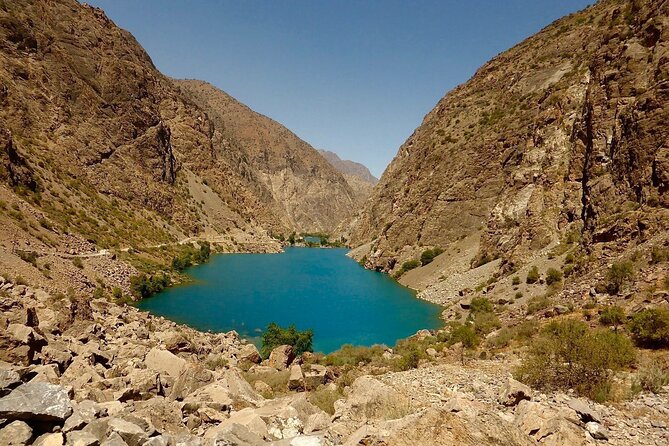
- The lakes change character as you climb: Marguzor is known for intense colors, while Hazorchashma is the highest.
- Local guides add real value: Guides including Shamsiddin, Farrukh, Iva, Omar, Shakhzod, and Afredsho have helped explain local history and customs.
- Lunch is not included: Bring food and snacks, especially during Ramadan, when roadside options may be limited.
- The $100 price buys convenience: You get transport on both sides, coordination at the border, water, and a private arrangement, but the cost is high for a long day in a car.
Why the Seven Lakes make a strong day trip from Samarkand
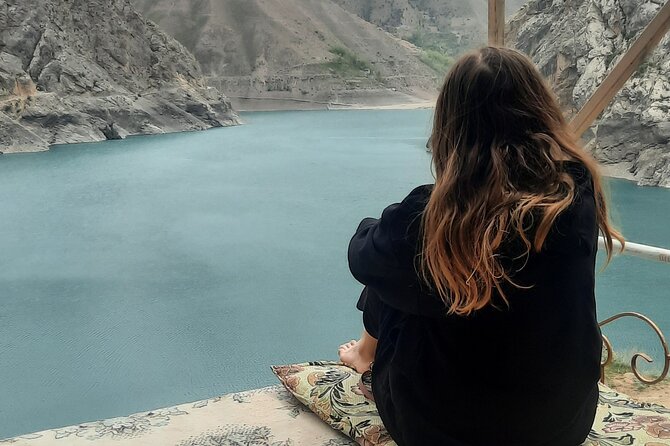
Samarkand is filled with grand architecture and Silk Road stories. The Seven Lakes offer something very different: narrow mountain valleys, streams, steep slopes, snow-topped ridges, and small settlements where daily life still follows the shape of the terrain.
The lakes are called Haftkul in Tajik, meaning Seven Lakes. They are also known as the Marguzor Lakes. They sit in the Fann Mountains of northwest Tajikistan, and each body of water has its own color and setting. You are not simply driving to one viewpoint, taking a photo, and leaving. The road follows the valley upward, with the scenery changing at every turn.
I especially like this outing for people who want a short taste of Tajikistan without planning a separate multi-day journey. The trip handles the awkward part, getting you from Samarkand to the border, arranging a Tajik vehicle, and connecting you with a local guide. You still have to walk across the border yourself, but you do not have to find a taxi on the other side.
The tradeoff is time. The tour lasts about 8 to 10 hours, and a large portion is spent in vehicles. That is reasonable for the distance, but you should not expect a relaxed morning and afternoon of easy walking. This is a full day built around scenery and the journey itself.
More mountain and lake days from Samarkand:
- Tour From Samarkand To Tajikistan: Seven Lakes
★ 5.0 · 34 reviews - Seven Lakes of Tajikistan Full Package Excursion from Samarkand
★ 5.0 · 26 reviews - Seven Lakes Tajikistan Private Excursion From Samarkand
★ 4.0 · 11 reviews
Leaving Samarkand and reaching Panjakent
Pickup is offered from your Samarkand hotel, with the listed meeting point at Registan Square. The Uzbek-side driver takes you toward the Uzbek-Tajik border, then you walk across after completing the departure formalities.
This handoff is one of the most important practical details. Your Uzbek driver does not simply continue into Tajikistan. After you cross on foot, Tajik staff meet you and take you onward to Panjakent. Several guides have handled this part for visitors, including Farrukh, Shakhzod, and Shamsiddin.
The border is often straightforward, but it can be slow. Allow extra patience, since one account put the crossing time at about 1.5 hours, and the return can involve queuing and crowding. Keep your passport and documents easy to reach, and follow the instructions of the staff. One person was asked to show hotel registration at the border, so carrying your accommodation details is sensible.
The crossing itself gives the tour a little more substance than a normal day excursion. You are not just looking at Tajikistan from a viewpoint. You are entering the country, passing through Panjakent, and seeing how the road and settlements change soon after the border.
Panjakent adds a useful first look at Tajikistan
The planned drive through Panjakent takes about an hour. The itinerary treats it mainly as the transfer point before the mountains, but your guide may also help you see a little of the town. Farrukh, for example, accompanied a visitor to a mosque so they could pray.
That small detail tells you what kind of guide service this can be at its best. The Tajik guides are not only there to point out lakes. Shamsiddin has explained local customs and the story of the lakes, while Iva has discussed history and daily life. Omar and Afredsho have also been praised for making the long drive more enjoyable.
The quality of guiding can vary by departure, since different guides and drivers may be assigned. Still, the consistent strength of the experience is the local handoff. Once you are in Tajikistan, you have someone who can answer questions, manage the route, and help with practical needs.
Marguzor, the first lake, is the visual highlight
The drive reaches Marghuzor, or Marguzor, the first lake, at about 1,640 metres. Its name is translated as eyelashes in Tajik, and it is known for strong, changing colors. One useful piece of advice is not to assume that the highest lake is automatically the most impressive. Several visitors found the first lake especially striking.
The first arrival is also your clearest sense of how dramatic the valley can be. Mountains rise around the water, and the road, streams, and scattered homes make the setting feel remote without requiring a strenuous hike. Your driver may stop for photographs and short breaks, though the exact pace depends on road conditions and the day’s schedule.
From here, the route continues toward the other lakes, including Soya, whose name means shadow. The water, light, and angle of the valley shift as you climb. You will see meadows, streams, mountain slopes, and rural homes along the way.
Do not expect a smooth coach road. The route toward the lakes includes rocky, dusty, unpaved sections, and it can take almost two hours from the border to the first lake. A Honda CR-V was used on one departure, but the exact vehicle can vary. The important point is that you should be comfortable with a long ride over rough ground.
A few more things worth doing in Samarkand
- Amirsoy, Chimgan & Charvak Full-Day Adventure
★ 4.9 · 82 reviews - Best of Bukhara: All Day Private Old Town Tour
★ 5.0 · 66 reviews - Best of Bukhara: All Day Private Old Town Tour
★ 4.9 · 62 reviews - Bukhara Full Day Old City Private Tour
★ 5.0 · 46 reviews
The upper lakes bring more mountain drama
The middle and upper lakes give you a stronger sense of the valley’s height. The road becomes more enclosed, and the mountains feel closer. At times there are steep drops beside the route, which can be unsettling if you dislike heights.
The drivers have received both praise and criticism. Several have been described as careful, confident, and skilled on difficult roads. One guide helped make a nervous passenger feel safe on the approach to the final lake. At the same time, some passengers found the driving too fast and noted that seatbelts did not always work in passenger seats.
That is worth treating seriously. Ask to use a working seatbelt before leaving, and tell the driver if you want a slower pace. The road is part of the adventure, but there is no prize for reaching the lakes a few minutes sooner.
The itinerary allows about three hours for the Seven Lakes area, not counting the optional hike. That sounds generous, but border delays and road conditions can eat into the schedule. Your guide may adjust the plan to give you the best available lake views rather than forcing every stop at the expense of safety.
Hazorchashma and the optional hike
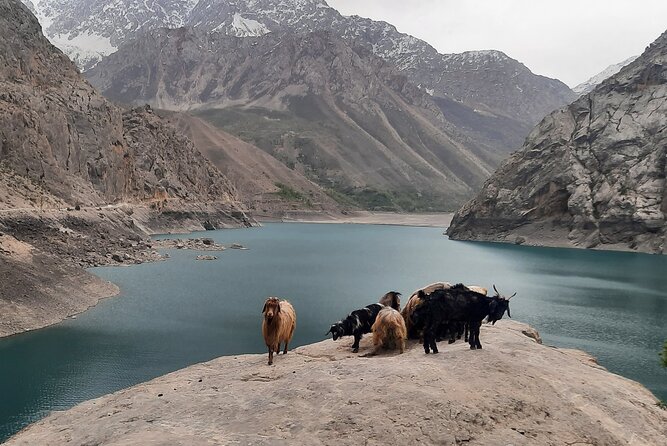
Hazorchashma, also written Azorchashma, is the seventh and highest lake, at about 2,400 metres. Its name means a thousand springs. The suggested walk from the sixth lake to the seventh takes about 1.5 hours, making this the most active part of the day.
The walk is optional, which is useful because the tour needs to suit different energy levels. If you want a short mountain outing, you can focus on the lakes reached by vehicle. If the path is open and conditions are good, the upper walk gives you a closer look at the mountain setting and a stronger feeling of reaching a remote place.
Access is not guaranteed. Snow, rain, landslides, and rough road conditions have blocked the final section on some days. One departure could not reach the seventh lake because of a landslide, and another could not continue because mountain conditions made it unsafe.
That does not necessarily ruin the day. A picnic by a stream or extra time beside another lake can be a pleasant substitute. Still, you should not book this trip with the seventh lake as the single reason for going. Think of it as the best-case finish, not a promise.
Rural villages are part of the experience
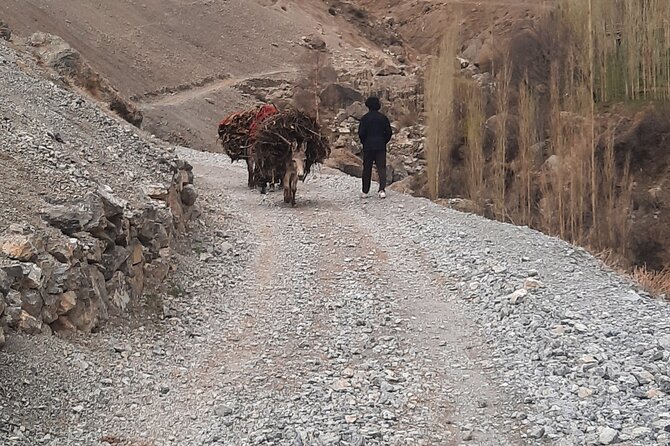
The lakes are only half the appeal. Villages near Khurdak and Marguzor show how families live in this mountain region. Homes and settlements appear along the road, and you may see children and residents as you pass through.
The villages are not presented as a staged cultural show. They are part of the route, which makes the experience feel more genuine. Your guide can explain local customs, history, and the practical realities of life in the mountains. That context turns a scenic drive into a better understanding of Tajikistan.
Food can also become part of the local contact. One guide bought a local lunch, and another group ate at a village near the fourth lake. But lunch is not included in the tour price, and food may be hard to find during Ramadan. Bring a packed meal and snacks rather than counting on a restaurant or shop.
Restrooms are another weak point. The region is remote, and decent public toilets are not reliably available. Plan ahead when you have the chance, and do not expect the facilities you would find on a standard city tour.
Sarazm gives the return journey historical weight
On the return route, the tour makes a brief stop at Sarazm, a UNESCO World Heritage Site and one of Central Asia’s oldest settlements. The site dates back more than 5,500 years, and the visit usually lasts about 30 minutes.
After a day of mountain scenery, Sarazm changes the subject from nature to early settled life. The excavated remains show that this part of Central Asia had organized communities long before the famous medieval Silk Road cities. The entrance fee is included, so you do not need to budget separately for admission.
Thirty minutes is enough for a quick look, not a full archaeological visit. If you are deeply interested in ancient settlements, you may wish the stop were longer. Still, it is a worthwhile final contrast before you return toward the border and Samarkand.
Is $100 per person a fair price?
At $100 per person, this is not the cheapest way to reach the Seven Lakes. You could potentially reduce the cost by arranging your own transport to and from the border, but that would leave you responsible for finding a Tajik vehicle, coordinating the handoff, and managing the mountain route.
The price includes an air-conditioned vehicle, bottled water, transport on both sides of the border, and the Sarazm entrance fee. Lunch and visa costs are extra. For a solo visitor, the price may feel high. For a couple or small private group, the convenience can make the cost easier to justify.
The tour is advertised as private, with only your group participating. One departure was experienced as a small shared group, so I would confirm the arrangement if having a fully private vehicle is important to you. Group discounts are offered, which may improve the value for several people booking together.
The strongest part of the price is not the bottled water or admission ticket. It is the coordination. You are paying to have an Uzbek driver, Tajik guide, Tajik vehicle, border handoff, and return journey organized in one day. If you value simplicity, that is meaningful. If you are comfortable arranging transport yourself, the price may feel less attractive.
Visa and border planning
This trip begins in Uzbekistan, enters Tajikistan, and then returns to Uzbekistan. Many nationalities can enter both countries without a visa, but you must check your own passport rules before booking.
If you need a Tajik visa, arrange it before the trip. You may also need a double-entry Uzbek visa because you leave Uzbekistan and re-enter it later. Do not assume that a visa for one country solves the requirements for the other.
The tour operator can help with visa questions, but the responsibility for having correct documents remains with you. Carry your passport, visa paperwork if needed, accommodation details, and any other documents required for your nationality.
Who will enjoy this day most?
You are a good match for this tour if you want dramatic scenery, can tolerate a long drive, and like seeing a less familiar side of Central Asia. It works especially well if your Samarkand schedule does not allow a longer stay in Tajikistan.
You should also be comfortable with uncertainty. Road access can change. The seventh lake may be closed. Border lines may be slow. Lunch and toilet facilities are basic. Those are not minor details here, they shape the day.
I would be cautious about booking if you have serious back problems, dislike rough mountain roads, need reliable restroom access, or expect a relaxed luxury excursion. The bumpy ride has left some passengers sore, and the route can be dusty and uncomfortable.
The best guides make a noticeable difference. Shamsiddin, Farrukh, Iva, Omar, Shakhzod, and Afredsho have all been praised for warmth, clear English, local information, and careful help. You may receive a different guide, but the company’s quick WhatsApp communication is useful when weather or road conditions force a change.
Should you book the Seven Lakes tour?
Book it if you want a full, demanding day that combines an international border crossing, high mountain scenery, village life, and an ancient archaeological site. The lakes are beautiful, and the chance to reach Tajikistan from Samarkand without planning a separate trip is genuinely valuable.
Before paying, check your visa needs, ask about the expected group arrangement, confirm the current road situation, and pack lunch, water, comfortable shoes, and warm layers. Accept that the seventh lake may be missed and that the road will be rough.
For me, the tour makes sense for an adventurous first look at Tajikistan. It is not the cheapest excursion, and it is not physically effortless, but the combination of strong scenery, local guiding, and practical border coordination gives the $100 price a reasonable case.
FAQ
How long does the Seven Lakes tour from Samarkand take?
The tour lasts approximately 8 to 10 hours, including transport, the border crossing, time at the lakes, and the Sarazm stop.
Where does the tour start and end?
The listed meeting point is Registan Square in Samarkand. Pickup from your Samarkand hotel is also offered, and the activity ends back at the meeting point.
Do I have to walk across the Uzbekistan and Tajikistan border?
Yes. You walk across the border after completing the Uzbek departure formalities, then meet the Tajik staff and driver on the other side.
Do I need a visa for Tajikistan?
That depends on your nationality. Many nationalities have visa-free entry, but you must check the current requirements for your passport before booking.
Do I need a double-entry visa for Uzbekistan?
If your nationality requires an Uzbek visa, you may need a double-entry visa because the tour leaves Uzbekistan and returns there after the Tajikistan visit.
Is lunch included?
No. Lunch is not included. Food can be limited in the Seven Lakes region, particularly during Ramadan, so bringing snacks or a packed lunch is recommended.
Is the seventh lake always accessible?
No. Hazorchashma, the seventh and highest lake, can be inaccessible because of snow, rain, landslides, or unsafe road conditions. The hike from the sixth lake is optional.
Is the tour private?
It is offered as a private activity for your group. Because one departure was experienced as a small shared group, confirm the current arrangement if a fully private vehicle matters to you.
What is included in the $100 price?
The price includes an air-conditioned vehicle, bottled water, transport coordination, and the entrance fee to the Sarazm archaeological site. Visa costs and lunch are not included.
Just added in Samarkand
- Samarkand City Tour: Ancient Domes & Timeless Stories★ 5.0 · 5 reviews
- Samarkan City Tour From Tashkent★ 4.3 · 5 reviews
- Seven Lakes Tajikistan: All-Inclusive Private Day Tour★ 5.0 · 11 reviews
- 1 Day Tour to Shakhrisabz: Motherland of Amir Temur★ 4.5 · 6 reviews
- Samarkand Moonlight Tour: A Timeless Night Experience★ 5.0 · 6 reviews
- Private Day Trip to Shakhrisabz from Samarkand★ 5.0 · 9 reviews
- Panjakent day trip from Samarkand★ 4.5 · 6 reviews
- Samarkand – Shakhrisabz – Bukhara One Day Trip★ 4.6 · 11 reviews
Seven Lakes Tours, compared.
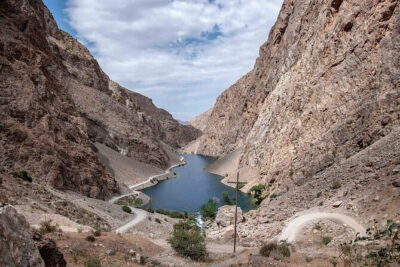
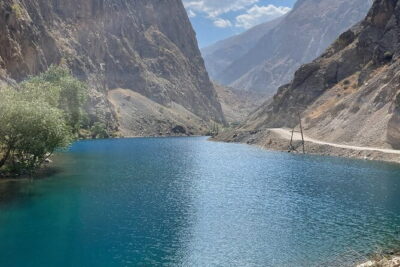
Seven Lakes of Tajikistan Full Package Excursion from Samarkand
Read our review →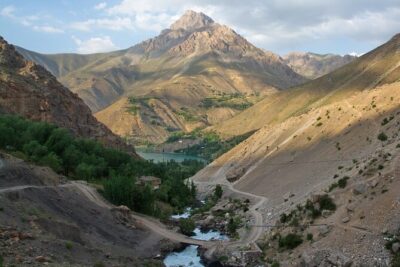
Seven Lakes Tajikistan Private Excursion From Samarkand
Read our review →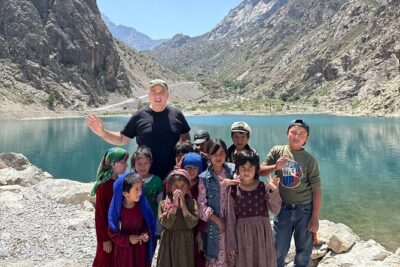
Seven Lakes Tajikistan: All-Inclusive Private Day Tour
Read our review →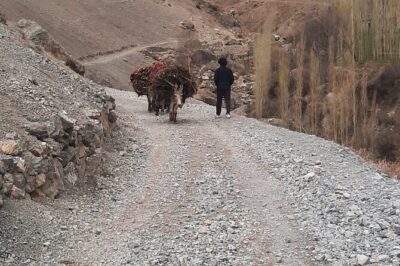
Day Tour from Samarkand Explore Panjakent and Seven Lakes
Read our review →Browse the lists this tour appears in