
Reviewed · TOURS IN BUKHARA
Best of Bukhara: All Day Private Old Town Tour
Bukhara is the kind of city that rewards a good guide. Behind every blue-tiled madrasa and weathered trading dome sits a piece of Silk Road history, and this private walking tour brings the main sights together in one long, well-filled day. Guides such as Shakhnoza, Behruza, Malika, and Nargiz are praised for clear English, local insight, and a knack for adjusting the pace.
I like the private format, since you can ask about Uzbek customs, Jewish heritage, crafts, food, or the monuments that catch your eye. I also like the broad route: you see the grand Kalon complex and Ark, then move into quieter lanes, markets, workshops, and the old Jewish quarter. The main drawback is that the $65 price does not include entrance fees, and the schedule packs many stops into a walking day.
Key points to know before booking
- The route covers 13 major stops, from Lyab-i-Hauz and the Kalon Minaret to the Ark, trading domes, madrasas, and Bukhara’s synagogue.
- Your guide meets you at a central hotel, with the initial transfer sometimes made by local taxi before the walking tour begins.
- The tour is private, so the pace can be adjusted for older visitors, mobility concerns, or special interests.
- The $65 rate is per person, with group discounts available. Museum and historic-site admission costs an additional $6 per person.
- Crafts and shopping are part of the appeal, with opportunities to see carpets, textiles, metalwork, miniature painting, and Uzbek spices.
- Free cancellation applies up to 24 hours before departure, but changes or cancellations inside that window are not refunded.
Why a private day works well in Bukhara
Bukhara’s Old Town is easy to admire but harder to understand on your own. The buildings are close together, yet each one belongs to a different period, ruler, religious tradition, or commercial purpose. A guide helps you connect the dots instead of treating the city as a series of pretty facades.
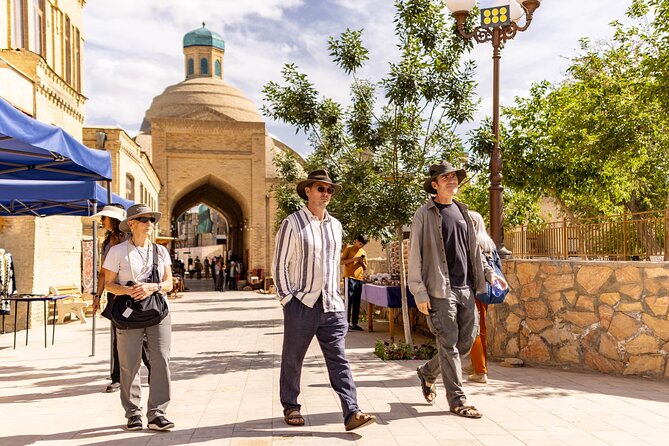
This is not a bus tour. After pickup, usually from a central hotel, the experience is mainly on foot. One guest noted that the first transfer was made by local taxi, so you should expect a walking tour rather than private transport between every monument.
The private setup is useful here. You can stop for photographs, ask for a slower pace, or spend more time on crafts and local life. Several guides have adjusted the route for visitors with walking difficulties, and one guide arranged a tuk-tuk back to the starting area at the end. That sort of help matters after six hours on old streets and uneven steps.
The tour is advertised at five to seven hours. In practice, you should reserve most of a day. A typical route may run from morning into early afternoon, while a more relaxed group can spend longer at workshops, shops, or individual monuments.
A few more things worth doing in Bukhara
- Best of Bukhara: All Day Private Old Town Tour
★ 4.9 · 62 reviews - Bukhara Full Day Old City Private Tour
★ 5.0 · 46 reviews - Full Day Private Tour in Seven Lakes from Samarkand
★ 5.0 · 94 reviews
Lyab-i-Hauz, where the day begins around water
Lyab-i-Hauz means by the pond, and the name fits. This square centers on a historic pool surrounded by buildings from the sixteenth and seventeenth centuries. It is one of the most pleasant places to get your bearings in the Old Town.
The setting gives the tour a softer opening than beginning inside a fortress. You can look at the surrounding architecture, watch local life around the square, and hear how water shaped daily life in an otherwise dry region.
The nearby monument to Hodja Nasreddin adds a lighter note. This bronze figure, installed in 1979, honors the famous comic folk character known for clever stories and practical humor. The stop is short, but it helps show that Bukhara is not only about rulers and religious schools.
The Kalon Minaret and the blue-tiled heart of Bukhara
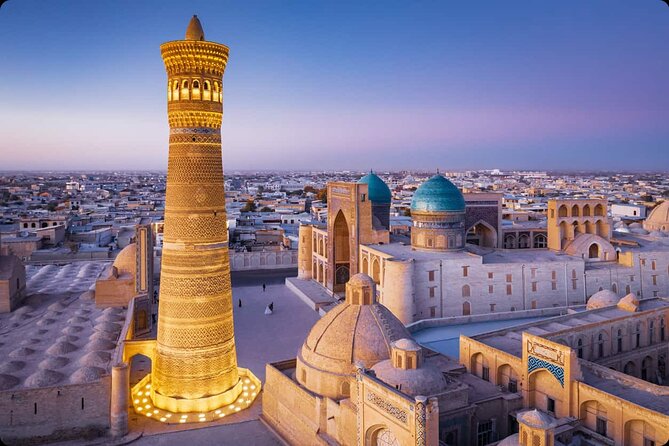
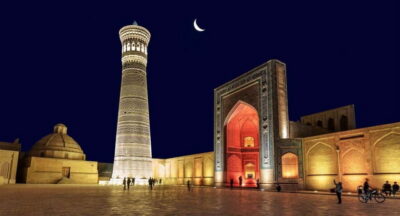
The Great Minaret of the Kalon is one of Bukhara’s unmistakable landmarks. Its scale and age make it an ideal place to hear about the city’s role along Central Asian trade routes and its place as a center of Islamic learning.
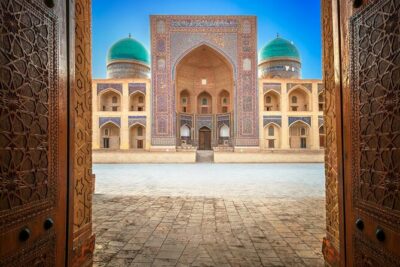
The minaret is part of the Po-i-Kalyan complex, which also includes the Kalon Mosque and Mir-i-Arab Madrasa. Seeing the three together is more useful than visiting them as isolated monuments because their religious and architectural roles are linked.
The Kalon Mosque gives you the broadest sense of the complex. Its open spaces and repeated arches can feel grand even when the details blur together. Your guide’s explanation is especially helpful here, since the stories of construction, worship, education, and political power overlap.
Entrance fees are not included at the Kalon Minaret, Mir-i-Arab Madrasa, or Kalon Mosque. The extra cost is modest, but keep the $6 total historic-site and museum charge in mind when comparing the tour price with a self-guided day.
Mir-i-Arab Madrasa has a particularly notable twentieth-century story. It was the only spiritual educational institution in the Soviet Union that resumed operation after the Second World War. The stop offers a useful reminder that Bukhara’s religious life did not end with the arrival of Soviet rule.
The Ark and Bolo Hauz Mosque
The Ark of Bukhara is the largest single stop on the route, with about an hour set aside for it. This massive fortress was occupied as early as the fifth century and served as a seat of power for Bukhara’s rulers.
Inside, the Ark is less about one perfect viewpoint and more about scale, layers, and the sense of a city within a city. Give yourself time to look beyond the walls and imagine the administrative and royal functions that once operated there.
The nearby Bolo Hauz Mosque offers a different mood. Built in 1712 opposite the Ark, it is known for its historic setting and place on the UNESCO World Heritage list with the other monuments of Bukhara’s Old Town. The scheduled visit is brief, so it works best as a focused stop rather than a long architectural study.
If you care most about the Ark, tell your guide early. Since the route includes many monuments, a private guide can help you spend less time on stops that interest you less and more time inside the fortress.
Same city, a different kind of day:
- City Tour Around Bukhara
★ 5.0 · 55 reviews - Yurt Camp Tour with Night from Bukhara
★ 3.8 · 35 reviews - All You Need To Know About Bukhara. A Walk In The Town
★ 4.9 · 31 reviews - One-Day Private Tour in the Old Town of Bukhara
★ 5.0 · 24 reviews
Trading domes, old commerce, and Uzbek crafts
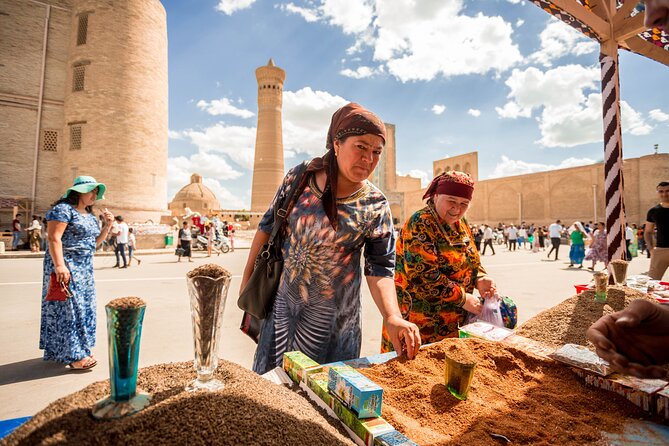
Bukhara’s trading domes are among the most enjoyable parts of the walk. Four historic domes remain, placed along an old north to south route through the city. Their vaulted interiors once sheltered merchants and goods from the heat, and they still give the Old Town a strong sense of commercial purpose.
This is where the tour becomes more tactile. You might see handwoven textiles, carpets, spices, metalwork, miniature paintings, and other local crafts. Some guides also include artisan workshops, depending on your interests and the time available.
The shopping is not compulsory, which is important. You can browse, ask how an item was made, and move on without turning the whole day into a sales visit. A strong private guide can explain what you are seeing and point out useful places to eat or shop later.
The tour description calls attention to Uzbek textiles, and that is well chosen. You will see them in madrasas, shops, and pedestrian lanes. If you want souvenirs with a clear connection to Uzbekistan, Bukhara is a better place to look than a generic hotel shop.
Nodir Devon Begi and the old religious quarter
Nodir Devon Begi Madrasa dates from 1622 or 1623. It was first built as a caravanserai and later converted into a madrasa, a detail that neatly connects Bukhara’s trade and religious worlds.
The building sits near Lyab-i-Hauz and helps explain how travelers, merchants, students, and religious figures shared the same urban center. Its history is more interesting once you understand that a madrasa was not simply a decorative school building. It was part of a working network of lodging, education, worship, and commerce.
The route then reaches Maghak-i Attari Mosque, a historic mosque tied to the Lyab-i-Hauz complex. The visit is another chance to see how religious buildings were added to and reused over many centuries. Admission is not included, so the same $6 site-fee allowance applies.
Ulugbek and Abdulaziz-Khan madrasas
The Ulugbek Madrasa was completed in 1420 and is associated with Ulugbek, a ruler and scholar who supported education and science. Look for the exterior tile work, fluted dome, stained windows, and old tombs.
The Abdulaziz-Khan Madrasa provides a useful comparison. Its design and decoration belong to a later period, so visiting both buildings lets you see changes in style rather than viewing one madrasa as an isolated monument.
These stops are best for visitors who enjoy architecture and ideas, not just dramatic photographs. Your guide can explain how madrasas functioned and why rulers invested in them. Since the schedule gives each around half an hour, you will get a solid introduction rather than an exhaustive architectural lecture.
Bukhara’s Jewish heritage and the synagogue
The Bukhara Synagogue adds an important layer to the tour. Bukhara has long been home to a Jewish community, and the synagogue represents a religious tradition that existed alongside the city’s Muslim institutions.
One striking detail is that Jews in Bukhara once prayed together with Muslims in the same mosque before the synagogue was built. That small piece of history changes how you see the Old Town. The city’s identity was shaped by contact among communities, not by one tradition alone.
The synagogue visit lasts about 20 minutes and admission is not included. If religious history, minority communities, or local social life interest you, tell your guide. The private setting makes it easier to ask questions that might not fit into a large group tour.
The guide makes the difference
The strongest part of this experience is the guide. The named guides connected with the tour include Shakhnoza, Shaknoza, Shaherzat, Behruza, Bekhruza, Shehnaz, Malika, Gulnaz, Sittora, and Nargiz. Guide assignments can vary, but the qualities you should expect are strong English, local knowledge, and a friendly approach.
Shakhnoza is especially praised for explaining Bukhara’s past and present in an easy-to-follow way. Behruza is noted for adding artisan workshops when requested, while Nargiz has been praised for covering the full route and helping with the return trip. Malika is described as a native of Bukhara who handles questions about local history and culture with ease.
The tour also suits families with older parents or mixed-age groups. Guides have adjusted walking speed, accepted delayed starts, and added an extra monument when timing allowed. That flexibility is a real benefit, but it depends on communicating your needs at the start.
Is $65 good value?
At $65 per person, this is not the cheapest way to walk through Bukhara. You also pay about $6 per person for museums and historic sites, and gratuity is not included. Still, the price is reasonable if you value a private guide for five to seven hours and want more than a quick introduction.
The value comes from the range of the route. You cover the major religious monuments, the Ark, trading domes, the Jewish quarter, craft areas, and several smaller sites in one day. A private guide also saves you from piecing together the city’s story from separate visits.
The calculation changes if you are traveling alone and prefer a short, informal walk. In that case, the price may feel high, especially with admissions added. For a couple, family, or small group, the private format becomes more attractive, and group discounts may improve the cost.
The experience carries a 4.9 out of 5 rating from 66 ratings, with 98 percent recommending it. That matches the main strengths: guides who explain clearly, adjust the pace, and treat Bukhara as a living city rather than an open-air museum.
Practical advice for making the day work
Wear shoes suited to several hours of walking. The route includes many stops, and the most rewarding parts often happen between the headline monuments, in lanes, squares, and market areas.
Start with a clear request. If you want more craft workshops, Jewish heritage, architecture, food advice, or shopping time, say so before the walk begins. The guides have shown they can tailor the day, but a seven-hour route cannot give equal attention to every subject.
Keep a little room for the unexpected. A delayed train, a slower walker, or an interesting workshop can change the timing. The private format makes adjustments possible, but the tour cannot linger everywhere.
You receive confirmation at booking, pickup is offered from central hotels, and the activity is near public transportation. Most people can participate, but this is still a long walking day with stairs and historic surfaces. Free cancellation is available until 24 hours before the start time. Inside that window, you receive no refund.
Should you book this Bukhara tour?
Book it if you want a full introduction to Bukhara in one day, prefer private attention, and care about the story behind the monuments. It is especially useful for first-time visitors, families, history fans, and anyone who wants help with crafts, restaurants, or local customs.
Think twice if you dislike long walks, want every entrance included, or prefer to explore at a very slow pace. You can manage the costs by budgeting the extra $6 admission fee and stating your walking needs or interests in advance.
For most people with limited time in Bukhara, I would book it. The route is packed, but the private guide gives it shape, context, and room for personal questions. That is what turns a day of beautiful buildings into a clearer understanding of the city.
FAQ
How long does the Best of Bukhara tour last?
The tour lasts approximately 5 to 7 hours. The exact timing can vary with walking pace, questions, stops at workshops, and the amount of time spent at each monument.
Is hotel pickup included?
Yes. The guide meets you at central hotels. The experience is mainly a walking tour, and the initial pickup or transfer may use a local taxi.
Are entrance fees included in the price?
No. Museum and historic-site admission costs $6 per person. Several individual stops also list entrance fees as not included.
Is this a private tour?
Yes. Only your group participates, and the tour is led by a private professional local guide.
What places are included?
The route includes Lyab-i-Hauz, the Great Minaret of the Kalon, Mir-i-Arab Madrasa, Poi Kalyan Mosque, Bolo Hauz Mosque, the Ark of Bukhara, the trading domes, Nodir Devon Begi Madrasa, the Hodja Nasreddin monument, Maghak-i Attari Mosque, Ulugbek Madrasa, Abdulaziz-Khan Madrasa, and Bukhara Synagogue.
What is the cancellation policy?
You can cancel up to 24 hours before the start time for a full refund. Cancellations or changes made less than 24 hours before the experience are not accepted and are not refunded.
Just added in Bukhara
- 9 Days Private Guided Tour to Uzbekistan★ 5.0 · 3 reviews
- 2 – Days Guided Tour of Samarkand and Bukhara from Tashkent★ 5.0 · 5 reviews
- Bukhara Countryside Private Tour with Transport★ 5.0 · 6 reviews
- 2 Days Private Safari Tour from Bukhara★ 4.5 · 6 reviews
- Private Bukhara-Khiva Transfer via Ancient Fortresses★ 4.5 · 8 reviews
- A Group Walking Tour Of Old Town★ 5.0 · 8 reviews
- Bukhara: Walking Tour with a Small Group★ 5.0 · 10 reviews
- Bukhara: Private Guided Walking Tour with Hotel Pickup★ 5.0 · 11 reviews
Tours in Bukhara, compared.
All You Need To Know About Bukhara. A Walk In The Town
Read our review →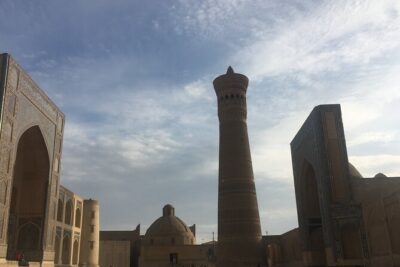
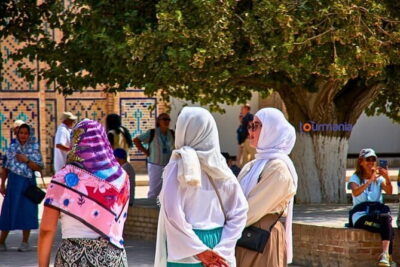
Bukhara Historical City Highlights Guided Walking Tour
Read our review →
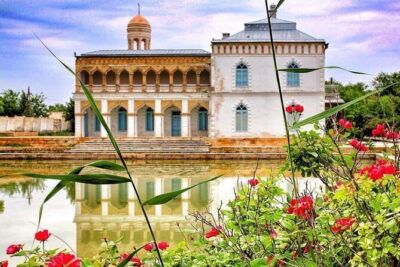
Beyond the Walls: Countryside Tour with Transport and Lunch
Read our review →
Hiking tour to Hayat, Uhum and Asraf villages – 4 days
Read our review →Browse the lists this tour appears in