
Reviewed · WALKING TOURS
Bukhara: Walking Tour with a Small Group
Bukhara reveals itself best on foot, one trading dome, tiled madrasa, and shaded square at a time. This four-hour small-group walk ties together the city’s major sights, from Lyabi-Hauz to the Kalon Minaret, with local stories and explanations of Uzbek customs. I like the group limit of 10 and the chance to hear guides such as Sunny or Nuriddin explain more than dates and names.
I also like that the route includes working artisan spaces and old market domes without turning the outing into a shopping trip. The main drawback is that entrance fees are extra, and the Ark Fortress is viewed only from outside, so you will need a separate visit if you want its museums.
Key points at a glance
- A full half-day on foot: Plan on about 4 to 4.5 hours across Bukhara’s historic center.
- Small groups capped at 10: The size should make it easier to ask questions and hear the guide.
- Major monuments in one route: See Lyabi-Hauz, the trading domes, Poi Kalyan, Bolo-Hauz, and the Ismail Samani Mausoleum.
- Strong guide-led storytelling: Guides including Sunny and Nuriddin have been praised for clear English, local customs, flexibility, and engaging stories.
- Shopping is not the purpose: Artisan workshops show local life, but the tour is not built around buying carpets or crafts.
- Tickets cost extra: Meals, drinks, and admission fees are not included in the $28 price.
Why this Bukhara walk works well
Bukhara has an unusual concentration of important monuments within a walkable historic center. That makes a guided route especially useful. You can move from an old religious complex to a market dome and then to the Poi Kalyan group without spending much of your limited sightseeing time figuring out the map.
The tour costs $28 per person. For a 4 to 4.5 hour walk, that is a sensible price if you want historical context and help connecting the sites. The value depends partly on the entrance fees you choose to pay. Since tickets are not included, your final cost will be higher if you enter several monuments.
The maximum group size is 10. That is not a private tour, but it is small enough for a guide to keep the group together and respond to questions. I would choose this format over a large coach outing in Bukhara, where the narrow streets and courtyards are better suited to walking.
The tour is in English and includes online support. You receive confirmation when booking, and the ticket is mobile, which keeps the arrival process simple. The walk starts at Nodir Devonbegi Madrasah on Bakhouddin Naqshbandi Street and normally finishes at the Ismail Samani Mausoleum.
More Walking Tours in Bukhara
- All You Need To Know About Bukhara. A Walk In The Town
★ 4.9 · 31 reviews - Bukhara Historical City Highlights Guided Walking Tour
★ 4.5 · 16 reviews - Bukhara: Private Guided Walking Tour with Hotel Pickup
★ 5.0 · 11 reviews
Starting at Lyabi-Hauz and the old caravan routes
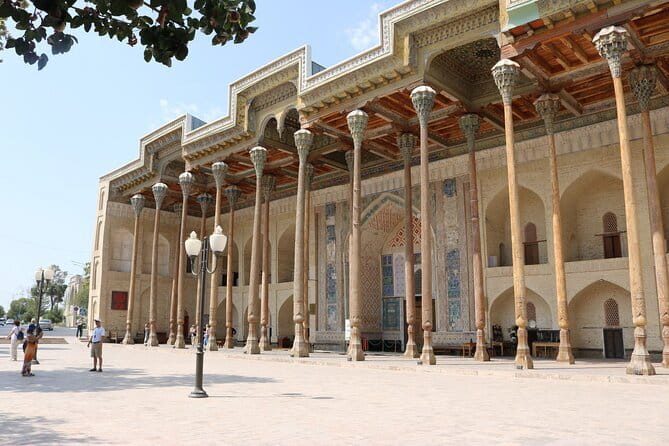
The opening stop is Lyabi-Hauz Square, a natural place to begin because it gathers several important buildings in one setting. The ensemble includes Kukeldash Madrasah, Nodir Divan Begi Madrasah, and the Nadir Devanbegi Hanaka.
You have about 40 minutes here. That gives your guide time to explain how the square functioned as a social and religious center rather than simply pointing out façades. I would use this first stop to ask about the role of madrasahs, the local meaning of a hanaka, and how Bukhara’s public spaces were used.
From there, the route includes Sayfuddin Caravanserai and the Toki Sarrafon trading dome. These sites help you picture Bukhara as a major stop on long-distance trade routes. The caravanserai connection is useful context before you reach the larger market domes later in the walk.
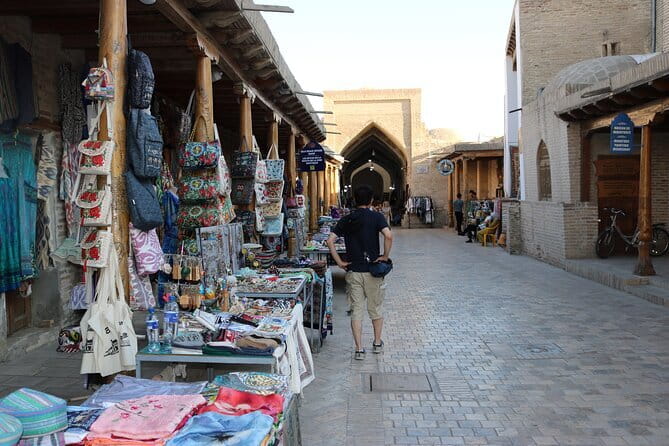
The route is not focused on shopping. Artisan workshops are included to show part of local life and culture, not to pressure you into purchases. That distinction matters if you want cultural context but prefer not to spend your sightseeing time in salesrooms.
Magoki-Attori and the first trading domes
Magoki-Attori Mosque is one of the oldest religious sites on the route, with origins in the 12th century. It forms part of the wider Lyab-i Hauz area and provides a change of pace after the open square.
You have around 20 minutes here. Admission is not included, so check with the guide about the current entrance arrangement before deciding to go inside. I like having this stop early in the route because it gives you a clear example of how Bukhara’s sacred buildings sit alongside its commercial spaces.
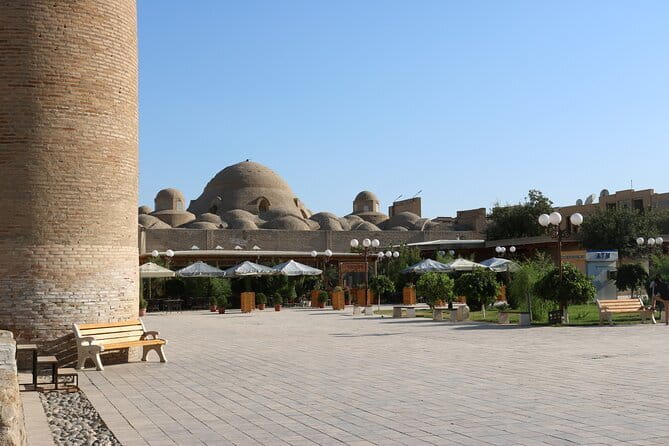
The next major stop is Toki Telpakfurushon, one of Bukhara’s historic trading domes. The name is associated with the old hat sellers, and the covered market structure gives the walk a stronger sense of the city’s commercial past.
You have another 20 minutes here. The dome is free to view, but the atmosphere can vary depending on what shops and workshops are open. I would treat this as a place to look up at the architecture and listen to the guide, not as a guaranteed shopping stop.
Abdulaziz-Khan and Ulugbek Madrasahs
The Abdulaziz-Khan Madrasah dates to 1652, during the rule of Abdulaziz Khan. Its decorative tile work and fresco details make it one of the more visually elaborate stops.
The planned time is about 20 minutes, with admission extra. That is enough for an explanation and a careful look, though not a long architectural study. If you enjoy tile patterns, ask the guide to point out details that are easy to miss from the entrance.
Ulugbek Madrasah follows, with about 15 minutes allotted. It was built by Ulugbek, the grandson of Amir Timur, and is one of Bukhara’s oldest buildings. The contrast between this madrasa and the later Abdulaziz-Khan building helps you see changes in decorative style and educational architecture.
Admission is also separate here. Because several of the day’s buildings have individual fees, I would carry some local currency and decide in advance which interiors matter most to you. You may not want to enter every paid site, especially after several hours of walking.
More walks around Bukhara:
- A Group Walking Tour Of Old Town
★ 5.0 · 8 reviews - Samarkand: Historical Monuments Guided Walking Tour
★ 4.8 · 446 reviews - Khiva: Historical City Highlights Guided Walking Tour
★ 4.8 · 156 reviews - Samarkand One Day Tour: one day walking & group tour
★ 4.4 · 87 reviews
Jewelry dome to the Kalon Minaret

Toki Zargaron is another historic market dome, dating to the 16th century. It was known as the Dome of Jewelers, a useful reminder that each covered market had its own trade.
The stop lasts about 15 minutes and is free. I find these short market visits valuable because they break up the sequence of religious buildings. They also give your guide a chance to explain how merchants and craftspeople fitted into Bukhara’s urban life.
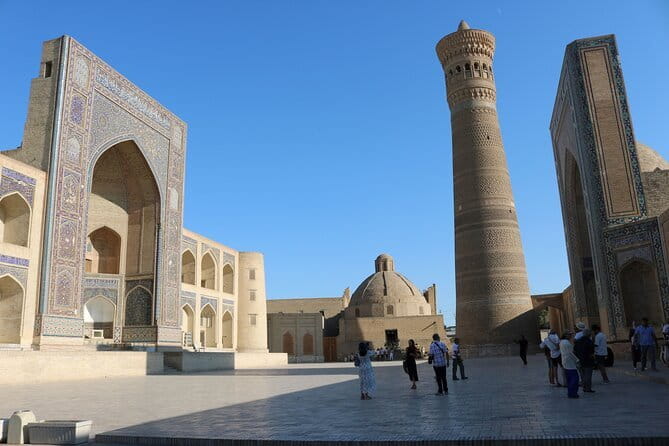
Then the route reaches the Great Minaret of the Kalon. Built in 1127 by the Karakhanid ruler Arslan Khan, the minaret rises 47 meters and is one of Bukhara’s most recognizable landmarks.
You have about 20 minutes here. The minaret is viewed from outside, and that is enough to appreciate its scale and brickwork from the surrounding square. The guide’s explanation adds useful context, especially if you are seeing the monument alongside the nearby madrasa and mosque rather than as an isolated tower.
Poi Kalyan, the visual high point

The Kalon Minaret, Poi Kalyan Mosque, and Miri Arab Madrasah form the Poi Kalyan complex. For many people, this is the visual high point of the walk.
Miri Arab Madrasah was built in the early 16th century under the Shaybanid ruler Ubaydullah Khan. It was named for his spiritual mentor, Sheikh Ab, whose full name is not supplied in the tour details. The building remains one of Bukhara’s important Islamic educational institutions.
The Poi Kalyan Mosque dates to the 16th century and is one of the city’s grandest religious buildings. You have about 15 minutes at the mosque, and admission is not included. The minaret itself is free to view, while entry to some interiors may require a ticket.
I would pay close attention to the way the three buildings frame one another. This is not just a checklist of monuments. The power of the square comes from their relationship, with the tall minaret drawing your eye and the surrounding buildings creating a large ceremonial space.
The Ark Fortress from the outside
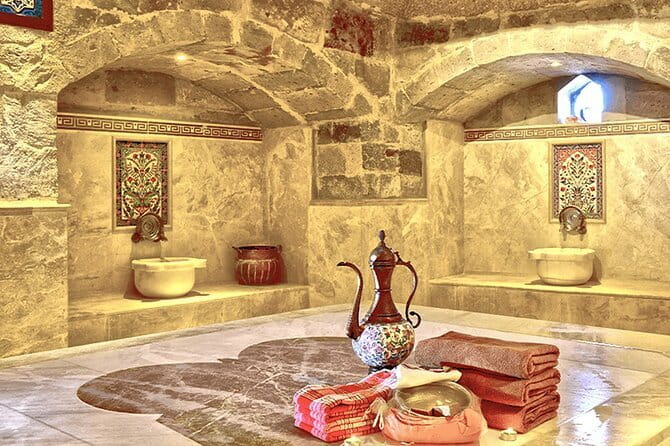
The route passes the Ark Fortress, one of Bukhara’s oldest structures. It dates back to the 5th century and served as a residence for the emirs as well as a military stronghold.
The tour allows about 30 minutes at the Ark, but the fortress is shown from the outside only. The museums inside would add about 1.5 hours, so they are not part of this walking experience.
This is an important limitation to understand before booking. If the Ark is high on your list, plan a separate visit. The exterior still gives you a useful sense of the fortress’s size and position, but you will not see its museum displays or interior rooms during this tour.
Bolo-Hauz and the final mausoleum
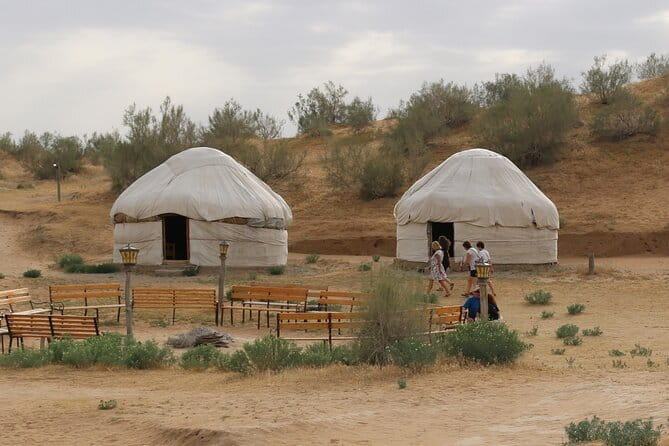
Bolo-Hauz Mosque is the next stop, with about 15 minutes for a visit. The mosque dates from the 18th to 20th centuries and adds a later chapter to the day’s architectural story.
In late autumn and winter, the tour ends at Bolo-Hauz Mosque rather than continuing to the Ismail Samani Mausoleum. This seasonal change is worth noting when you compare the route with your own plans.
In the normal itinerary, the final stop is the Ismail Samani Mausoleum. It is considered one of the key examples of early Islamic architecture in Central Asia and is described as the oldest funerary building in the region’s architectural tradition.
You have around 30 minutes here, with admission extra. Ending at the mausoleum makes practical sense: the route moves from the dense central monuments toward an important site with a different mood and design. If you want to continue sightseeing afterward, confirm the exact finishing point with the guide, especially in the cooler season.
What the guides add
A good guide matters on a walking tour because the buildings can blur together when you are seeing many of them in one morning. This experience uses professional English-speaking guides rather than trainees or language students.
Sunny has been praised for making the walk interactive and for explaining Bukhara’s history clearly. Nuriddin has also been singled out for fluent English, engaging stories, and the ability to answer questions about Uzbek traditions and daily habits.
Those details are useful when choosing a guide-led outing. The strongest part of this tour appears to be the human explanation: stories, customs, and flexibility when the group wants to pause or ask about something beyond the basic route. One guide even added an extra site and a short café break for coffee, showing that the schedule can have some room to breathe.
That flexibility is not guaranteed on every departure, but it is worth asking questions as you walk. If you are curious about food, family customs, religion, or the old trading system, say so early. A guide can often make the route feel more personal when you explain what interests you.
Pace, comfort, and practical planning
Four to 4.5 hours on foot is a substantial morning or afternoon. You will move between squares, domes, courtyards, and religious buildings, so comfortable shoes are more important than polished sightseeing clothes.
The route has several short stops, including 15-minute visits, mixed with longer stops at Lyabi-Hauz, the Ark exterior, and the Samanid Mausoleum. That rhythm keeps the walk moving, but it also means you should not expect a long break at every monument.
A past outing took place in very hot weather, and the guide adapted well. Still, you should treat heat as a real consideration when choosing your start time and bring drinks, since refreshments are not included. The tour requires good weather, and a poor-weather cancellation leads to either another date or a full refund.
You can cancel for a full refund up to 24 hours before the start time. Changes or cancellations inside that window are not accepted for a refund. The experience also requires a minimum number of participants, so a departure can be changed or refunded if that minimum is not reached.
Most people can participate, according to the booking details. The group is limited to 10, and the activity is entirely a walking tour, so anyone concerned about long periods on foot should consider the duration before booking.
Is the $28 price good value?
I think the price is fair for a guided introduction to Bukhara, especially if this is your first visit. You are paying for a professional guide, a small group, online support, and several hours of historical and cultural explanation.
The price does not include meals, drinks, or entry fees. That keeps the base cost low, but it means you should budget separately for the interiors you choose to visit. The free outdoor sights, including the trading domes and the Kalon Minaret, already make up a substantial part of the experience.
I would book it if you want one well-planned orientation walk before exploring on your own. I would skip it if you prefer to spend hours inside the Ark museums or move at your own pace with long photography stops.
Should you book this Bukhara walking tour?
Book this tour if you want to cover Bukhara’s main historic sights in one organized walk, prefer a group capped at 10, and value clear English explanations about architecture, religion, trade, and Uzbek customs. It suits first-time visitors particularly well because the route connects the city’s major areas without requiring you to plan every turn.
Before booking, accept three trade-offs: admission fees are extra, the Ark is exterior-only, and four hours of walking can feel demanding in hot weather. If those points work for your plans, $28 buys a useful, focused introduction to Bukhara, with the added benefit of guides such as Sunny and Nuriddin bringing the monuments to life through stories and conversation.
FAQ
How long does the Bukhara walking tour last?
The tour lasts approximately 4 to 4.5 hours.
What language is the tour conducted in?
The tour is conducted in English.
How many people can join the small group?
The group has a maximum of 10 participants.
Where does the tour begin?
It begins at Nodir Devonbegi Madrasah on Bakhouddin Naqshbandi Street in Bukhara.
Where does the tour end?
The normal finishing point is the Ismail Samani Mausoleum. In late autumn and winter, the tour ends at Bolo-Hauz Mosque.
Is the Ark Fortress visited inside?
No. The Ark Fortress is shown from the outside only. Visiting its museums would add about 1.5 hours.
Are admission fees included in the price?
No. Meals, drinks, and entry fees are not included.
Can I cancel for a full refund?
Yes. You can cancel at least 24 hours before the local start time for a full refund. Cancellations or changes made less than 24 hours in advance are not accepted for a refund.
Just added in Bukhara
- 9 Days Private Guided Tour to Uzbekistan★ 5.0 · 3 reviews
- 2 – Days Guided Tour of Samarkand and Bukhara from Tashkent★ 5.0 · 5 reviews
- 2 Days Private Safari Tour from Bukhara★ 4.5 · 6 reviews
- A Group Walking Tour Of Old Town★ 5.0 · 8 reviews
- Private Bukhara-Khiva Transfer via Ancient Fortresses★ 4.5 · 8 reviews
- Bukhara: Private Guided Walking Tour with Hotel Pickup★ 5.0 · 11 reviews
- Bukhara Traditional Men’s Hammam / Bath XVI Century★ 3.9 · 11 reviews
- Bukhara Countryside Private Tour with Transport★ 5.0 · 6 reviews
Walking Tours, compared.
Samarkand One Day Tour: one day walking & group tour
Read our review →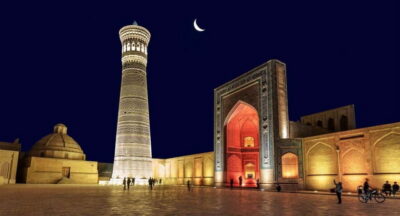
All You Need To Know About Bukhara. A Walk In The Town
Read our review →
Tashkent Walking Tour with Local Lady / Gentleman
Read our review →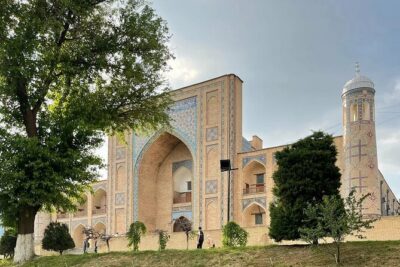
Tashkent Walking & Food Tour: Highlights + Local Flavors
Read our review →Browse the lists this tour appears in