
Reviewed · TOURS IN BUKHARA
A Complete Chapter To Old Bukhara
Bukhara is best understood on foot, one courtyard, mosque, madrasa, and market at a time. This walking tour links the old city’s major sights with the local bazaar near the Ismail Samani Mausoleum, giving you both grand monuments and a glimpse of daily life. Guide Hamza focuses on Central Asian history and explains how Bukhara’s buildings fit into the wider story.
I like the small maximum group of 10, which should make it easier to ask questions and keep up with the guide. I also like the route’s balance between famous sights such as the Ark and Kalon Minaret and less familiar places such as Magoki Attori Mosque and the carpet museum. The main consideration is that the listed stop times are very short, often only two to five minutes, so this is best viewed as a guided orientation walk rather than a slow, detailed visit inside every monument.
Key points
- Guide Hamza explains Central Asian history in clear, engaging terms, with useful points to remember after the walk.
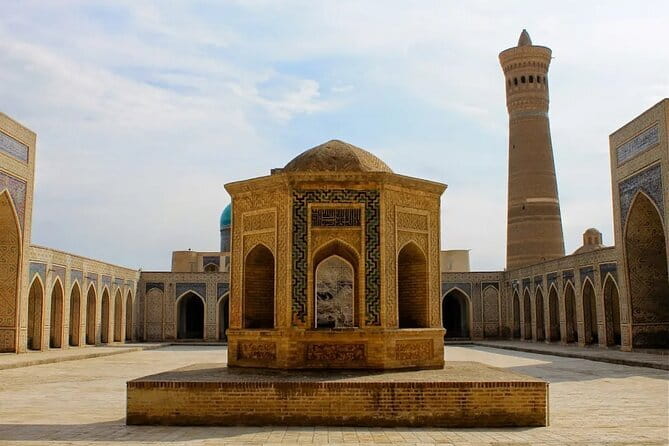
- The route covers Bukhara’s central monuments, including Bolo Hauz Mosque, the Ark, Kalon Minaret, Mir-i-Arab Madrasa, and several historic schools.
- Magoki Attori Mosque and its carpet museum add a quieter, more unusual stop to the main sightseeing route.
- The tour ends near the Ismail Samani Mausoleum and a local bazaar, giving you time to continue exploring if the market is open.
- The $55 price includes a private walking guide and booking help, but transport, drinks, entrance fees, and taxes are extra.
- A 3 to 4-hour walk requires comfortable shoes, and the final timing can change because the experience is conducted entirely on foot.
Why Old Bukhara Works Best on Foot
Bukhara’s old center rewards a walking tour because its main sights are tied closely together. Instead of seeing isolated buildings from a vehicle, you move through the historic core and build a sense of how the city’s mosques, madrasas, markets, and religious schools relate to one another.
That matters in Bukhara. A minaret is not simply a tall landmark to photograph. A madrasa is not merely an ornate façade. The value of a guide is in explaining the purpose of each place and helping you connect the buildings to the wider story of Central Asian religious, educational, and trading life.
Hamza’s approach, based on the supplied feedback, leans toward clear explanations and memorable historical points. That should suit you if you want more than a list of dates. It is especially useful if this is your first introduction to Bukhara and you want a firm base for exploring independently afterward.
The experience lasts about three to four hours, but the duration is not rigid. It depends on walking pace, access to the sights, questions, and the conditions on the day. I would allow extra time afterward rather than scheduling another fixed activity immediately.
Other tours people book in Bukhara:
- Best of Bukhara: All Day Private Old Town Tour
★ 5.0 · 66 reviews - Best of Bukhara: All Day Private Old Town Tour
★ 4.9 · 62 reviews - City Tour Around Bukhara
★ 5.0 · 55 reviews
Starting at Magoki Attori Mosque
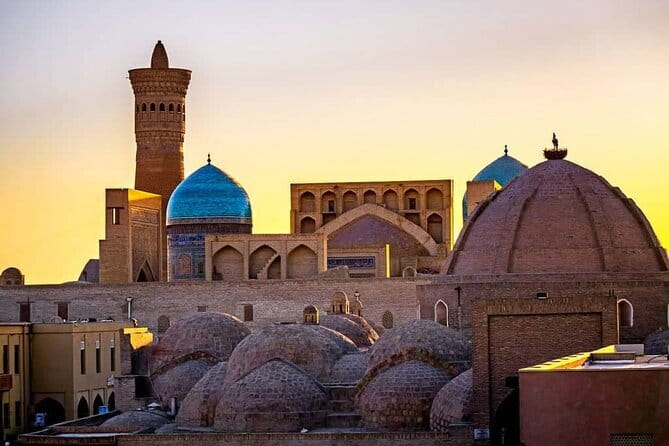
The meeting point is Magoki Attori Mosque and the carpet museum at Mekhtar Anbar Street 55. This is a practical starting place in the old city, and it puts you among historic buildings from the first minute rather than beginning at a transport hub outside the center.
Magoki Attori Mosque is one of the more distinctive stops because it combines religious history with a museum setting. The carpet museum adds another layer, connecting architecture with one of the region’s best-known traditional crafts. The entrance fee is not included, so you should be prepared to pay separately if you want to go inside areas that require admission.
The listed time here is only five minutes, which suggests that the stop may serve as an introduction rather than a long museum visit. If carpets are a major interest, ask Hamza at the start how much time is available and what admission covers. The walking route has several other sights, so a longer visit may affect the overall pace.
I like this beginning because it avoids opening with only the most famous postcard view. You get a sense of Bukhara’s religious and artistic life before moving toward the major monuments.
Bolo Hauz Mosque and the Ark of Bukhara
Bolo Hauz Mosque is listed as the first formal stop, with admission included. The stop is scheduled for five minutes, enough for a quick look and an explanation, but not necessarily enough for an unhurried interior visit.
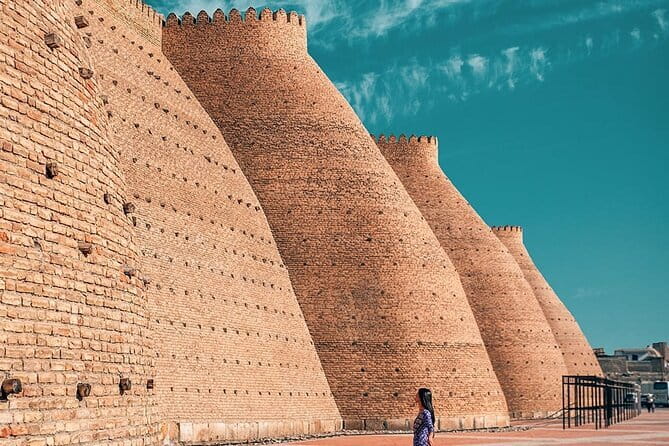
The mosque is paired in the route with the Ark of Bukhara, the city’s great fortified citadel. The Ark is one of the essential landmarks in Bukhara, and its presence gives the walk a strong historical anchor. You should expect Hamza to explain the site as part of the political story of Bukhara, not only as a large old structure.
The supplied itinerary does not provide a separate timing or admission detail for the Ark, so do not assume that a full interior visit is included. The tour may focus on seeing the site and understanding its role from the outside or nearby. If entering the Ark is important to you, confirm the plan with the guide before booking or at the meeting point.
This part of the route works well for history-minded visitors. It gives you a clear contrast between religious architecture at Bolo Hauz and the authority represented by the citadel.
Kalon Minaret, the Landmark You Will See Twice
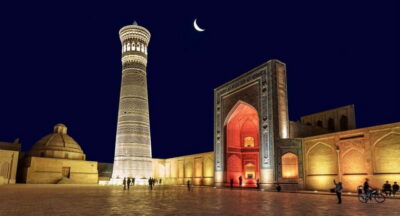
The Great Minaret of the Kalon appears more than once in the schedule. One stop allows about five minutes and includes admission, while a later stop is listed as a two-minute look-around. The repeated appearance is not necessarily a problem. The minaret is central to Bukhara’s old city, and you may see it from different points as the walk continues.
The first visit is likely the main explanation and viewing point. The second may be a brief orientation stop within the wider Kalon complex. The schedule does not promise a long climb or a detailed interior visit, so plan on seeing and understanding the minaret rather than treating this as a dedicated tower tour.
For photography, the repeated stops can be useful. You may have a chance to look from a different angle, though the exact views depend on the walking path and conditions. Ask Hamza which stop is best for photographs if you want to avoid spending your limited time taking pictures at the less useful viewpoint.
The Kalon Minaret is also a good example of why a guide adds value. Its size and decoration are immediately impressive, but a short explanation can help you place it within Bukhara’s religious and civic center.
Same city, a different kind of day:
- Bukhara Full Day Old City Private Tour
★ 5.0 · 46 reviews - Yurt Camp Tour with Night from Bukhara
★ 3.8 · 35 reviews - All You Need To Know About Bukhara. A Walk In The Town
★ 4.9 · 31 reviews - One-Day Private Tour in the Old Town of Bukhara
★ 5.0 · 24 reviews
Ulugbek Madrasa and the Two Madrasa Stops
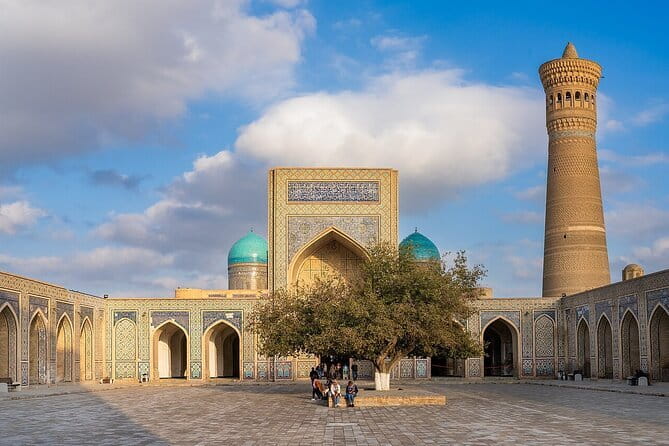
Ulugbek Madrasa receives a five-minute stop with no admission fee listed. This is one of the route’s educational landmarks. A madrasa was a place of religious learning, so the building helps you think about Bukhara as a center of study as well as a place of worship and trade.
The short timing means you will probably hear the key points, see the façade and courtyard areas available to the group, and then move on. If you prefer a slower architectural study, you may want to return later on your own.
The route then includes Kosh Madrasah and Abdulaziz-Khan Madrasah. Each is scheduled for only two minutes and no admission is included. These very short stops are best treated as exterior visits or quick explanations. They add breadth to the tour, showing you more than one example of madrasa design and use without turning the entire walk into a single-building tour.
I appreciate the range here. You see a major landmark, then compare it with other schools. Still, the pace may feel brisk if you want detailed discussion of every decorative feature. This is one of the clearest trade-offs in the experience: you cover a lot of ground, but you will need independent time later for close inspection.
Mir-i-Arab Madrasa and the Heart of the Old City
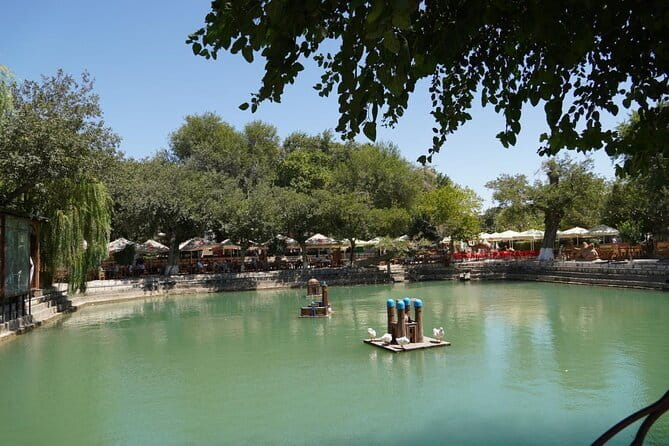
Mir-i-Arab Madrasa is another important stop, listed as a two-minute look-around with admission not included. The short time indicates that the guide will likely offer context and point out the key features rather than organize a full interior visit.
Placed alongside the Kalon Minaret and other madrasas, Mir-i-Arab helps form one of the most memorable clusters on the route. This is where the tour’s sequence makes sense: instead of treating each building as a separate attraction, you see how several major religious and educational sites occupy the same historic center.
The exact access available on the day may affect what you can see. Entrance fees are not included for this stop, so carry some local currency or confirm payment arrangements with Hamza. Since the tour price excludes all fees and taxes, the $55 should not be treated as the complete cost of every possible entry.
For you, the main benefit is efficiency. A single walk introduces several central buildings, then leaves you free to return to the ones that caught your attention most.
Magoki Attori and Bukhara’s Carpet Tradition
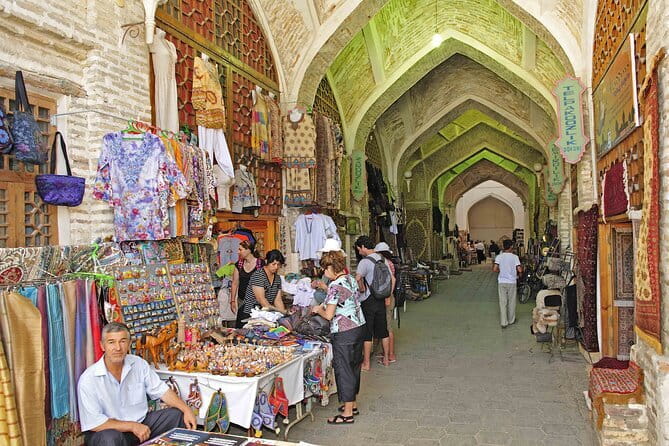
Magoki Attori deserves more attention than its short schedule suggests. The mosque and carpet museum offer a different angle on Bukhara, moving away from the largest monuments and toward the city’s religious and craft traditions.
The museum admission is not included. That is worth checking before you enter, especially if you are managing a tight daily budget. The tour price covers Hamza’s guide service, walking, support, and help with other bookings, but not coffee, tea, transport, entrance fees, or taxes.
A carpet museum can also be a useful place to ask practical questions about regional patterns and traditional production. The available details do not specify the museum’s collection or how long the visit lasts, so I would not book this tour solely for an extended carpet presentation. Think of it as one stop within a wider cultural walk.
Ending Near Ismail Samani Mausoleum and the Bazaar
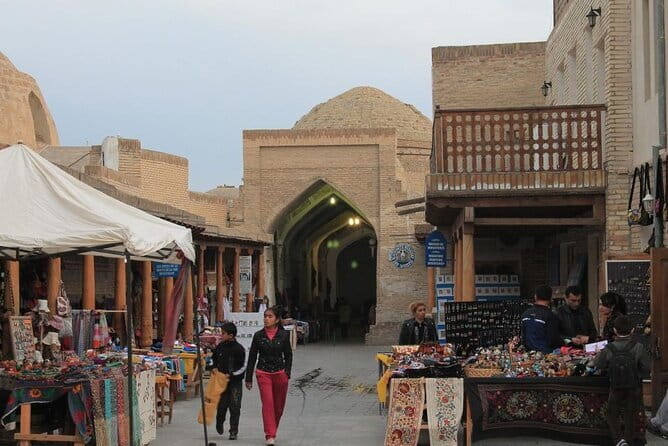
The walk ends near the Ismail Samani Mausoleum, close to a local bazaar. If the bazaar is open, you have time to explore it after the guided portion. This is one of the tour’s strongest practical features because the experience does not end at a monument with nothing else to do.
The bazaar gives you a chance to continue at your own pace. You can browse, look at local goods, or simply observe daily commerce after spending several hours with Bukhara’s formal landmarks. The information provided does not guarantee opening hours, so keep your plans flexible.
The mausoleum itself is the final area rather than a separately timed stop in the schedule. Do not assume that a full guided visit inside is included unless Hamza confirms it. The end point is near the bazaar, not necessarily at the exact center of every market activity, so use the map details provided when arranging your next stop.
I like ending here because it shifts the mood from monumental history to ordinary local life. It also gives you a useful place to continue exploring without immediately needing transport.
What the $55 Price Really Covers
At $55 per person, this is not a bare walking route. The price includes guide service, 24/7 support, help with other bookings, and assistance with other needs. For a first visit to Bukhara, that support can be useful, especially if you are arranging several activities or need help with local plans.
The group maximum is 10 people. That is small enough for a more personal conversation than a large coach tour, though it is not a private tour. If you want uninterrupted attention, confirm the group arrangement before booking.
The price does not include transport, drinks, entrance fees, or taxes. Since the tour is entirely on foot, the transport exclusion is less important than it would be on a citywide excursion. The extra entrance costs matter more if you plan to enter Magoki Attori’s carpet museum or other sites where admission is required.
You should also remember that the listed stop times are brief. The value comes from the route, historical explanation, and support rather than from long guided visits inside each building. If you want a broad introduction and a clear route through the old city, the price is easier to justify. If you want detailed access to every monument, you may prefer a private guide or separate entrance visits.
Who Will Enjoy This Walking Tour Most
This experience suits you if you enjoy history, architecture, and learning how a city fits together. The strongest feedback centers on Hamza’s explanations, his clear presentation, and the useful points about Central Asian history.
It is also a good match if you prefer walking to moving between sights by car. The route keeps you in the old city and ends near a bazaar, giving the day a more local finish.
You should think twice if you dislike a brisk schedule or need guaranteed indoor access at every stop. Several locations are listed for only two or five minutes, and admission is not included at some of them. The experience also requires good weather, and the final duration can change because it is a walking tour.
Comfortable shoes are sensible. The supplied details do not state an accessibility policy, but most participants can take part, and the walk is conducted on foot. If you have mobility concerns, ask for more detail before booking.
Free cancellation is available if you cancel at least 24 hours before the start time. A late cancellation is not refunded, and changes made within 24 hours are not accepted. Poor weather or failure to meet the minimum number of participants can lead to a different date or a full refund.
Should You Book It?
Book this tour if you want a compact introduction to Old Bukhara led by Hamza, with strong attention to Central Asian history and a route that includes both headline sights and a local bazaar.
The tour is particularly useful early in your stay. It can help you understand the old city before you return independently to the buildings you want to examine more slowly.
Skip it if your main goal is extensive time inside every monument, since the planned stops are short and some entrance fees are extra. For most visitors who want a well-organized walking overview, the balance of landmarks, history, local life, and personal support makes the $55 price reasonable.
FAQ
How long does the Bukhara walking tour last?
The tour lasts approximately three to four hours. The final duration can change because it is conducted entirely on foot.
Who leads the tour?
The experience is led by guide Hamza.
What sights are included?
The route includes Bolo Hauz Mosque, the Ark of Bukhara, the Great Minaret of the Kalon, Ulugbek Madrasa, Magoki Attori Mosque and carpet museum, Kosh Madrasah, Abdulaziz-Khan Madrasah, Mir-i-Arab Madrasa, and the area near the Ismail Samani Mausoleum.
Where does the tour begin?
The meeting point is Magoki Attori Mosque and the carpet museum at Mekhtar Anbar Street 55, Bukhara.
Where does the tour end?
The walk ends near the Ismail Samani Mausoleum, close to a local bazaar. You may have time to explore the bazaar if it is open.
Is transportation included?
No. This is a walking tour, and transport is not included.
Are entrance fees included?
Some admission is included, but the tour does not include all entrance fees. Magoki Attori Mosque and the carpet museum, Kosh Madrasah, Abdulaziz-Khan Madrasah, and Mir-i-Arab Madrasa are listed with admission not included.
How many people can join the tour?
The maximum group size is 10 people.
Can I cancel for a refund?
Yes. You can cancel up to 24 hours before the experience start time for a full refund. Cancellations or changes made less than 24 hours before the start time are not accepted for a refund.
Just added in Bukhara
- Bukhara in a Day History, Culture, and Local Insight Private Tour★ 5.0 · 4 reviews
- Full-Day Private Guided Tour to Islamic 7 Saints of Bukhara★ 4.5 · 3 reviews
- Bukhara Walking Tour★ 5.0 · 4 reviews
- 2 Day Ukhum Hiking Tour from Bukhara★ 5.0 · 4 reviews
- Uzbekistan 8 Days Private Guided Tour★ 4.6 · 3 reviews
- Bukhara: Full-Day Guided Tour with English-Speaking Guide★ 5.0 · 4 reviews
- 9 Days Private Guided Tour to Uzbekistan★ 5.0 · 3 reviews
- 2 – Days Guided Tour of Samarkand and Bukhara from Tashkent★ 5.0 · 5 reviews
Tours in Bukhara, compared.
All You Need To Know About Bukhara. A Walk In The Town
Read our review →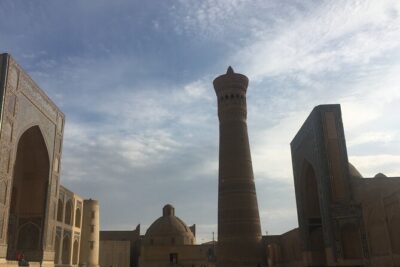
Bukhara Historical City Highlights Guided Walking Tour
Read our review →
Beyond the Walls: Countryside Tour with Transport and Lunch
Read our review →
Hiking tour to Hayat, Uhum and Asraf villages – 4 days
Read our review →Browse the lists this tour appears in