
Reviewed · TOURS IN BUKHARA
Bukhara: Full-Day Guided Tour with English-Speaking Guide
Bukhara’s best sights are packed into a walkable old center, and this private tour gives you the stories that turn handsome brickwork into a living Silk Road city. You’ll see the Samanid Mausoleum, the 47-meter Kalon Minaret, the Ark fortress, and the quiet pond at Lyabi Khauz.
I like the private format, since you can ask questions without keeping pace with a large group. I also like the practical side: guides such as Lola, Paris, and Malika have helped visitors understand local history, answer detailed questions, and find artisan workshops for quality scarves.
The main drawback is that this is a walking-heavy day, and the $80 price does not include entrance tickets, meals, or transportation with a driver. Historic surfaces, courtyards, and steps also make the tour unsuitable for wheelchair users and people with major mobility limitations.
Key points to know before you book
- The route covers Bukhara’s essential monuments: You visit the Samanid Mausoleum, Kalon Minaret, Poi Kalan Mosque, Magok-i-Attari Mosque, Ark fortress, Bolo Haouz Mosque, and Lyabi Khauz.
- You meet near Lyabi Khauz: The starting point is by the Hodja Nasreddin monument, and the tour returns there at the end.
- Your guide is the main added value: English and Russian are available, with named guides including Lola, Paris, and Malika appearing in the guide team’s past tours.
- Trading domes add a useful shopping stop: Tim Abdulla Khan Trading Dome connects Bukhara’s old commercial life with present-day handicrafts.
- Budget beyond the headline price: Entrance tickets, food, drinks, personal purchases, and transport with a driver are extra.
- Plan for sun and walking: Bring comfortable shoes, water, a hat, sunscreen, and a camera. Flash photography is not allowed inside the monuments.
Why Bukhara works so well on foot
Bukhara is one of those cities where the main sights are close enough to connect on foot, yet each building belongs to a different chapter. A good guide helps you see the difference between a mausoleum, a mosque, a minaret, a madrassa, a trading dome, and a royal fortress.
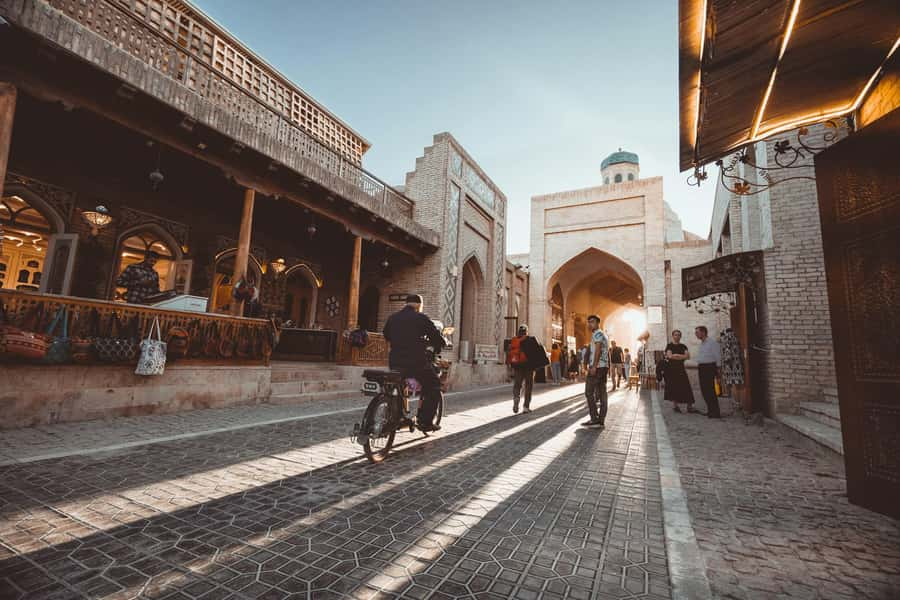
You begin at Lyabi Khauz, a natural place to orient yourself. The name refers to the area around a historic pond, one of the last surviving pools in the city. In earlier centuries, ponds supplied water and served as meeting points. Today, the plaza gives you a calm first look at Bukhara before the route moves into larger monuments and market streets.
Because the tour is private, you can ask for more detail where your interest lies. If brick patterns catch your eye, you can focus on construction. If Silk Road trade matters more to you, your guide can frame the domes and bazaars around commerce. That flexibility is more useful than a fast march from one photo stop to the next.
The exact duration is described as a full day, but no fixed number of hours is given. Expect a substantial outing with a moderate amount of walking, and keep some energy for the final stops. Bukhara’s summer sun can be strong, so water and sun protection are practical necessities rather than optional extras.
A few more things worth doing in Bukhara
- Best of Bukhara: All Day Private Old Town Tour
★ 5.0 · 66 reviews - Best of Bukhara: All Day Private Old Town Tour
★ 4.9 · 62 reviews - Bukhara Full Day Old City Private Tour
★ 5.0 · 46 reviews
Samanid Mausoleum and the art of brick
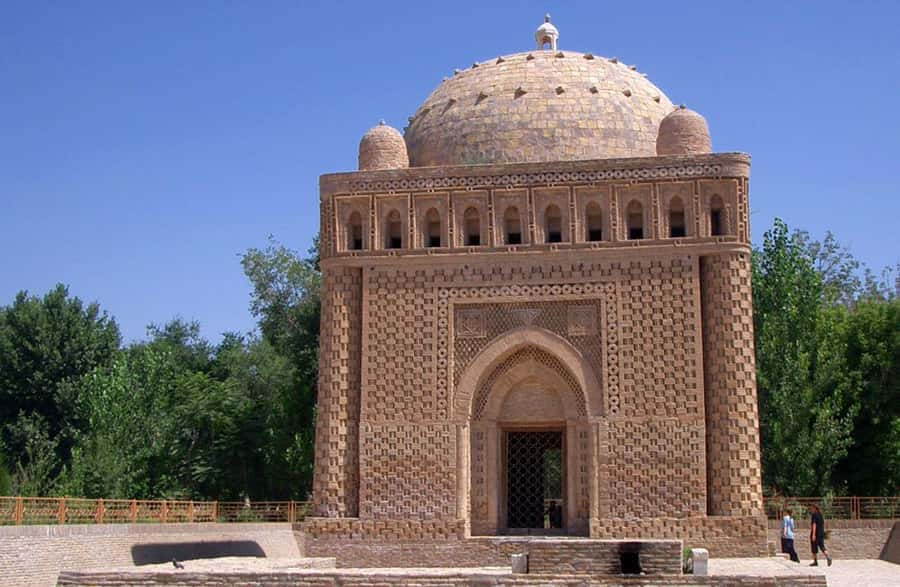
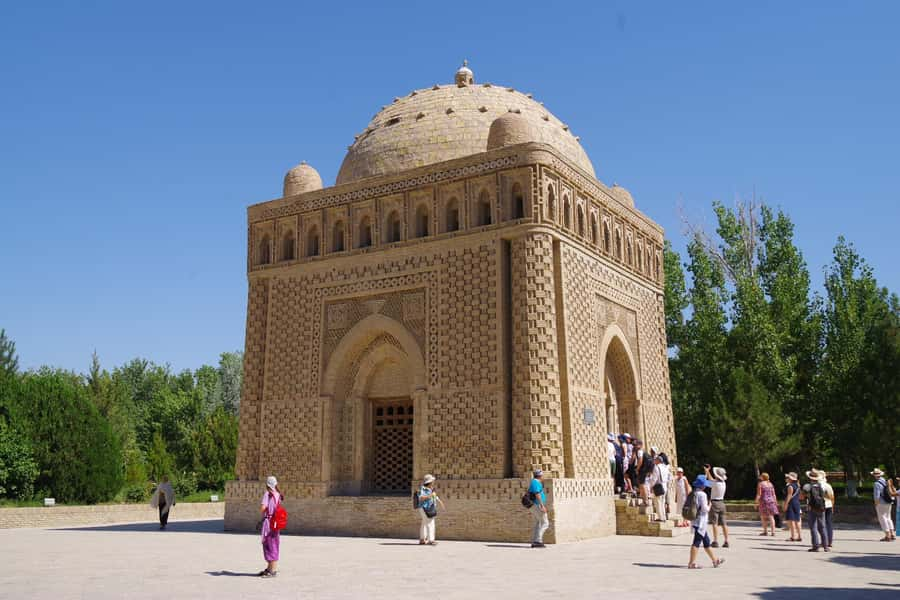
The Samanid Mausoleum is an excellent opening monument because it looks restrained beside Bukhara’s blue tile and grand courtyards. Built in the 10th century, it is connected with Ismail Samani, founder of the Samanid dynasty, and is regarded as one of the oldest major monuments in Central Asia.
The building’s power comes from its brickwork. Instead of relying on painted decoration, the design uses carefully placed bricks to create geometric patterns, shadow, and symmetry. From a distance, the mausoleum seems simple. As you move around it, the surface reveals more detail.
I find this stop valuable because it shows an early stage of Central Asian Islamic architecture. Later buildings on the tour use brilliant tile, towering entrances, and larger religious spaces. Here, the character is quieter and more intimate.
Take your time looking at the corners, arches, and repeated brick patterns. This is one place where a guide’s explanation adds real value. Without context, you may see an attractive square building. With context, you can appreciate how much design has been achieved with one basic material.
Kalon Minaret and the Poi Kalan Mosque
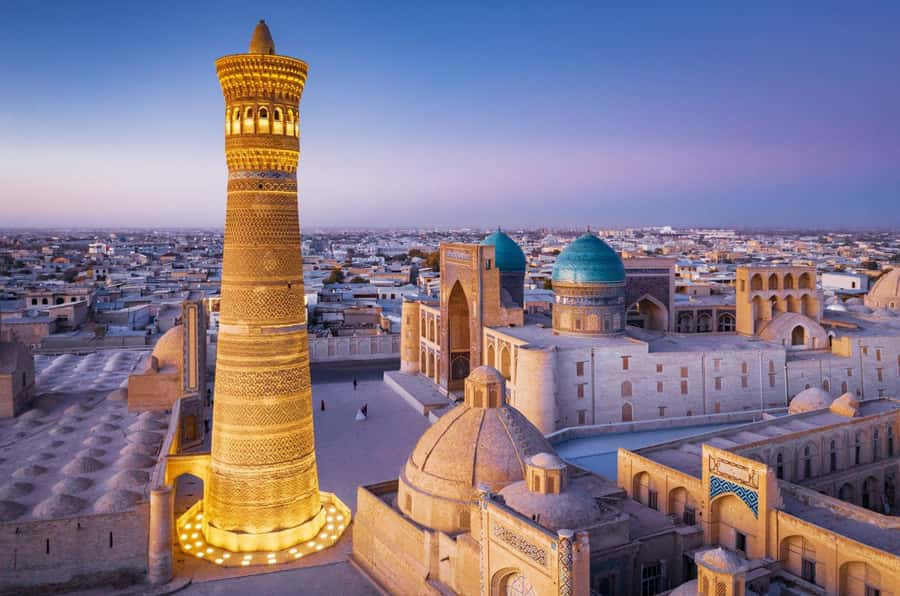
The Kalon Minaret is the tour’s most recognizable landmark. Rising 47 meters, it has guided Silk Road caravans toward Bukhara since the 12th century and has survived invasions that destroyed or changed many other structures.
The minaret is not merely a tall object for photographs. Its height made it a visual marker across the city, while its decorated brick surface shows the skill of medieval builders. Your guide will explain its place in Bukhara’s religious and commercial life, as well as the engineering behind its survival.
Nearby, the Poi Kalan Mosque gives you scale. The mosque can hold up to 10,000 worshippers, and its broad courtyard makes the minaret seem part of a much larger religious setting. Look for the blue-tiled domes, the mihrab, and the relationship between open space and enclosed prayer areas.
This portion of the route can feel visually busy, especially when several important buildings appear within a short walk. That is another reason the private setup helps. You can stop for photographs, ask about tile patterns, or simply sit for a moment rather than being hurried onward.
Food and drinks are not allowed inside the monuments, so plan your meals around the sightseeing. The tour information does not include lunch, and you should not expect a meal stop to be part of the $80 price.
Magok-i-Attari Mosque and layered belief
Magok-i-Attari Mosque is one of the most unusual stops because its story reaches back before the building became a mosque. It was originally a Zoroastrian temple and later became a mosque in the 12th century.
The lower position and underground entrance give the building a different feel from the open grandeur of Poi Kalan. You can see how Bukhara developed over time, with newer streets and structures rising around older foundations. This is not just a stop for religious architecture. It is a lesson in how sacred sites can change use while remaining part of a city’s memory.
Your guide can explain the building’s religious and cultural changes, which may be difficult to understand from the exterior alone. The entrance and surrounding area also require care underfoot, so comfortable shoes matter.
Photography is allowed, but flash photography is not permitted inside the monuments. Keep your camera ready for details, but follow the site rules and avoid using flash in enclosed interiors.
Same city, a different kind of day:
- City Tour Around Bukhara
★ 5.0 · 55 reviews - Yurt Camp Tour with Night from Bukhara
★ 3.8 · 35 reviews - All You Need To Know About Bukhara. A Walk In The Town
★ 4.9 · 31 reviews - One-Day Private Tour in the Old Town of Bukhara
★ 5.0 · 24 reviews
Tim Abdulla Khan Trading Dome and present-day crafts
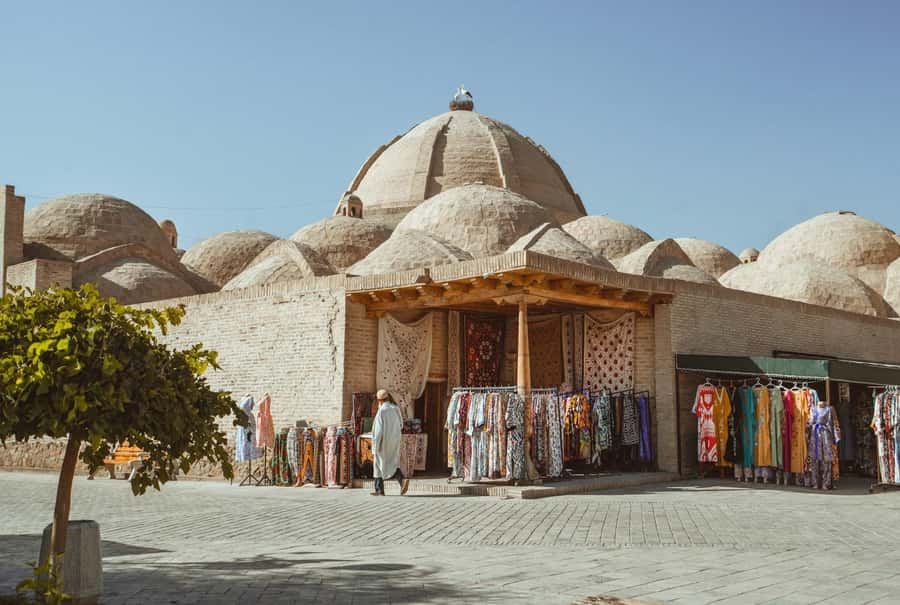
The Tim Abdulla Khan Trading Dome brings the Silk Road from grand history down to ordinary commerce. Covered market structures like this once protected sellers and buyers from the sun while connecting different trades within Bukhara’s city center.
Your guide will explain how the dome fit into Silk Road commerce. You also have time to browse local handicrafts, which makes this stop more than a quick history lecture. It gives you a chance to see how traditional production remains part of the city’s identity.
One practical tip is to wait until this guided visit before buying scarves if that is on your list. Malika has taken visitors to artisan workshops where higher-quality products are available. You should still compare prices and buy only what you genuinely want, but local guidance can help you understand what you are looking at.
Shopping can be the least predictable part of a guided cultural tour. Some people enjoy meeting makers and browsing textiles. Others prefer monuments and may find sales conversations distracting. Since the tour is private, you can tell your guide how much time you want to spend in the trading dome.
The Ark of Bukhara, a fortress with a political past
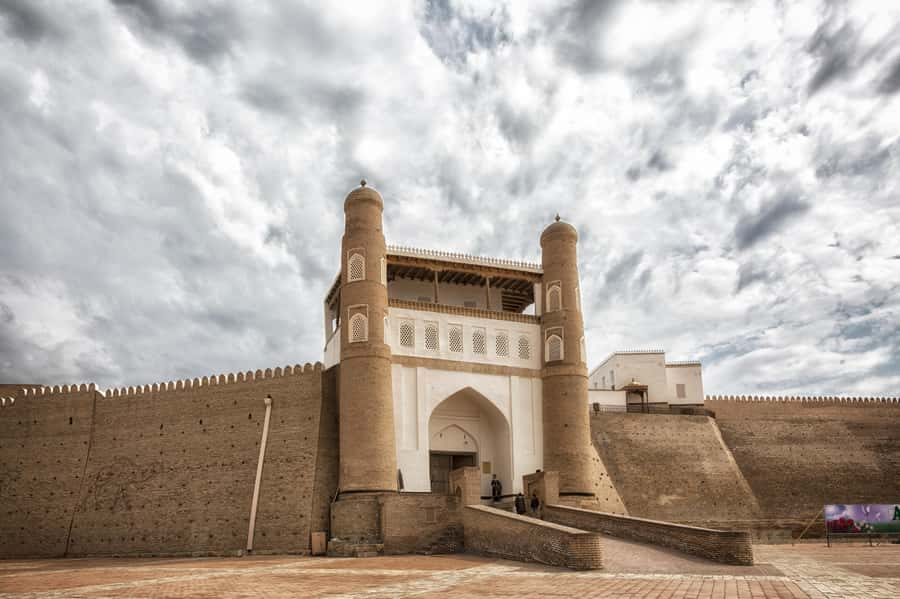
The Ark is the largest and most imposing structure on the itinerary. Dating back to the 5th century, it served as the royal residence of Bukhara’s rulers and functioned as a center of defense and government.
The massive walls make the purpose clear. This was not simply a palace designed for display. It was a fortified seat of power, with courtyards and chambers supporting the ruler’s household, administration, and security.
Inside, your guide will connect the rooms and walls with Bukhara’s political past. The value of this stop lies in seeing how the city was governed, not just how people worshipped or traded. After the mausoleum, mosque, and market, the Ark adds the missing side of urban life: authority.
The site is another reason to wear practical shoes. The tour includes a moderate amount of walking, and old fortifications can involve uneven surfaces. The information provided does not promise a fully accessible route, and the tour is specifically not suitable for wheelchair users or people with significant mobility impairments.
Bolo Haouz Mosque and a quieter change of pace
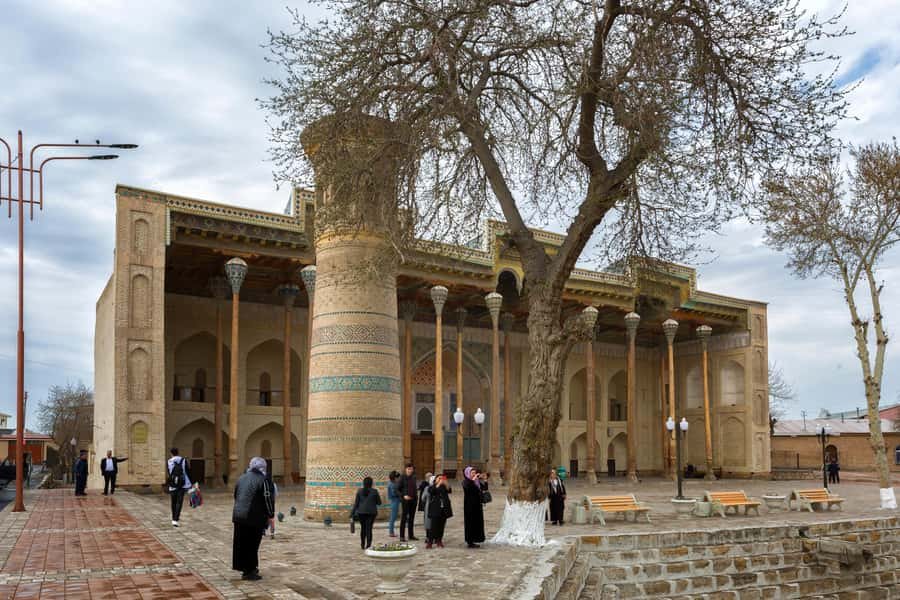
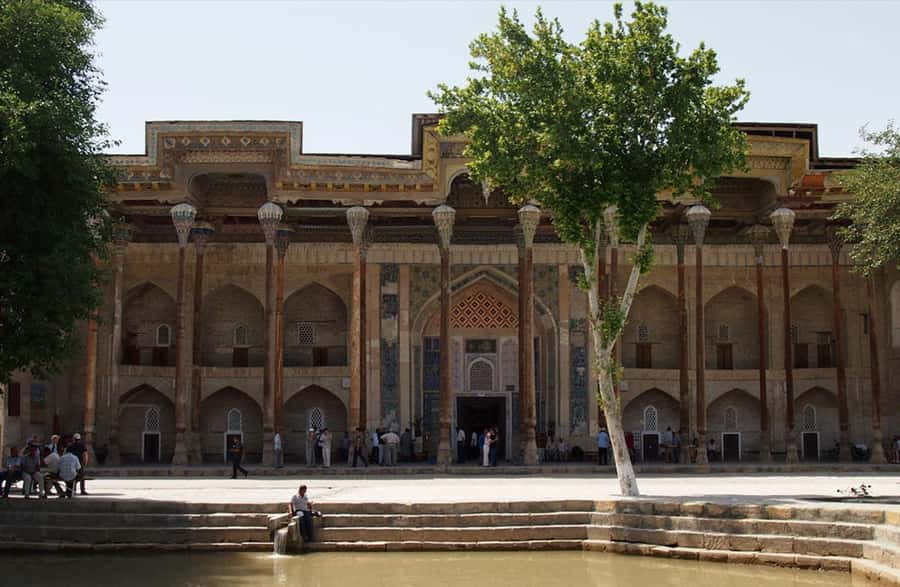
Bolo Haouz Mosque offers a welcome shift after the scale of the Ark. Built in the early 18th century, it was the official place of worship for the Emir of Bukhara.
Its most memorable feature is the row of elegant wooden columns. These create a graceful entrance and show a different side of local craftsmanship than the brick patterns at the Samanid Mausoleum or the blue tiles around Poi Kalan.
I like having this mosque later in the day because it gives the route a slower rhythm. You can focus on woodwork, proportion, and atmosphere rather than trying to take in another huge complex. Your guide can also explain how the mosque related to the emir’s public and religious role.
As with the other sacred sites, modest, respectful behavior is appropriate. Food and drinks are not allowed inside the monuments, and flash photography is prohibited.
Ending at Lyabi Khauz
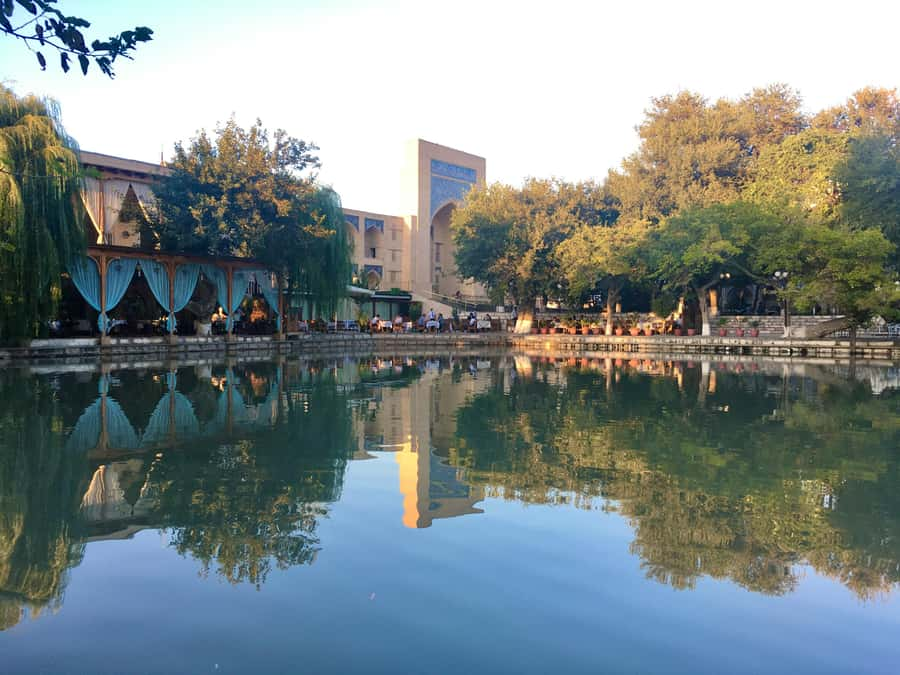
The tour returns to Lyabi Khauz, where the pond, madrassas, tea houses, and shaded public space offer a gentle finish. This is more than a scenic plaza. It was a center of social life during Bukhara’s great trading years, and its setting helps you picture how people met, rested, and exchanged news.
Ending where you began is convenient. You do not need to arrange a separate pickup from an unfamiliar part of town, and the area is a sensible place to continue your evening after the guide leaves.
The plaza also gives you time to sort through the day. You have seen early dynastic architecture, major Islamic monuments, market buildings, royal defenses, and a working social center. That range is the strongest reason to choose this tour instead of visiting only the Kalon complex.
The meeting point is near the Hodja Nasreddin monument. Check that detail carefully when arranging your morning, since the experience starts there and ends back at the same point.
What the $80 price really covers
At $80 per person, this is a private guided experience rather than a bare sightseeing walk. The price includes a certified English-speaking guide, with Russian also available, plus route planning and practical suggestions during the day.
The main value is interpretation. Bukhara’s monuments are impressive on their own, but the differences between Samanid, religious, commercial, and royal buildings become much clearer with a guide beside you. A private guide also lets you ask about details that interest you, rather than listening to a fixed script.
You should budget separately for entrance tickets, meals, drinks, personal expenses, and transportation during the tour with a driver. The activity does not include accommodation or train and flight tickets. Since ticket costs are paid on the spot, carry enough local payment funds for the sites you enter.
The price is easier to justify if you want a full day of structure and explanation. It is less attractive if you only want to photograph the Kalon Minaret and wander independently. In that case, you may prefer to explore at your own pace and pay only for selected entrances.
Who should book this Bukhara tour?
I would choose this tour if you have one full day in Bukhara and want the city’s major sights explained in a clear order. It suits first-time visitors, history fans, architecture enthusiasts, and anyone who prefers asking questions to a guide rather than reading signs.
It also works well for couples, families with older children, or small private parties who want control over the pace. Guides such as Lola, Paris, and Malika have offered strong English communication, personal warmth, and useful answers, though the specific guide assigned to you is not guaranteed.
You should think twice if walking on historic surfaces is difficult, if you need wheelchair access, or if you dislike visiting markets and artisan workshops. You should also allow for extra spending, since tickets, meals, transport, and purchases are outside the price.
The booking terms are flexible: you can reserve now and pay later, and cancellation is allowed up to 24 hours in advance for a full refund. That is useful when your Uzbekistan plans depend on train schedules or changing weather.
Should you book it?
Book this tour if you want Bukhara explained as a complete city, not just a collection of photogenic buildings. The route connects dynastic power, religious life, trade, craftsmanship, and public space in one well-organized day.
The strongest reasons to book are the private format, the range of major sights, and the chance to receive practical help with local crafts. The main cautions are the walking, additional entrance costs, and lack of included transport or meals.
If your guide is Lola, Paris, or Malika, you can expect clear English and plenty of room for questions based on their past work. Even without knowing the assigned guide in advance, this is a sound choice for visitors who want context, structure, and a useful introduction to Bukhara.
FAQ
Where does the Bukhara tour start?
The tour starts at Lyabi Khauz, near the Hodja Nasreddin monument.
Where does the tour end?
The activity ends back at the original meeting point.
How much does the tour cost?
The listed price is $80 per person.
Is the tour private?
Yes. A private tour is included.
Which languages are available?
The tour is available in English and Russian.
Is an English-speaking guide included?
Yes. A certified English-speaking guide is included.
Are entrance tickets included?
No. Entrance tickets are not included and can be paid for on the spot.
Are meals and drinks included?
No. Meals and beverages are not included. Food and drinks are also not allowed inside the monuments.
What should I bring?
Bring comfortable walking shoes, a hat, sunscreen, water, and a camera.
Is the tour suitable for wheelchair users?
No. The tour is not suitable for wheelchair users or people with significant mobility impairments because of the historic sites and walking involved.
Just added in Bukhara
- Bukhara in a Day History, Culture, and Local Insight Private Tour★ 5.0 · 4 reviews
- Full-Day Private Guided Tour to Islamic 7 Saints of Bukhara★ 4.5 · 3 reviews
- Bukhara Walking Tour★ 5.0 · 4 reviews
- A Complete Chapter To Old Bukhara★ 5.0 · 5 reviews
- 2 Day Ukhum Hiking Tour from Bukhara★ 5.0 · 4 reviews
- Uzbekistan 8 Days Private Guided Tour★ 4.6 · 3 reviews
- 9 Days Private Guided Tour to Uzbekistan★ 5.0 · 3 reviews
- 2 – Days Guided Tour of Samarkand and Bukhara from Tashkent★ 5.0 · 5 reviews
Tours in Bukhara, compared.
All You Need To Know About Bukhara. A Walk In The Town
Read our review →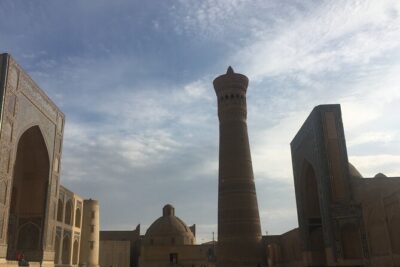
Bukhara Historical City Highlights Guided Walking Tour
Read our review →
Beyond the Walls: Countryside Tour with Transport and Lunch
Read our review →
Hiking tour to Hayat, Uhum and Asraf villages – 4 days
Read our review →Browse the lists this tour appears in