
Reviewed · COOKING CLASSES
Legends and Crafts: Suzani Masterclass & Cultural Immersion
The best part of this Tashkent experience is that you do not just look at Uzbek crafts. You try Suzani embroidery yourself, then sit down to a full meal of plov, bread, salads, and tea. The craft gives you a better feel for the patience behind the beautiful textiles sold across Uzbekistan.
I like the personal scale and the strong cultural thread. Guide Yusuf is praised for his clear English, humor, and warm manner, while Yusuf and Yulia have also helped visitors understand modern Uzbek life alongside old customs. The main consideration is time: the workshop is a small introduction, not a serious course, and the restaurant stop can feel long if you have already eaten plenty of plov.
Key points at a glance
- Create your own Suzani: Learn basic embroidery stitches and take home a small piece with symbolic meaning.
- Meet Uzbek craft traditions: See textiles, dolls, jewelry, metalwork, and ceramics linked to regional customs.
- Hear Silk Road stories: Learn why Uzbek cloth and crafted goods mattered along the route between Asia and Europe.
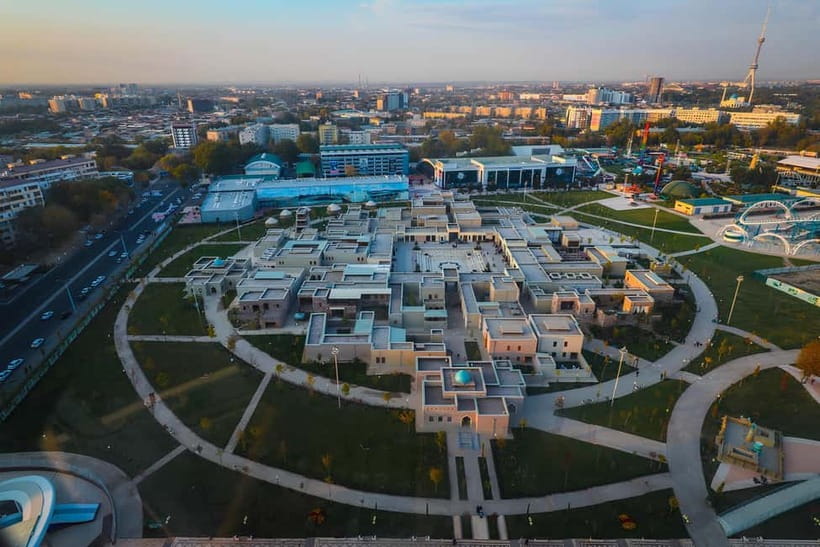
- Visit Navruz Park: Spend about an hour with a guide among cultural displays, legends, and traditional arts.
- Eat a full Uzbek meal: Expect non bread, salads, palov, green tea, and water in a garden setting.
- Book it early in your trip: It offers useful advice about textiles, pottery, food, and prices before you start shopping.
Why making Suzani changes the way you see Uzbek craft
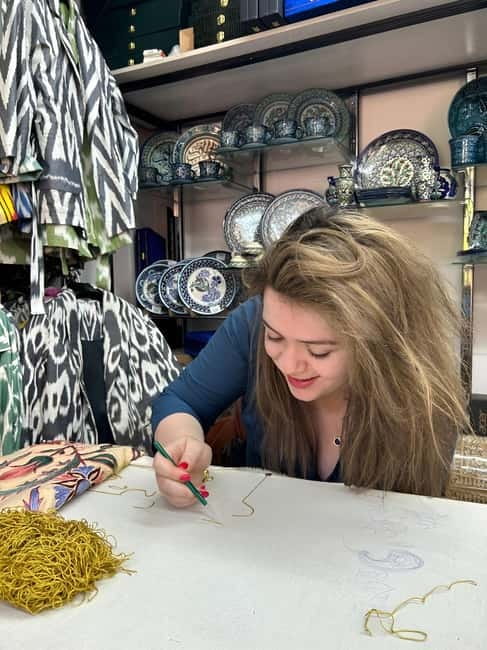
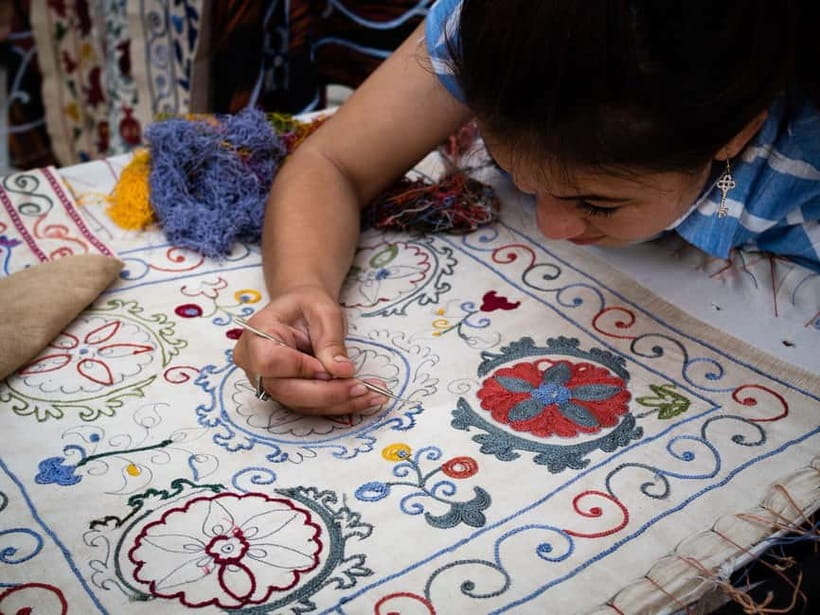
Suzani is not simply a decorative cloth to admire in a shop. It is embroidered by hand, often with designs connected to protection, good fortune, and family traditions. When you make even a small piece, you quickly see how much time and care go into the finished textiles displayed around Uzbekistan.
The class teaches basic stitches and designs under the care of local artisans. You should not expect to produce a large wall hanging in an hour. The useful point is the experience of trying the work yourself, making a few careful marks, and taking home something personal rather than another factory-made souvenir.
I like this part because it gives meaning to later shopping. Afterward, you can look at a large embroidered textile with a better sense of the labor involved. You may also become more patient about comparing quality, pattern, fabric, and price.
The designs carry cultural ideas, including symbols intended to keep away evil spirits or bring blessings. The guide explains these meanings as part of the wider story of Uzbek life. Some of the details connect the craft to family customs, regional styles, and old beliefs that continue in adapted form today.
More cooking with locals in Tashkent:
- Tashkent: Cultural Exploration & Pottery Masterclass
★ 5.0 · 24 reviews - Tashkent: Uzbek Culture, Food, Crafts & Pottery Masterclass
★ 5.0 · 24 reviews - Plov and Samsa Cooking Class in Tashkent
★ 4.3 · 6 reviews
Starting at Navruz Park with Silk Road stories
The experience begins with pickup in Tashkent, followed by a guided visit to Navruz Park. The cultural exploration lasts about an hour, giving you a broad introduction before the hands-on class begins.
The Silk Road section helps place Uzbek craft in a wider setting. Uzbekistan sat along important trade routes linking Asia and Europe, and goods such as textiles, ceramics, metalwork, and jewelry traveled because they were useful, beautiful, and often tied to ideas of blessing and good fortune.
This is not a museum lecture built around dates and names. The focus is on how objects were made and why people cared about them. You learn how cloth could signal regional identity, how ceramic work became valuable, and how ornament could carry a protective meaning.
You also look at different textile styles, including ikat and embroidery. Ikat is especially useful to see in context because its blurred, layered patterns can look very different from the neat stitching of Suzani. The guide helps you distinguish the techniques and understand that Uzbek textile traditions are not all one style.
Uzbek dolls, jewelry, and metalwork
One unusual part of the cultural visit is an Uzbek doll store. The dolls represent different parts of the country, with clothing and details tied to regional legends and superstitions.
This gives you a simple way to see how local identity works. Clothing is not just decoration. It can point to a place, a custom, or a story. The dolls are also a practical stop for anyone interested in small souvenirs, though the main value here is the explanation rather than the shopping.
The visit also covers jewelry and metalwork. Traditional designs were often linked to protection and good luck, so an ornament could carry a meaning beyond its material value. The guide connects these objects with long-held beliefs, including the idea that certain forms or decorations could guard the wearer.
You will also hear about the effect of globalization. Uzbek makers now balance inherited designs with modern tastes and changing markets. That tension is worth understanding before you shop. A contemporary version of a traditional pattern is not automatically inauthentic, and an old-looking object is not automatically handmade. The conversation helps you ask better questions.
The workshop: a useful hour with a real souvenir
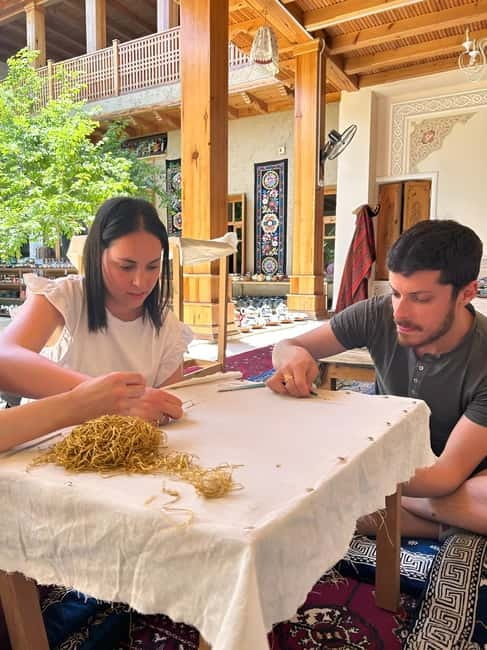
After the park, you move to the craft workshop, described as a quieter local setting away from the main sightseeing route. The embroidery session lasts about one to one and a half hours.
The artisans explain the basic process, then guide you as you work on a small piece. Expect instruction and encouragement rather than a formal exam. You can ask questions, try the stitches, and see how small changes affect the shape and finish.
The class is suitable for beginners because the goal is participation. Several visitors have found the work harder than expected, which is exactly the point. Suzani looks effortless when a finished panel hangs on a wall. Your own uneven stitches show how much practice sits behind a polished piece.
Do not worry about artistic ability. The guides and artisans are patient, and the souvenir matters because you made it. The final piece will not replace a professional Suzani, but it will carry a stronger connection to your time in Uzbekistan.
I would allow yourself to slow down here. This is not the moment to rush because you want more sightseeing. The value comes from the quiet concentration and from talking with the artisans about what the designs mean.
Same city, a different kind of day:
- Best of Tashkent Mountains: Amirsoy, Chimgan & Charvak Trip
★ 4.8 · 567 reviews - Samarkand One Day Tour – Departure From Tashkent
★ 5.0 · 313 reviews - Tashkent City Tour
★ 5.0 · 121 reviews - Amirsoy, Chimgan & Charvak Full-Day Adventure
★ 4.9 · 82 reviews
A full Uzbek meal, not just a tasting
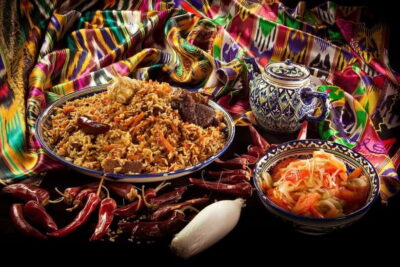
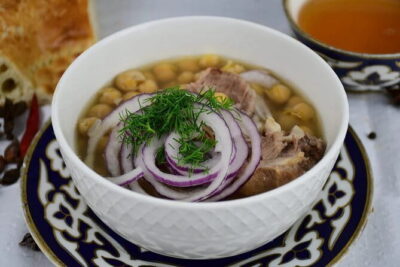
The final section is a traditional meal in a calm garden setting. The menu includes freshly baked non bread, Shakarob, Kuzchi Kayfiyat Salad, a choice or variety of Uzbek palov, green tea, and water. Additional side dishes can be ordered for an extra charge.
Palov, also called plov, is the main event: rice with lamb, carrots, and raisins. It is one of the dishes most closely tied to Uzbek food culture, and the meal treats it as part of the story rather than a quick plate at the end of a tour.
The guide explains the cultural background of the dishes and how food fits into Uzbek hospitality. That makes the meal more useful than a standard restaurant stop, especially if you are still learning how Uzbek cuisine differs from the food you know at home.
This is also the place to manage expectations. If you have already eaten palov several times, you may want to ask about alternatives. On one occasion, Yusuf adjusted the restaurant plan so a visitor could try different dishes instead of repeating plov. Flexibility is possible, but you should discuss food preferences in advance.
The meal takes about 45 minutes to an hour. It is a full course, not a snack, so plan accordingly if you have evening reservations or a tightly packed sightseeing schedule.
What Yusuf and Yulia add to the experience
The guides are a major part of the activity. Yusuf is repeatedly described as warm, funny, patient, and easy to understand in English. He answers many questions, shares practical advice for the rest of an Uzbekistan trip, and explains both older customs and present-day life in Tashkent.
Yulia, also written as Julia in some booking details, has led departures with Yusuf. She is described as having strong English and a real interest in the country. Together, the guides can make the tour feel more like a conversation than a scripted walk.
That matters because craft traditions can become dry if they are presented as a list of objects. A good guide connects the object to daily life, belief, family, and trade. Here, the conversation ranges from textile quality and pottery prices to museum displays and local food.
The small private-group format also helps. You can ask why one pattern differs from another, stop longer at a display, or explain that you have already eaten a particular dish. A large group would make the craft class less personal and the meal less flexible.
How much value do you get for $90?
At $90 per person, this is not the cheapest way to spend three hours in Tashkent. You are paying for a private experience, hotel pickup when arranged, a live guide, craft materials, instruction, a take-home embroidery, and a full traditional meal.
The value is strongest if you would otherwise book separate activities. A standard park visit might show you objects without letting you work with them. A restaurant meal would feed you but not explain the legends behind the food or crafts. This experience ties the parts together.
The price also makes more sense for people who want cultural context rather than a quick photo stop. You receive guidance on textiles, pottery, jewelry, dolls, and metalwork, then get a practical lesson in Suzani. If you are planning to buy Uzbek crafts later, that background can help you judge workmanship and ask more informed questions.
The value is weaker if you want a serious embroidery course, a long museum visit, or a full-day tour. The schedule moves through several subjects in three to three and a half hours. You get a broad introduction, not an exhaustive study of Uzbek craft.
Timing, pickup, and languages
The tour begins in Tashkent, with Navruz Park followed by the workshop and restaurant. Hotel pickup is available, but confirm the arrangement after booking and send the local guide a message through WhatsApp as requested. The pickup instructions say to wait in the hotel lobby five minutes before the scheduled time, with the driver holding a sign with your last name.
The activity runs in English, Polish, Russian, or Uzbek. English-language departures have been especially useful for visitors who want detailed explanations and practical conversation.
The schedule is listed as three to three and a half hours. Allow extra time around that window if you have a fixed appointment afterward. The meal can take close to an hour, and a private tour may adjust its pace when questions or food preferences require it.
Free cancellation is available up to 24 hours before the activity for a full refund. You can also reserve and pay later, which helps if your Tashkent plans are still shifting.
Who should book this craft experience?
I would choose this for a first or second day in Uzbekistan. It gives you a quick grounding in local customs and helps you understand the things you will see in bazaars, museums, restaurants, and craft shops.
It suits you especially well if you:
- Like making something with your hands
- Want a personal souvenir rather than a simple purchase
- Care about the meaning behind patterns and objects
- Enjoy asking questions in a private setting
- Want an introduction to Uzbek food and palov
- Are curious about how old traditions adapt to modern life
Families and couples may also appreciate the private format, though the activity is not described with a specific age range or accessibility details. If embroidery is not your interest, the park visit and meal still offer value, but you should know that the workshop is a central part of the experience.
Small drawbacks to consider before booking
The broad scope is both a strength and a limitation. In one short outing, you cover Silk Road trade, textiles, dolls, jewelry, metalwork, globalization, embroidery, and food. That gives you useful context, but no single topic receives a long academic treatment.
The embroidery class can also expose a gap between expectation and reality. You make a small item, not a large finished Suzani. If you are looking for advanced instruction, this will feel introductory.
Finally, the meal centers on plov. It is an important Uzbek dish and a good cultural match for the tour, but repeat visitors may want another regional option. Tell Yusuf or the local guide in advance if you have already eaten a lot of palov or need a different meal.
Should you book Legends and Crafts?
Book it if you want a warm, personal introduction to Uzbekistan that combines conversation, craft, and food. The strongest reasons are the private format, Yusuf and Yulia’s attentive guiding, the chance to try Suzani rather than simply photograph it, and the practical cultural advice you receive early in your trip.
Skip it if you want a specialist textile course, a long museum visit, or a low-cost meal tour. For most first-time visitors to Tashkent, though, $90 buys more than a few hours of sightseeing. It gives you a better eye for Uzbek craftsmanship and a small handmade reminder of your time in the country.
FAQ
How long does the Suzani and cultural experience last?
The activity lasts about three to three and a half hours. The cultural visit takes about an hour, the Suzani workshop takes one to one and a half hours, and the meal takes about 45 minutes to an hour.
Where does the experience begin?
The experience begins with pickup in Tashkent, followed by a guided visit to Navruz Park.
Is hotel pickup included?
Hotel pickup is available. After booking, you should message the local guide through WhatsApp and wait in your hotel lobby five minutes before the scheduled pickup time.
Which languages are available?
The live tour guide can lead the experience in English, Polish, Russian, or Uzbek.
What food is included?
The meal includes non bread, Shakarob, Kuzchi Kayfiyat Salad, traditional Uzbek palov with rice, lamb, carrots, and raisins, plus unlimited green tea and water.
Do I take home the embroidery I make?
Yes. The small Suzani embroidery you create during the workshop is included as a take-home souvenir.
Can I cancel for a full refund?
Yes. You can cancel up to 24 hours in advance for a full refund. You can also reserve the activity and pay later.
Just added in Tashkent
- Fergana One Day Tour From Tashkent★ 3.4 · 8 reviews
- Tashkent City Highlights Guided Walking Tour★ 5.0 · 6 reviews
- Discover Uzbekistan – explore top destinations: Samarkand, Bukhara & Tashkent★ 4.5 · 6 reviews
- Tashkent Chimgan Mountains, Charvak Reservoir and Amirsoy Resort★ 5.0 · 6 reviews
- Ten Bites Adventure Food Tour in Tashkent★ 5.0 · 6 reviews
- Tashkent Private Full-Day City Tour on a Premium Car★ 5.0 · 6 reviews
- From Tashkent: Uzbekistan Private 6-Day Tour★ 5.0 · 6 reviews
- Plov and Samsa Cooking Class in Tashkent★ 4.3 · 6 reviews
Cooking Classes, compared.
Village Tour with Plov Cooking Class & Home Visit
Read our review →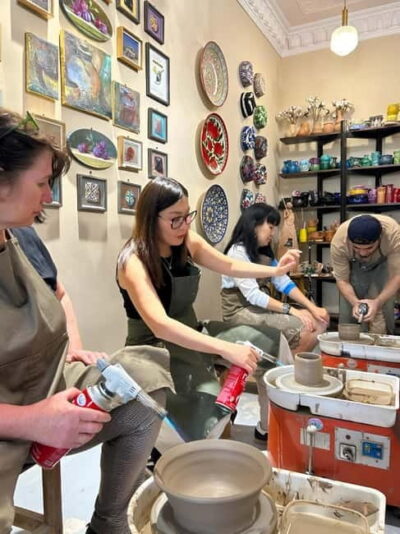
Uzbek Culture, Food, Crafts & Pottery Masterclass
Read our review →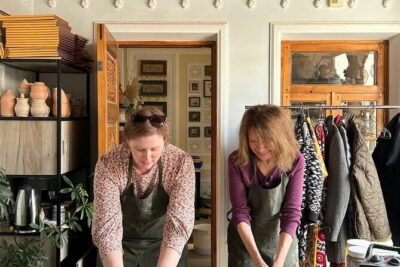
Cooking class in Samarkand with local life experience
Read our review →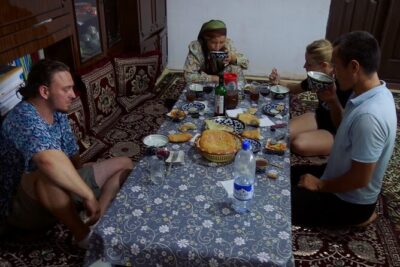
Private Samarkand Cooking Class with Market Tour & Transfers
Read our review →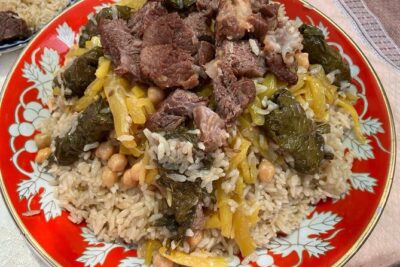
Cooking Class in the Village with Local Family in Samarkand
Read our review →
Browse the lists this tour appears in