
Reviewed · COOKING CLASSES
Tashkent: Uzbek Culture, Food, Crafts & Pottery Masterclass
The best part of this Tashkent experience is that you do not just look at Uzbek craft. You make something yourself. A local master potter helps you prepare clay, shape a bowl or other piece, smooth it, and add patterns. Guides such as Yusuf and Julia also explain the Silk Road, wedding customs, textiles, dolls, ceramics, and everyday Uzbek life.
I like two things right away: the mix of culture and food, and the relaxed private-group format. You get a guided look at craft traditions, help with bargaining in the shops, a hands-on workshop, and a generous Uzbek meal with plov and green tea. The main consideration is that your pottery is not ready to take home that day. It must dry and be fired, and shipping costs extra.
Key points to know
- Pottery you actually make: Choose a piece, work with clay, shape it by wheel or hand, then smooth and decorate it with an artisan nearby.
- A useful introduction to Uzbek culture: The tour covers Silk Road trade, silk, Suzani embroidery, dolls, ceramics, superstitions, household customs, and weddings.
- Guides who add a personal touch: Yusuf and Julia are frequently involved, with tours offered in English, Russian, Polish, or Uzbek.
- Plov finishes the outing: The included meal features non bread, salads, traditional rice with lamb, carrots, and raisins, plus unlimited green tea and water.
- Shopping help is part of the experience: Your guide can help bargain for textiles, ceramics, dolls, and other local crafts.
- Plan around the finished pottery: Firing can take up to a week, and the piece may take about two weeks to be ready for collection.
Why this pottery and food experience works in Tashkent
Tashkent has grand avenues, museums, markets, and Soviet-era buildings, but craft can be harder to understand from a display case. This outing gives you a way into that world. You see objects, hear the stories behind them, and then try the work yourself.
The tour costs $85 per person and lasts about three and a half hours. For that price, you get transport from Tashkent to the workshop, a private guided cultural tour, materials, artisan instruction, and lunch. That makes it good value if you want more than a standard city walk.
I would not choose it only as a quick sightseeing transfer. The pottery needs patience, and the full experience works best when you allow the afternoon to unfold at its own pace. You are paying for access to local makers, personal guidance, and conversation as much as for the meal and finished object.
The group is private, which matters here. Pottery is easier when you can ask for help without feeling rushed by a large crowd. It also gives your guide room to tailor the cultural discussion to your interests, from textiles and family customs to the practical side of buying crafts.
More cooking with locals in Tashkent:
- Tashkent: Cultural Exploration & Pottery Masterclass
★ 5.0 · 24 reviews - Legends and Crafts: Suzani Masterclass & Cultural Immersion
★ 5.0 · 11 reviews - Plov and Samsa Cooking Class in Tashkent
★ 4.3 · 6 reviews
The first hour, Silk Road crafts and Uzbek customs
The opening cultural section lasts about an hour. It explains why Uzbekistan became such an important meeting point along the ancient Silk Road. Trade brought people, designs, techniques, and beliefs across Central Asia, and local crafts developed through that steady exchange.
You learn about textiles and silk production, including the role of woven and embroidered fabrics in Uzbek life. Suzani embroidery receives special attention. These large embroidered textiles are tied to family traditions and have long been connected with household decoration, dowries, and celebrations.
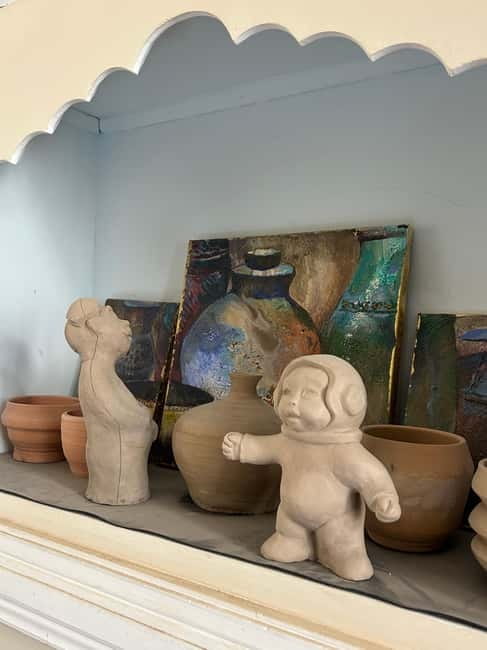
The discussion also covers handmade dolls dressed in regional clothing. This is a good detail for shoppers because a doll is not just a decorative souvenir. Its clothing can point to local dress traditions and differences between regions.
The tour also looks at tribal craft differences, ceramics, and pottery. You may hear about local superstitions, household traditions, and wedding customs, subjects that help explain why certain objects are made and when they are used.
That is what makes this portion useful. You are not only memorizing craft names. You are learning how objects fit into family life, ceremony, belief, and trade.
Guides bring a personal angle to these subjects. Yusuf is described as warm, funny, and full of stories about Uzbek culture. Julia has also shared her experience of joining an Uzbek family and adjusting to local customs. The guides may vary, but the format is designed to feel like a conversation rather than a lecture.
Shopping with a guide who knows when to bargain
Shopping is built into the cultural visit, but you are not pushed to buy anything. You might see textiles, ceramics, handmade dolls, or other craft items, and your guide can help with bargaining.
That help is valuable if you are unfamiliar with local prices or do not speak the language. Bargaining can be part of the fun in Uzbek markets, but it is easy to pay too much or feel awkward when you do not know the usual rhythm. Having a local guide handle or support the negotiation lets you concentrate on the objects.
Keep your expectations sensible. This is not described as a major shopping tour with unlimited market time. The point is to understand the work and buy something if it appeals to you. I would bring a little extra money if you like textiles, pottery, or dolls, but the shopping is optional and separate from the $85 price.
Your guide may also help explain why a piece looks the way it does. A pattern, fabric, or painted design can carry local meaning, and that context makes a small purchase more memorable than an unmarked souvenir from a shop shelf.
At the pottery workshop, beginners get real control
The pottery class lasts roughly one to one and a half hours, with the activity schedule giving it about 75 minutes. This is the heart of the outing.
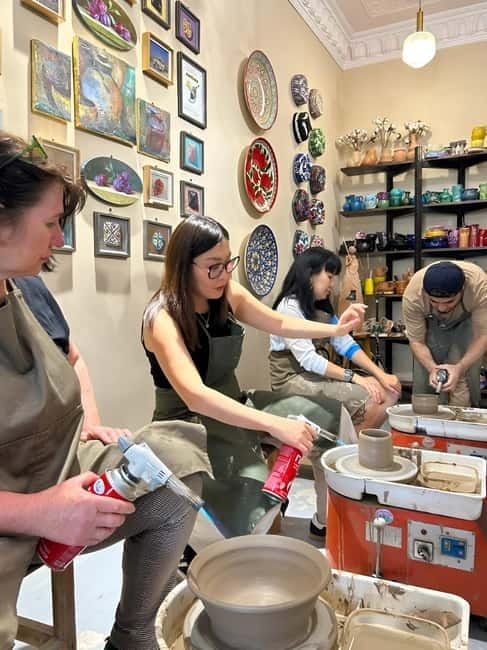
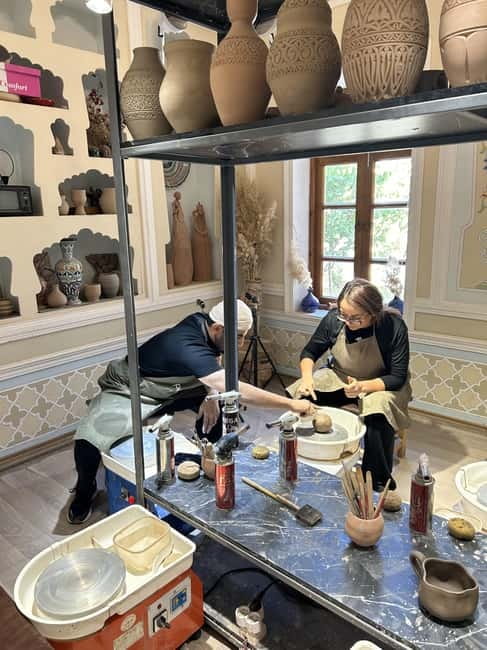
You begin with an introduction to Uzbek pottery and clay preparation. Then you choose the type of piece you want to make. Depending on the approach used that day, you work on a wheel or shape the clay by hand.
The artisan guides you through throwing, molding, smoothing, and decoration. You are not simply watching a professional make a pot while you stand nearby. You take part in the process, with help when the clay starts to wobble or the shape needs correcting.
That balance matters. Several accounts of the experience emphasize that the master potter helps without taking over. You get creative control, but you are not left alone to rescue a collapsing lump of clay. For a first attempt, that is the right arrangement.
Do not expect every piece to look like showroom pottery. The pleasure is in seeing a form appear under your hands. A beginner may produce a surprisingly good bowl or pot, but uneven edges and fingerprints are part of the story. The final decoration gives you another chance to make the object your own.
The workshop is also a good fit for people who do not normally choose craft activities. You do not need prior pottery experience, and the focus is on learning and making rather than producing professional work.
There is one practical issue: clay takes time. Your piece must dry before it can be fired in a kiln. The drying and firing process can take up to a week, and the finished work may be ready for collection in about two weeks.
If you are still in Uzbekistan, you can arrange to collect it later. If not, international shipping is available for an additional fee. Confirm the price and delivery details before you commit, since shipping is not included.
Other ways to eat your way around Tashkent:
- Tashkent Vegan Street Food Tour
★ 5.0 · 22 reviews - Tashkent Walking & Food Tour: Highlights + Local Flavors
★ 5.0 · 18 reviews - With John Private Tashkent city & Food tour
★ 5.0 · 13 reviews - Ten Bites Adventure Food Tour in Tashkent
★ 5.0 · 6 reviews
Lunch with plov, non bread, and green tea
After the craft work, you sit down for a traditional Uzbek meal. The food is not a small snack added at the end. It is a proper part of the cultural experience.
The meal includes fresh non bread, the traditional round Uzbek bread served with many meals. You also get Shakarob, a tomato and herb salad, plus another salad called Kuzchi Kayfiyat.
The main dish is a variety of traditional Uzbek palov. Expect rice served with lamb, carrots, and raisins. Palov is one of the best-known Uzbek dishes, and eating it after learning about local customs gives the meal more meaning than ordering a familiar international dish in a hotel.
Green tea and water are unlimited. Additional side dishes can be ordered for an extra cost.
The meal may be held at a local restaurant, and one experience placed lunch at the plov center in a garden setting. Exact arrangements can vary, so think of the food stop as a regional meal rather than a fixed restaurant attraction.
The timing is sensible. Pottery requires concentration, and lunch gives you time to relax, compare your creations, and ask more questions. Guides and participants often continue talking about Tashkent, customs, and places to visit during the meal.
If you have dietary restrictions, ask before booking or before the meal. The supplied details confirm the menu, but they do not promise substitutions or special dietary arrangements.
What the three and a half hours feel like
The schedule is compact but full:
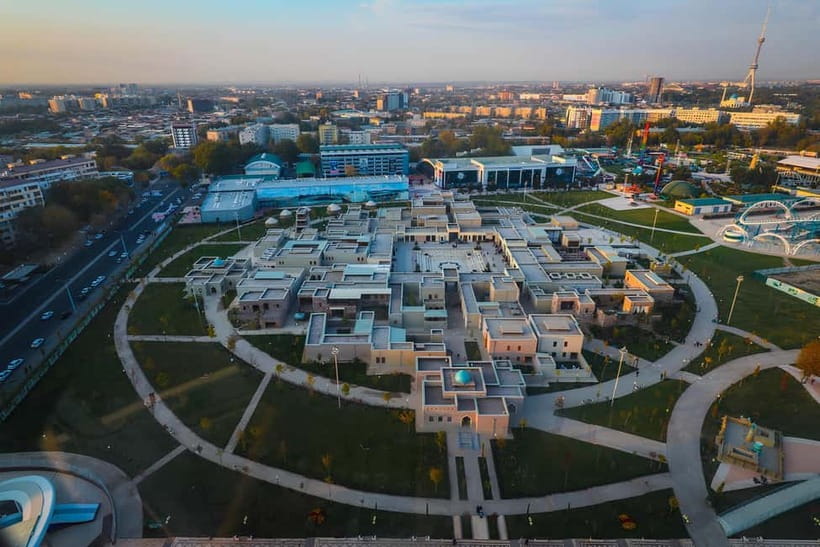
- Pickup in Tashkent and transport to the workshop area
- About one hour exploring Uzbek crafts and culture
- About 75 minutes for the pottery class
- About 45 minutes to one hour for the traditional meal
- Return arrangements, with hotel drop-off available for an extra fee
The stated duration is three and a half hours, but allow some flexibility. Craft visits, questions, shopping, and a meal do not always run like a train timetable.
Transportation to the workshop is included. Drop-off is not included, though a return to your hotel can be arranged for an additional charge. Confirm the pickup point and return cost when booking, especially if you have a flight, train, or another timed activity afterward.
Starting times depend on availability. The activity has a separate entrance for the workshop, which helps avoid waiting at a standard public attraction, but this is still a hands-on visit rather than a quick in-and-out stop.
Bring comfortable shoes and a camera. You may spend time walking around the artisan area, and the pottery process gives you plenty of photographs to take. Alcohol and drugs are not allowed.
Who will get the most from this outing
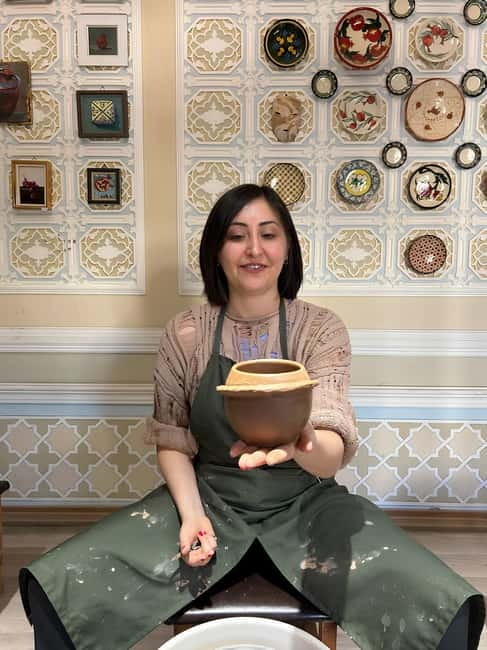
I would recommend this experience to you if you want to meet local makers, understand Uzbek customs, and do something with your hands. It is especially good for a first or second day in Tashkent because the guides can help you get oriented and offer practical ideas for the rest of your visit.
It also suits couples, families with older children, and small private groups. The pottery class gives everyone an activity, while the lunch and cultural conversation keep the outing from feeling like a formal lesson.
You should think twice if you have back problems. The experience is not suitable for wheelchair users, and pottery can involve sitting or leaning in a workshop setting. The information provided does not give detailed seating or accessibility arrangements, so ask before booking if mobility is a concern.
This is less suitable if you want a major archaeological site, a long museum visit, or a tightly timed schedule. The reward is personal contact with craft traditions, not a list of famous monuments.
Is $85 a fair price?
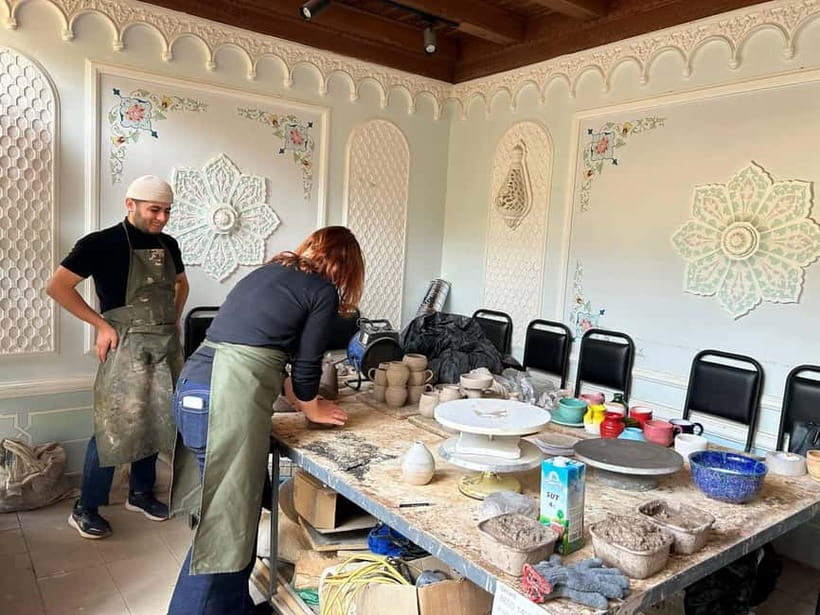
At $85 per person, the price is fair for a private three-and-a-half-hour outing that includes transport to the workshop, a guide, materials, artisan instruction, and a full Uzbek meal.
The strongest value comes from combining several things that would be difficult to arrange separately. You get cultural interpretation, shopping help, a workshop, and food in one outing. A standard city tour may explain Uzbek history, but it usually will not leave you with a piece of pottery you made yourself.
Remember the extra costs. Hotel drop-off is not included, pottery shipping costs extra, and additional lunch sides cost more. If you are collecting the pottery in person, plan your route and schedule around the later pickup.
Free cancellation up to 24 hours before the activity and the reserve-now, pay-later option make the booking flexible. Availability and starting times still need to be checked for your date.
Should you book it?
Book this if you want a personal, hands-on introduction to Uzbekistan rather than another passive sightseeing tour. The strongest reasons are the master potter’s close guidance, the chance to bargain with local help, and the meal of palov, salads, bread, and green tea.
I would be especially keen to book it near the start of a Tashkent stay. Yusuf, Julia, and the other guides bring local stories and practical advice, and the private format gives you room to ask the questions that rarely fit into a large group tour.
Skip it if you need step-free access, have serious back problems, or cannot return later for your pottery. Also skip it if your schedule is so tight that a three-and-a-half-hour meal and workshop feels like a squeeze.
For most visitors who want craft, conversation, and food in one well-priced afternoon, this is an unusually good choice. Just leave room in your itinerary for the pottery to dry.
FAQ
How long does the Tashkent pottery and culture experience last?
The activity lasts about three and a half hours. The schedule includes roughly one hour of cultural exploration, about 75 minutes of pottery work, and 45 minutes to one hour for the meal.
What is included in the $85 price?
The price includes transport to the workshop, a guided cultural exploration, the pottery class, materials, guidance from artisans, and the traditional Uzbek meal with bread, salads, palov, green tea, and water.
Will I take my pottery home the same day?
No. The pottery must dry and be fired in a kiln. It can take up to a week for this process, and the finished piece may be ready for collection in about two weeks.
Can my pottery be shipped internationally?
Yes. International shipping is available if you cannot collect the piece in person, but it costs extra and is not included in the activity price.
Is hotel pickup and drop-off included?
Pickup is listed from Tashkent, and transportation to the workshop is included. Hotel drop-off is not included, but a comfortable return can be arranged for an additional fee.
Which languages are available, and what should I bring?
Guiding is available in English, Russian, Polish, and Uzbek. Bring comfortable shoes and a camera. Alcohol and drugs are not allowed.
Just added in Tashkent
- Fergana One Day Tour From Tashkent★ 3.4 · 8 reviews
- Discover Uzbekistan – explore top destinations: Samarkand, Bukhara & Tashkent★ 4.5 · 6 reviews
- Tashkent Chimgan Mountains, Charvak Reservoir and Amirsoy Resort★ 5.0 · 6 reviews
- Ten Bites Adventure Food Tour in Tashkent★ 5.0 · 6 reviews
- Tashkent Private Full-Day City Tour on a Premium Car★ 5.0 · 6 reviews
- Tashkent City Highlights Guided Walking Tour★ 5.0 · 6 reviews
- Legends and Crafts: Suzani Masterclass & Cultural Immersion★ 5.0 · 11 reviews
- Plov and Samsa Cooking Class in Tashkent★ 4.3 · 6 reviews
Cooking Classes, compared.

Village Tour with Plov Cooking Class & Home Visit
Read our review →

Cooking class in Samarkand with local life experience
Read our review →
Private Samarkand Cooking Class with Market Tour & Transfers
Read our review →
Legends and Crafts: Suzani Masterclass & Cultural Immersion
Read our review →
Cooking Class in the Village with Local Family in Samarkand
Read our review →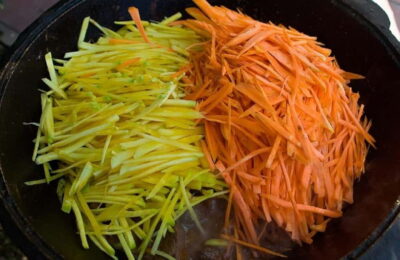
Browse the lists this tour appears in