
Reviewed · COOKING CLASSES
Plov and Samsa Cooking Class in Tashkent
The heart of this private Tashkent cooking class is hands-on work, not a cooking demonstration from the sidelines. You cut the onions, carrots, and meat, clean the rice, fry the ingredients, steam the plov, and shape samsa before sitting down to eat what you made. I like the clear focus on two important Uzbek dishes, and I like the family-home setting, where tea and small snacks may appear before the cooking begins. The main consideration is communication: the hostess has basic English, so some instructions may be simpler than a formal culinary lesson.
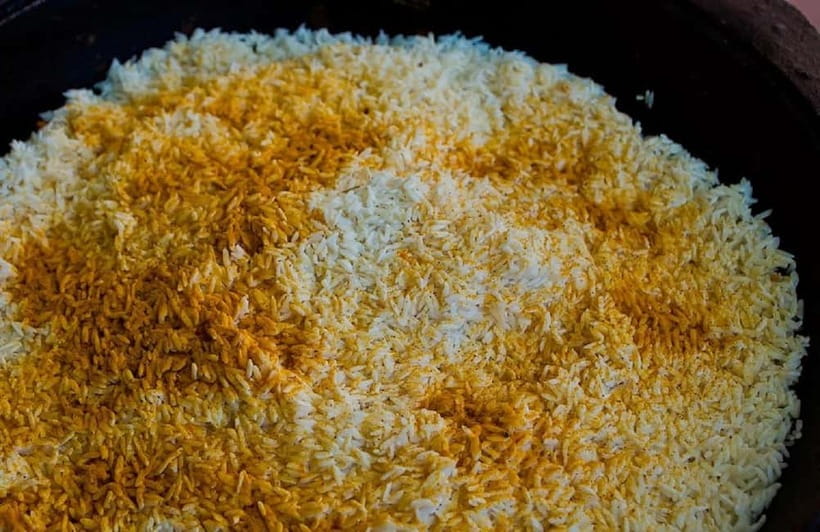
You also get a useful pause in the plov process. Once the water is added and the rice is steaming, you use that waiting time to make samsa, the flaky baked pastry filled with minced meat. At $160 for up to two people, the class costs more than a casual meal, but it can be good value if you want private instruction, a full meal, and a local home experience in one three-hour visit.
Key points at a glance
- Two Uzbek staples in one class: Prepare plov, the celebrated rice dish, and samsa, a baked filled pastry.
- Real kitchen work: Cut onions, carrots, and meat, wash rice, fry ingredients, and manage cooking and steaming.
- A private group of up to two: The price covers the group rather than charging each person separately.
- A smart use of cooking time: Make the samsa dough and filling while the plov steams.
- Flexible food preparation: The plov can be made without meat for vegans.
- Home hospitality: Tea, snacks, and desserts may be served, though the English level of the hostess is basic.
Why plov is the main event in Tashkent
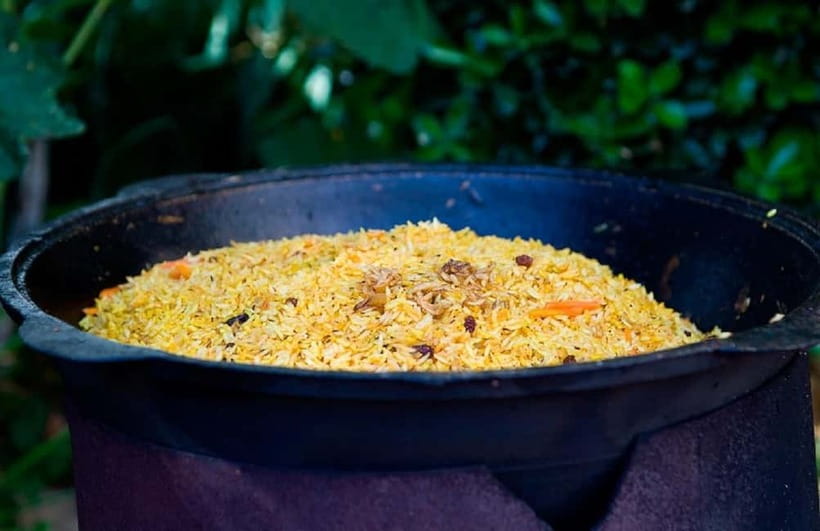
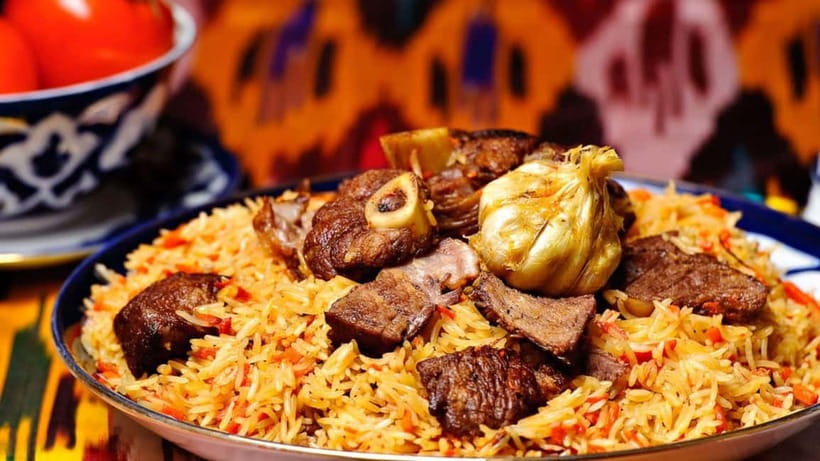
In Uzbekistan, plov is more than a bowl of rice. It is a centerpiece dish, built from a few ordinary ingredients but dependent on timing, heat, and technique. This class gives you a chance to see how rice, carrots, onions, meat, garlic, cumin, raisins, and sunflower oil become one carefully managed meal.
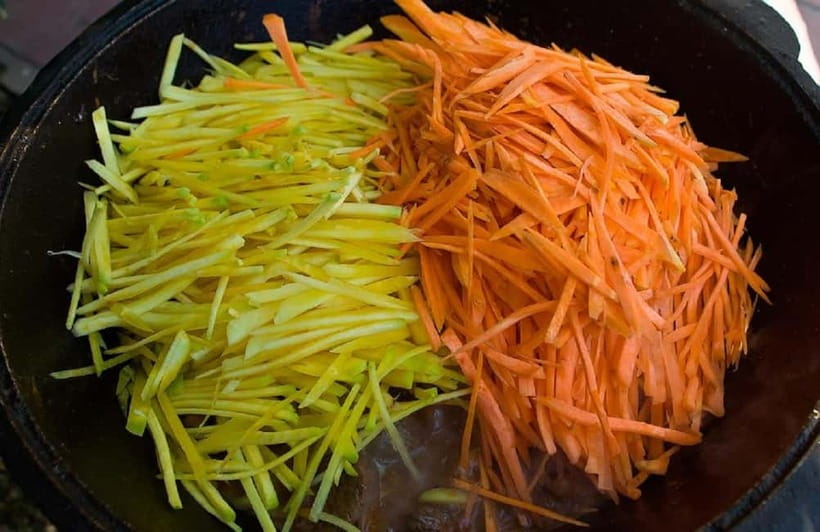
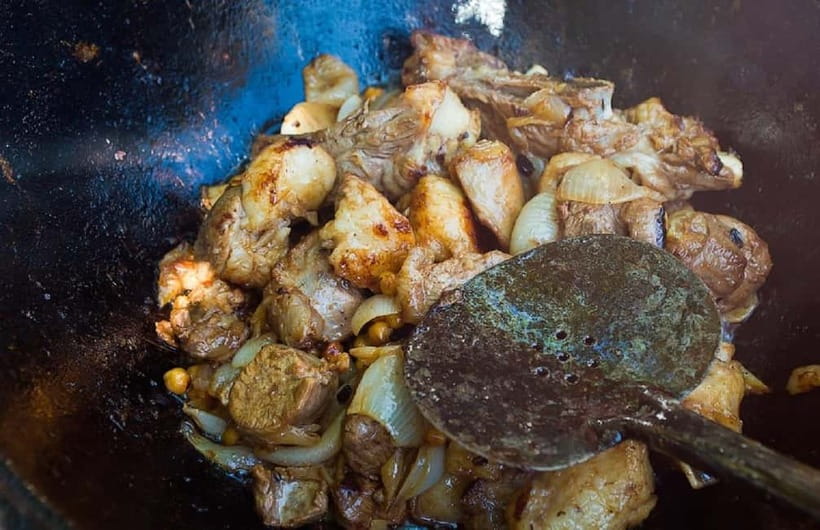
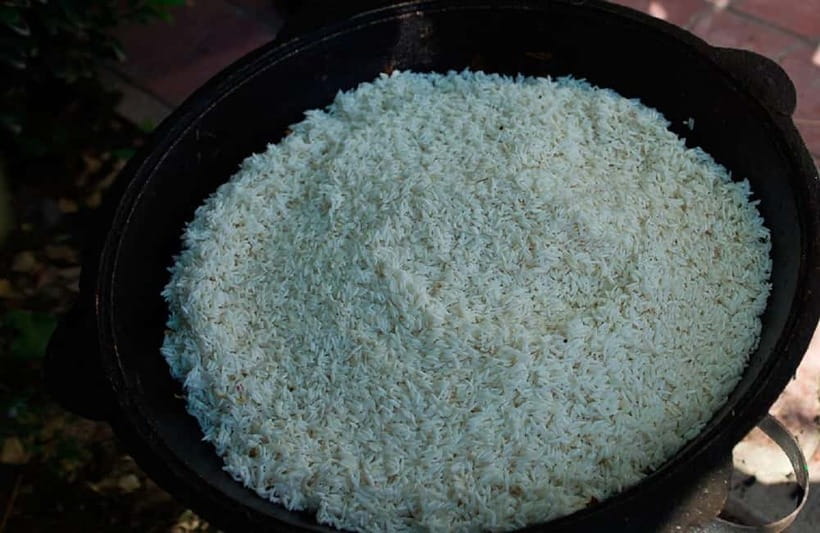
You begin by preparing the ingredients. You cut onions and carrots, prepare the meat if you are eating it, and clean the rice. These jobs may sound simple, but they help you see the basic structure of plov. The onions and oil form the first layer of flavor. Carrots add sweetness and color. Meat, garlic, cumin, and raisins give the pot its Uzbek character.
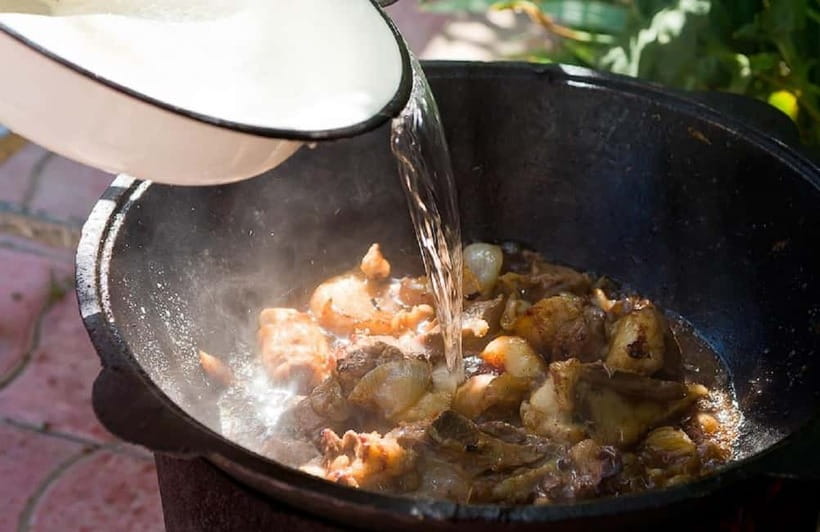
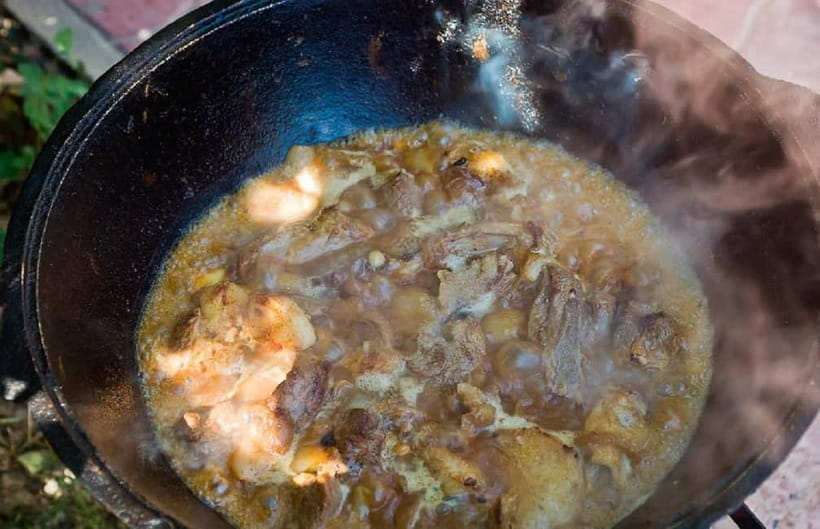
The class is useful because you are not simply handed a finished dish. You take part in the stages that affect the result. You fry the ingredients, add water, cook the mixture, and let the rice steam. A professional member of the host team guides the process and helps you adjust your technique so the food is enjoyable at the table.
This is also a good format for people who want to understand why plov can be difficult to reproduce at home. The ingredient list is short, but the order matters. Rice needs attention. The cooking pot needs time. The final steaming stage cannot be rushed. A class lets you connect each step to the texture and taste of the finished dish.
More cooking with locals in Tashkent:
- Tashkent: Cultural Exploration & Pottery Masterclass
★ 5.0 · 24 reviews - Tashkent: Uzbek Culture, Food, Crafts & Pottery Masterclass
★ 5.0 · 24 reviews - Legends and Crafts: Suzani Masterclass & Cultural Immersion
★ 5.0 · 11 reviews
Cutting, frying, and steaming your own meal
The practical nature of the class is its biggest strength. You handle the knife work and food preparation instead of watching someone else do everything. You cut the onions, carrots, and meat, then clean the rice before cooking begins.
You should wear comfortable clothes that you do not mind wearing in a kitchen. The activity involves frying and cooking, so this is not the place for your best travel outfit. You should also expect the pace to change. Some parts require active work, while the steaming stage gives you time to make the second dish.
The cooking team remains involved throughout. This matters because a first attempt at plov or samsa can feel uncertain, especially when you are working with unfamiliar methods. The class is designed to let you do the work while receiving help when needed.
For a vegan participant, the plov can be prepared without meat. The information provided specifically mentions this option for vegans. If your diet has other restrictions, you should clarify them before booking, since only the vegan plov option is confirmed.
Making samsa while the plov steams
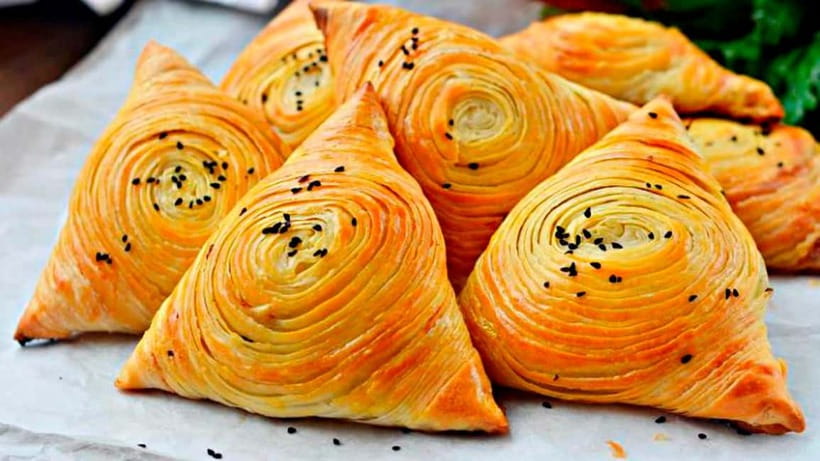
Samsa is often compared with samosa because both are filled pastries, but the Uzbek version has its own method. Here, you start with a simple dough. You roll it out, spread ghee over the surface, roll it tightly, divide it into equal portions, and chill the dough pieces.
After chilling, you roll out each piece again and add the filling. The planned filling is minced meat. You then fold the pastry into triangles and bake it in the oven. The host team helps you with the shaping, which is useful because the dough technique is one of the less familiar parts of the class.
The timing works well. You make samsa after adding water to the plov, while the rice is left to steam. Instead of waiting around, you prepare a second Uzbek dish. This keeps the three-hour class active without making the cooking feel rushed.
Samsa also gives you a different kind of kitchen lesson. Plov is built in a pot, with attention to heat and timing. Samsa is about dough, fat, filling, shape, and baking. You leave with two methods that are quite different, not two versions of the same meal.
A home setting with tea and small treats
The class takes place in a hostess’s home in Tashkent Province. That changes the mood from a restaurant lesson or a commercial cooking studio. You are not only learning recipes. You are seeing how a local household presents food and hospitality.
Tea, snacks, and desserts may be served when you arrive or during the visit. One particularly detailed account describes a wide selection of traditional snacks, sweets, and tea, along with extra food packed to take away. Those additions are not guaranteed as part of the formal program, but they show the kind of welcome you might find in the home setting.
The meal at the end is an important part of the experience. You eat the plov and samsa that you helped prepare, rather than treating the class as a lesson with no proper finish. Sharing the food gives the work a clear reward and lets you judge the results while the process is still fresh in your mind.
The atmosphere can also be warm and personal. The host family has been described as friendly and welcoming, with a strong sense of hospitality. Still, you should keep expectations realistic. The hostess is listed as having a basic level of English, even though one recent account found communication excellent. Simple English, gestures, and demonstrations may be part of the lesson.
Same city, a different kind of day:
- Best of Tashkent Mountains: Amirsoy, Chimgan & Charvak Trip
★ 4.8 · 567 reviews - Samarkand One Day Tour – Departure From Tashkent
★ 5.0 · 313 reviews - Tashkent City Tour
★ 5.0 · 121 reviews - Amirsoy, Chimgan & Charvak Full-Day Adventure
★ 4.9 · 82 reviews
What three hours feels like
Three hours is long enough for this menu. Plov needs preparation, cooking, and steaming, while samsa requires dough work and baking. A shorter session would likely cut out some of the hands-on stages or turn the class into a quick demonstration.
The opening part is ingredient preparation. You work with onions, carrots, meat, and rice. Next comes the active cooking stage, when the ingredients are fried and combined. Once water is added and the plov begins steaming, you switch to samsa.
The samsa segment covers dough rolling, ghee, tight rolling, portioning, chilling, shaping, filling, and baking. You then return to the plov for the final stages. The class ends with the meal.
The exact starting time depends on availability. You receive directions to the meeting point after booking, and pickup and drop-off are not included in the stated price. Plan extra time to reach the home because the cooking session itself is the full three hours and does not include transport.
Is $160 for two people good value?
The price is $160 per private group of up to two people. That works out to $80 per person if two people attend. It is not a budget meal, especially in a city where ordinary local food can cost much less.
The value comes from the combination of services. You get professional instruction, all ingredients for both dishes, active kitchen participation, and the meal at the end. You also get privacy, which is useful for couples, friends, or anyone who prefers not to cook in a large group.
The price looks stronger if you would otherwise book a restaurant meal, a cooking lesson, and local transport separately. It looks weaker if you only want to taste plov and samsa. A restaurant will be cheaper and easier, but it will not teach you how the food is made or give you the same home setting.
Pickup is not included, so transport adds to the total cost. One recent booking included a driver who handled pickup and drop-off smoothly, but that appears to have been an additional arrangement rather than a standard feature. Ask about transport before you finalize your plans.
English, Russian, and the pace of instruction
The activity is offered in English and Russian. The host team can guide you through the process, but the hostess’s English is described as basic. That does not make the class impossible, since cooking is visual and the steps are demonstrated, but it may limit long explanations about food culture or technique.
If you need detailed English instruction, contact the provider ahead of time and confirm who will lead the class. The supplied information identifies the provider as Asli Travel but does not give individual guide names. It is better to confirm the communication arrangements than to assume a fluent English-speaking chef will be present.
The private format helps here. With only you and one companion, you can pause, ask for a demonstration again, or use gestures without holding up a larger group. You also have more room to work through the steps at your own pace.
Who will enjoy this class most?
I would choose this experience if you care about food and want contact with local daily life. It suits people who like to work with their hands, ask questions, and eat a substantial meal after the lesson.
It is a good match for:
- Couples or two friends who want a private activity.
- First-time visitors looking for a home-based Uzbek experience.
- Cooks who want to learn the method behind plov rather than only taste it.
- People who enjoy pastry making as much as main dishes.
- Vegans who want the confirmed option of meat-free plov.
- Visitors with a spare half-day in Tashkent Province.
It may be less suitable if you want a polished professional kitchen, extensive culinary theory in English, or included hotel transport. It is also not the right activity if you do not want to handle raw ingredients, dough, or cooking equipment.
The class is wheelchair accessible, which is useful for planning. The information does not explain the exact layout of the home or kitchen, so you should confirm any specific access needs in advance.
A note about reliability and booking confidence
The overall score is 4.3 from six ratings, with several very positive accounts praising the food, warm welcome, hands-on format, and friendly instruction. One particularly serious complaint reports a canceled class and no refund. That is a small set of ratings, but it is still important information when you are making a paid booking.
The stated policy allows free cancellation up to 24 hours before the activity for a full refund, and a reserve-now, pay-later option is offered. Keep your booking confirmation and cancellation details. If the provider changes the plan, contact the booking platform promptly and ask for written confirmation of the refund process.
This concern does not erase the strengths of the class, but it does mean I would avoid booking it as the only fixed activity on a very tight schedule. Leave room in your Tashkent plans, especially if the cooking class is tied to a flight or another prepaid tour.
Practical preparation before you go
Wear comfortable clothes and arrive ready to participate. You will be cutting vegetables, working with rice and dough, frying ingredients, and helping with the cooking.
The ingredients supplied for plov include rice, meat, carrots, onions, garlic, cumin, raisins, and sunflower oil. Samsa uses dough, ghee, and minced meat. The confirmed meat-free adjustment applies to the plov, so ask about samsa if you need that dish to be vegetarian or vegan.
Alcohol and drugs are not allowed. Pickup and drop-off are not included, and the meeting point directions are provided after booking. Since the class is private and the price covers up to two people, book with the person you want to share the meal with rather than expecting to join a larger group.
Should you book the Plov and Samsa class?
Book it if you want more than a restaurant meal and you are happy to trade polish for a personal home setting. The strongest reasons are the hands-on preparation, the chance to make two distinct Uzbek dishes, and the shared meal at the end.
I would be cautious if you need guaranteed fluent English, included transport, or a spotless schedule with no possibility of provider changes. Confirm the meeting details, language support, dietary needs, and transport before paying.
For two people who enjoy cooking, $160 is a fair price for a private three-hour lesson with food included. It is a poor deal for anyone who only wants to eat plov. Choose it for the work, the welcome, and the chance to understand how these dishes come together.
FAQ
Where does the Plov and Samsa Cooking Class take place?
The class takes place in Tashkent Province, in a hostess’s home. After booking, you receive instructions for finding the meeting point.
How long is the cooking class?
The activity lasts three hours. Starting times depend on availability.
How many people can join the private class?
The price covers a private group of up to two people.
What dishes will I prepare?
You will prepare traditional Uzbek plov and samsa. Plov is a rice dish, while samsa is a baked triangular pastry filled with minced meat.
Can vegans take part?
The plov can be prepared without meat for vegans. The available information does not confirm a vegan version of the samsa.
Is transportation included?
No. Pickup and drop-off are not included. Meeting point instructions are provided after booking.
What languages are available for instruction?
Instruction is available in English and Russian. The hostess has a basic level of English, so confirm your language needs before booking if detailed English instruction is important to you.
Just added in Tashkent
- Fergana One Day Tour From Tashkent★ 3.4 · 8 reviews
- Tashkent Private Full-Day City Tour on a Premium Car★ 5.0 · 6 reviews
- Tashkent City Highlights Guided Walking Tour★ 5.0 · 6 reviews
- Discover Uzbekistan – explore top destinations: Samarkand, Bukhara & Tashkent★ 4.5 · 6 reviews
- Tashkent Chimgan Mountains, Charvak Reservoir and Amirsoy Resort★ 5.0 · 6 reviews
- Ten Bites Adventure Food Tour in Tashkent★ 5.0 · 6 reviews
- Day Trip to Amirsoy, Chimgan Mountains & Charvak Lake★ 4.9 · 9 reviews
- Aral Sea One Day Tour from Tashkent★ 4.5 · 11 reviews
Cooking Classes, compared.
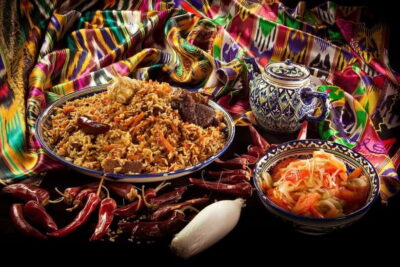
Village Tour with Plov Cooking Class & Home Visit
Read our review →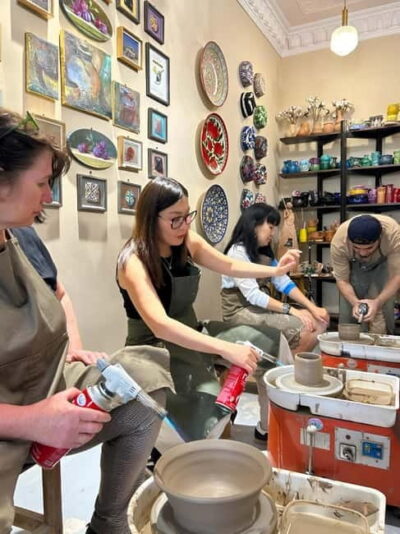
Uzbek Culture, Food, Crafts & Pottery Masterclass
Read our review →
Cooking class in Samarkand with local life experience
Read our review →
Private Samarkand Cooking Class with Market Tour & Transfers
Read our review →
Legends and Crafts: Suzani Masterclass & Cultural Immersion
Read our review →
Cooking Class in the Village with Local Family in Samarkand
Read our review →Browse the lists this tour appears in