
Reviewed · WALKING TOURS
All You Need To Know About Bukhara. A Walk In The Town
Bukhara makes sense once you understand how its Silk Road monuments fit together. This walking tour gives you that map, leading from Lyabi Khauz through old bazaars, mosques, madrasahs, and mausoleums before ending at the Samanid Mausoleum. Guide Hamza explains the city in clear English, with plenty of attention to architecture, rulers, religion, and daily life.
I like the tour’s strong historical focus and the way it helps you get your bearings early in your stay. I also like the price: $55 gives you a long guided walk and access to local advice on restaurants and shopping. The main drawback is that this is not an exclusive private tour, despite the private-group wording. Expect about 10 to 15 people, unless low demand leaves you with a smaller group.
Five useful things to know before you go
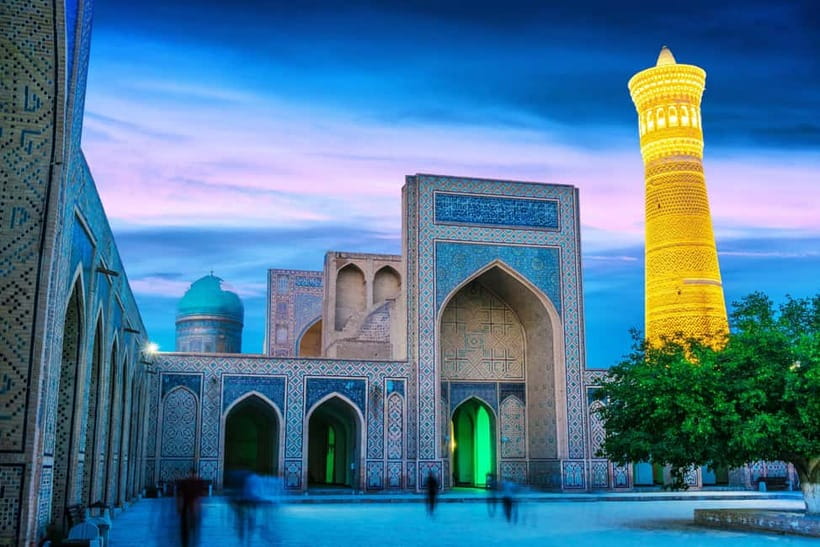
- You visit Bukhara’s main historic sights on foot: The route links Lyabi Khauz, the trading domes, Poi Kalan, Bolo Haouz Mosque, Chashma-Ayub, and the Samanid Mausoleum.
- Hamza is the guide to look for: His English is fluent, his delivery is relaxed, and he is especially strong on the city’s political, religious, and architectural past.
- The group size keeps the cost down: This is usually a shared walk for around 10 to 15 people, not a one-party private tour.
- It works best early in your stay: You get a useful layout of the Old Town, then you can return to the monuments, shops, or restaurants that caught your eye.
- Plan for extras: Entrance tickets, food, accommodation, transport with a driver, and train or plane tickets are not included.
Why Bukhara is best understood on foot
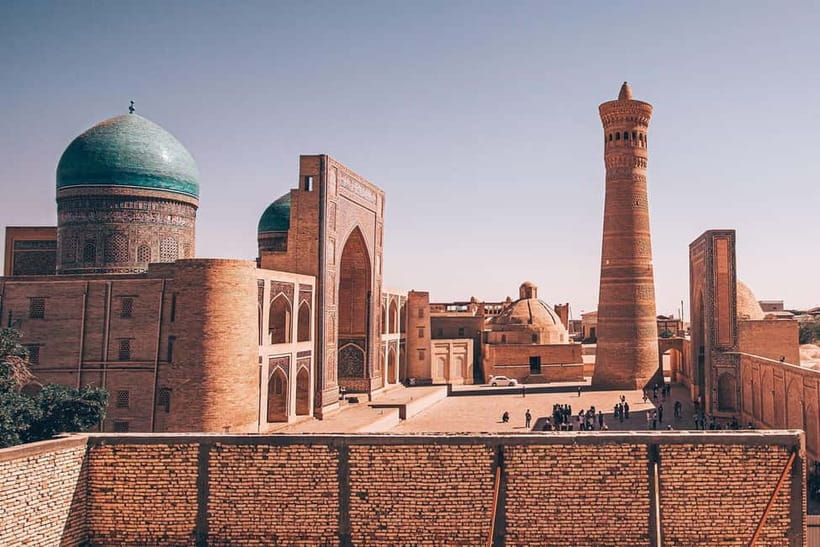
Bukhara is more than a collection of grand buildings. Its old center developed around religious schools, trading points, water reservoirs, mosques, royal power, and the long-distance routes that crossed Central Asia. The city’s historic center is protected as a UNESCO World Heritage site, and a walking tour is a practical way to see how those parts connect.
The route covers the city at a comfortable sightseeing pace over about 4.5 hours. You will move through pedestrian-friendly streets and old lanes, with short stops at major buildings. The walking itself matters: Bukhara’s appeal comes from the changing scale of the city, from open squares and monumental facades to narrow passages lined with craft shops.
I especially value a guide here because many buildings can look similar at first. A domed roof, a tiled facade, or a brick courtyard tells only part of the story. Hamza places each stop in a wider Central Asian timeline, then explains what the building was used for and how it relates to the city around it.
He also leaves room for questions. That makes a difference in Bukhara, where you may want to ask about madrassah design, Islamic education, local crafts, dynasties, or the difference between a mosque and a religious school.
More Walking Tours in Bukhara
- Bukhara Historical City Highlights Guided Walking Tour
★ 4.5 · 16 reviews - Bukhara: Private Guided Walking Tour with Hotel Pickup
★ 5.0 · 11 reviews - Bukhara: Walking Tour with a Small Group
★ 5.0 · 10 reviews
Starting at Nadir Divan Begi Madrasah and Lyabi Khauz
The walk begins at Nadir Divan Begi Madrasah, near the donkey statue. Confirm the exact meeting point before setting out, since the statue is the practical landmark used for the rendezvous.
From there, you reach Lyabi Khauz, one of Bukhara’s best-known gathering areas. The name refers to the pool, and the setting gives you an immediate sense of how public life worked in the old city. Buildings, shade, water, food, and trade came together here.
This is a good place to start because it provides orientation without requiring a long lecture before you see anything. Hamza can use the square to explain the layout of the old town and how religious and commercial buildings sat close together.
The stop itself is listed as short, so do not expect a long, leisurely pause here. If you want photographs around the pool or plan to return for a meal, note the location as you go.
Trading domes, textiles, and the old commercial streets
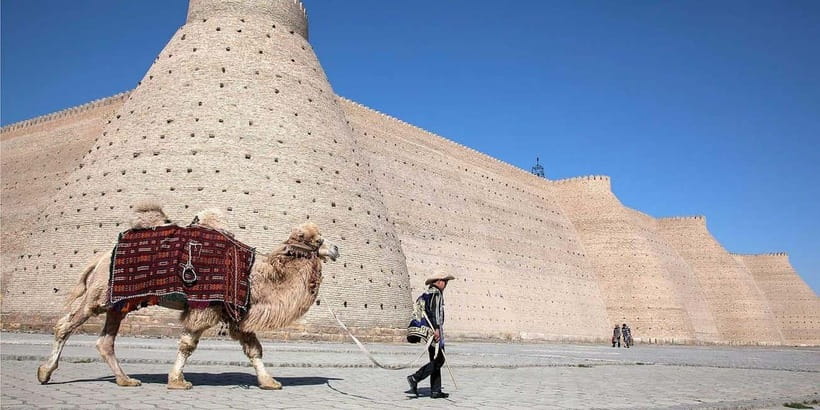
The route continues to Toqi Sarrafon Bazaar, one of Bukhara’s historic trading domes. These covered market buildings once sheltered specialist commerce, and they remain a useful introduction to the city’s craft traditions.
You may see hand-woven textiles, carpets, spices, and other Uzbek handicrafts as you walk through the commercial quarter. The tour does not require you to buy anything, and that is part of its value. You can ask Hamza about local products and get advice before returning to shop on your own.
Bukhara is a good place to look for souvenirs, but shopping works better when you know what you are seeing. A guide can help you distinguish a locally made craft from a more generic item, although the provided tour details do not promise formal shopping assistance or fixed prices.
The market stops are brief in the planned route. That keeps the tour moving, but it also means you should save serious browsing for after the walk. If you become interested in a textile or carpet, make a note of the shop and return later rather than holding up the group.
Magok-i-Attari Mosque and the city beneath the monuments
Magok-i-Attari Mosque is another important stop, with a short guided visit. Its place in the old center helps show how Bukhara was built in layers over time.
This is where a history-focused guide is most useful. The city has passed through several dynasties and periods of political change, and its buildings reflect those shifts. Instead of seeing the mosque as an isolated photo stop, you get a chance to connect it with the commercial streets and religious institutions nearby.
Several short guided stops follow this part of the route. The supplied schedule does not name all of them, so you should think of this stretch as a moving tour through the old center rather than a list of major ticketed attractions. The value is in the explanation as you walk between better-known monuments.
Wear comfortable shoes. The route is accessible in the sense that wheelchair access is offered, but the tour still involves several hours in the historic center and movement between many stops. If you have mobility concerns, ask for details about the current street conditions before booking.
More walks around Bukhara:
- A Group Walking Tour Of Old Town
★ 5.0 · 8 reviews - Samarkand: Historical Monuments Guided Walking Tour
★ 4.8 · 446 reviews - Khiva: Historical City Highlights Guided Walking Tour
★ 4.8 · 156 reviews - Samarkand One Day Tour: one day walking & group tour
★ 4.4 · 87 reviews
Ulugbek Madrasah and the lesson behind the architecture
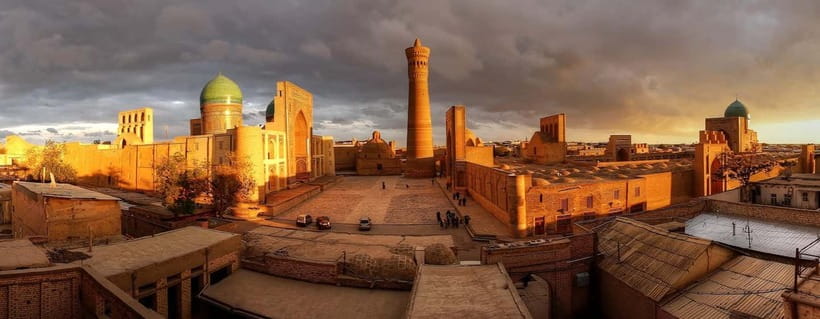
Ulugbek Madrasah receives a longer stop than some of the earlier sites. That is fitting, because madrasahs are central to understanding Bukhara.
The architecture is not only decorative. A madrasah was a place of study, and its layout reflected religious education and community life. One useful point from Hamza’s explanations is that a madrasah included both teaching spaces and a mosque. Details like this help you read the buildings instead of simply photographing their tilework.
Ulugbek was a major Central Asian ruler and patron of learning, so this stop also gives the tour a chance to connect science, education, political power, and religious architecture. You will not just hear isolated dates. The goal is to understand why a ruler would build such a complex and what it meant for the city.
The tour has a listed stop of about five minutes here, though actual timing can vary with the group and the guide’s discussion. Ask questions when something catches your attention. The guide’s question-and-answer style is one of the stronger reasons to choose this walk over following a map alone.
Poi Kalan, the minaret, and Bukhara’s grandest view
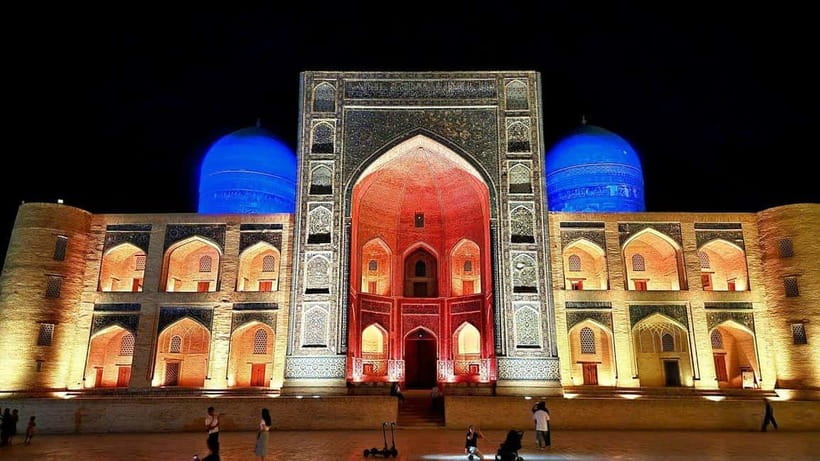
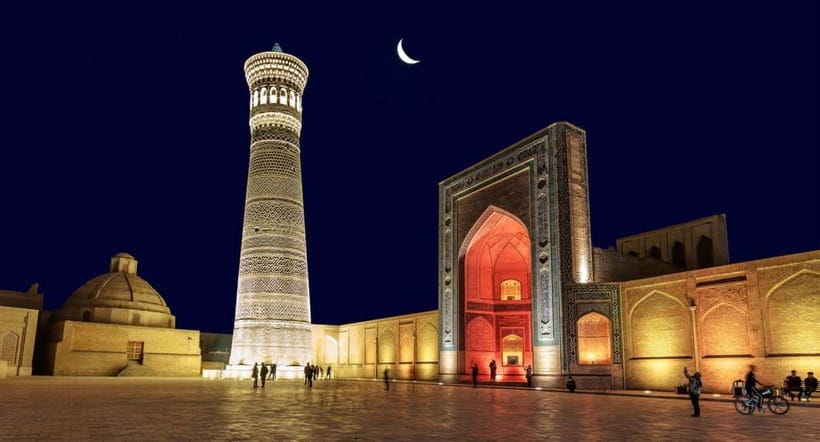
Poi Kalan is the visual centerpiece of the walk. The ensemble includes the Kalan Mosque, the Mir-i-Arab Madrasa, and the famous Kalan Minaret, often described as the Great Minaret of Bukhara.
This is the point where Bukhara’s scale becomes clear. The minaret has long served as a city landmark, and the surrounding buildings create one of the most memorable architectural spaces in the Old Town. Take time to look up, then look down at the paving, arches, tilework, and movement of people through the square.
The Kalan Mosque and Mir-i-Arab Madrasa also show the relationship between worship, education, and civic identity. Hamza’s explanations focus on the stories behind the buildings, not only their construction dates. That approach suits anyone who wants historical context without being buried under a string of names and numbers.
Entrance fees are not included in the $55 price. You can pay them locally, and the tour advertises skip-the-line access, but the exact entry arrangements may depend on the site and the day. Bring some cash for tickets and do not assume every interior is included.
Bolo Haouz, Chashma-Ayub, and the quieter northern sights
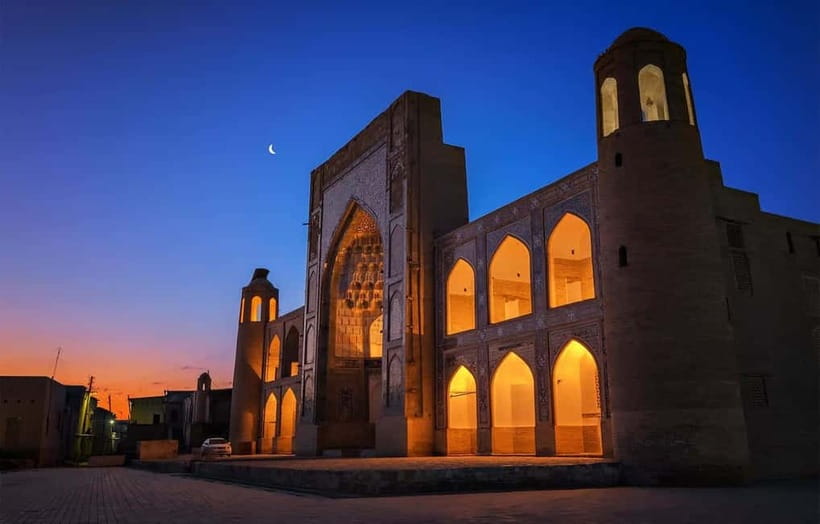
After the central monuments, the route continues to Bolo Haouz Mosque. This stop changes the mood. Its architectural details and setting give you another view of Bukhara’s religious heritage beyond the most photographed square.
Chashma-Ayub Mausoleum follows. Mausoleums add another layer to the city’s story, since they connect architecture with memory, pilgrimage, and respected religious figures. The stop is short, but it helps prevent the tour from becoming only a parade of markets and grand facades.
The route then reaches the Samanid Mausoleum, where the walk finishes. This building is especially important for its early Islamic architecture and brickwork. It also provides a fitting endpoint because the tour has moved through several periods of Bukhara’s development before arriving at one of the city’s oldest major monuments.
The finish is listed as Ismail Samani Mausoleum, while the site is also referred to as the Samanid Mausoleum. Plan your onward route from there rather than assuming you will return to the starting point. All-day support and assistance are offered, but transport back to your accommodation is not included.
What $55 buys you, and what it does not
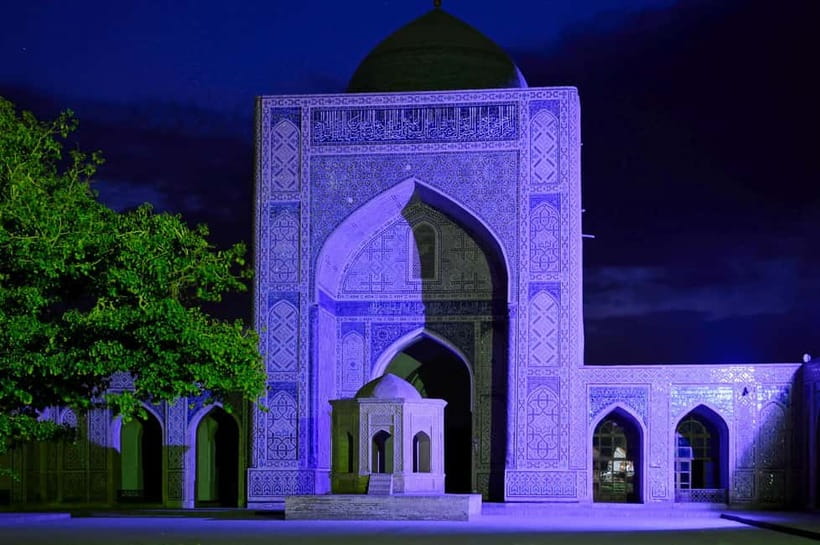
At $55 per person, this is a solid-value introduction to Bukhara if you want a guide for the historic core. You get about 4.5 hours, an English-speaking professional guide, a planned route through major sights, and help with questions, restaurants, and shopping.
The price works because the tour is shared. The usual group size is around 10 to 15 people, so this is not the right choice if you want every stop shaped around your interests. On the other hand, a group walk can be a pleasant way to meet people, and the cost is lower than arranging a fully private guide.
Your budget should include entrance tickets, lunch, dinner, and anything you buy in the bazaars. There is no transportation with a driver, accommodation, or travel to Bukhara. The walk itself is the product.
The booking terms are useful for uncertain plans. You can reserve now and pay later, and cancellation is allowed up to 24 hours before the start for a full refund. The activity is listed as wheelchair accessible, though you should still confirm the route details if access is a major concern.
The best time to take this walk
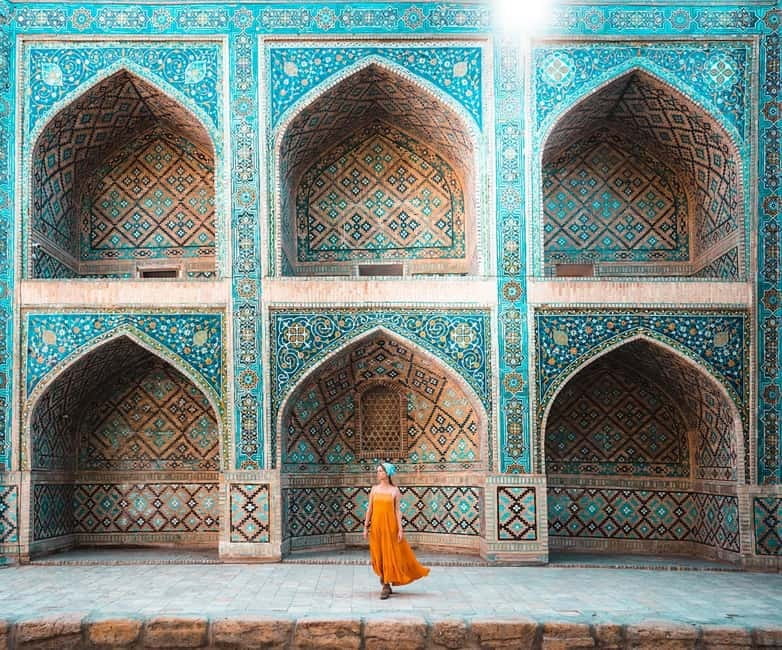
I would choose this tour near the start of your Bukhara stay. One person used it as an evening orientation, while another found it useful after arriving in the morning. The timing options can vary, so check availability when booking.
Taking it early gives you a mental map of the Old Town. You can then return to Poi Kalan at a quieter pace, spend longer in the trading domes, or revisit a building that went by quickly during the group walk.
The tour can also work in poor weather. A rainy walk is less comfortable, but the covered market areas and indoor monuments offer some shelter. Bring water, a sun hat, a camera, and a charged smartphone. In hot weather, the hat and water matter. In any weather, a phone is useful for meeting details and photographs.
Who will enjoy this Bukhara tour most
This walk suits you if you want history and architecture explained in plain English. Hamza’s style is informative but relaxed, with humor and room for questions. He also gives useful restaurant advice, which is handy on a first night in town.
It is a good fit for first-time visitors, solo travelers who want company, and anyone who prefers a planned route to navigating the old center alone. It also suits people who like to learn enough on a first visit to choose what deserves a second look.
You may want something else if you dislike group tours, shop stops, or walking for several hours. The advertising uses private-group language, but the practical information clearly says this is normally a shared group of 10 to 15 people. Contact the guide if you want a truly private tour.
Should you book it?
Book this tour if you want a clear introduction to Bukhara’s Old Town, especially with an emphasis on history, architecture, and how the monuments relate to one another. Hamza’s strong English, easy manner, and local food and shopping suggestions add real value.
Skip it if you want a silent photo walk, a fully private itinerary, or transport between sights. For most first visits, though, $55 is a fair price for four and a half hours covering Bukhara’s main historic center. Take it early, carry water, keep money aside for entrance tickets, and leave room in your schedule to revisit the places you like best.
FAQ
Where does the Bukhara walking tour start?
The tour starts at Nadir Divan Begi Madrasah, near the donkey statue. Confirm the meeting instructions before you go.
Where does the tour finish?
The route finishes at the Ismail Samani Mausoleum, also known as the Samanid Mausoleum.
How long does the tour last?
The walking tour lasts about 4.5 hours. Starting times depend on availability.
Is this a private tour?
No. The practical group size is around 10 to 15 people. The price is lower because it is a shared group tour. A fully private tour can be requested separately.
What language is the tour offered in?
The live tour guide speaks English.
Are entrance tickets included?
No. Entrance tickets are not included and can be paid for on the spot.
What should I bring?
Bring a sun hat, water, a camera, and a charged smartphone. You should also plan for several hours of walking through the Old Town.
Just added in Bukhara
- 9 Days Private Guided Tour to Uzbekistan★ 5.0 · 3 reviews
- 2 – Days Guided Tour of Samarkand and Bukhara from Tashkent★ 5.0 · 5 reviews
- Bukhara Countryside Private Tour with Transport★ 5.0 · 6 reviews
- 2 Days Private Safari Tour from Bukhara★ 4.5 · 6 reviews
- Private Bukhara-Khiva Transfer via Ancient Fortresses★ 4.5 · 8 reviews
- A Group Walking Tour Of Old Town★ 5.0 · 8 reviews
- Bukhara: Walking Tour with a Small Group★ 5.0 · 10 reviews
- Bukhara: Private Guided Walking Tour with Hotel Pickup★ 5.0 · 11 reviews
Walking Tours, compared.
Samarkand One Day Tour: one day walking & group tour
Read our review →
Tashkent Walking Tour with Local Lady / Gentleman
Read our review →
Tashkent Walking & Food Tour: Highlights + Local Flavors
Read our review →
Browse the lists this tour appears in