
Reviewed · COOKING CLASSES
Traditional Khiva Cooking Class with Market Visit & Lunch
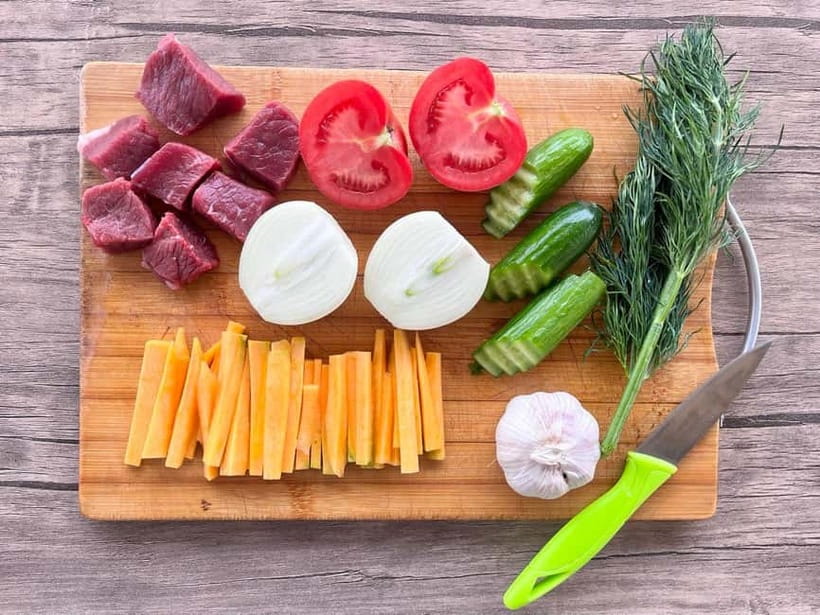
The best part of this Khiva experience happens after the market, when Sarvar brings you into his family home. You help prepare Plov or Shivit Oshi, then sit down with his mother and brothers for a meal that feels more like a family visit than a restaurant class. I like the market stop and the chance to see how ingredients are chosen, and I like that the food is cooked in a real home rather than a staged kitchen. The main thing to consider is the clothing and bag policy: shorts, sleeveless shirts, backpacks, and smoking are not allowed.
I also like the small touches. Sarvar explains local food and culture in English, serves traditional tea and seasonal fruit, and provides recipes so you can try the dishes again. The experience costs $150 per private group of up to three, which is a strong value for a small group sharing the cost, but less attractive for a solo visitor paying the full amount.
Key points before you book
- A family-home meal, not a restaurant demonstration: Sarvar’s mother and brothers may join the cooking and meal, giving the visit a personal feel.
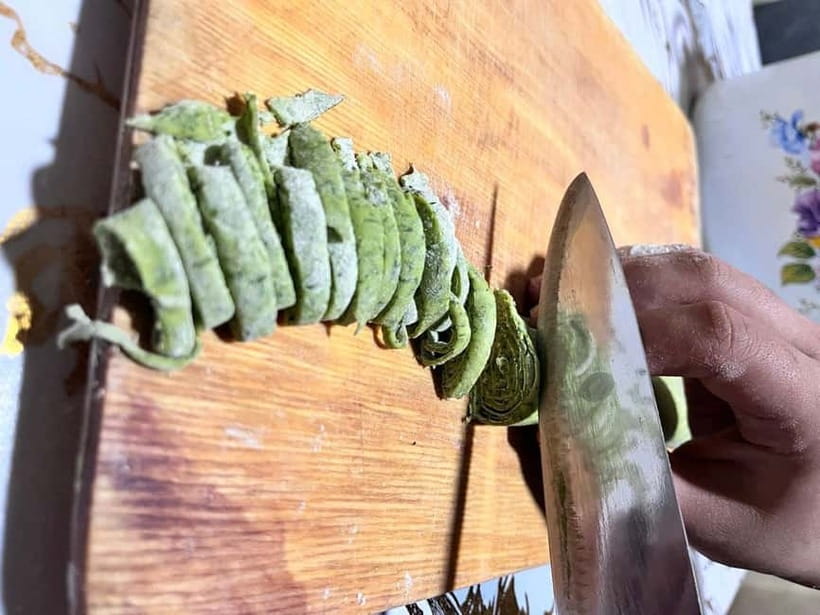
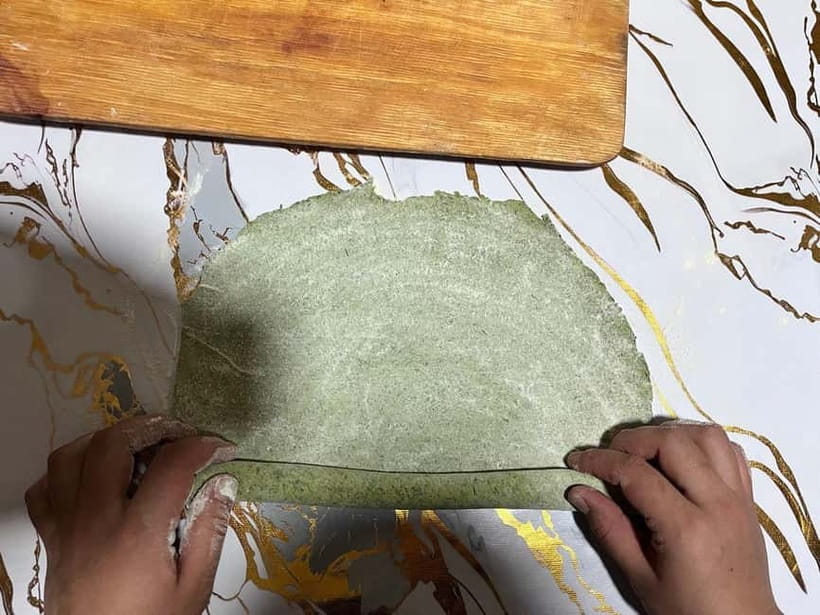
- Two Khorezm specialties: You can cook Plov or Shivit Oshi, the green noodle dish closely linked with the Khiva area.
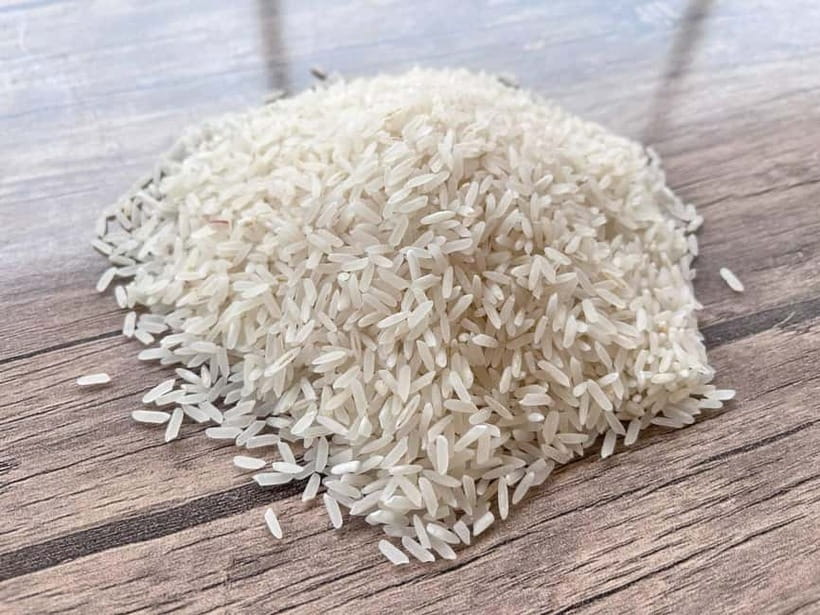
- The market comes first: Shop for fresh ingredients with Sarvar and learn how local people choose produce and discuss prices.
- Private and small-scale: The $150 rate covers a group of up to three, with English instruction and hotel pickup and drop-off.
- A relaxed food-and-culture visit: Expect conversation about cooking, Khiva, family life, and Uzbek traditions alongside the practical work.
- Plan your clothing carefully: Shorts, sleeveless shirts, backpacks, smoking, alcohol, and drugs are not permitted.
Why this Khiva cooking class feels personal
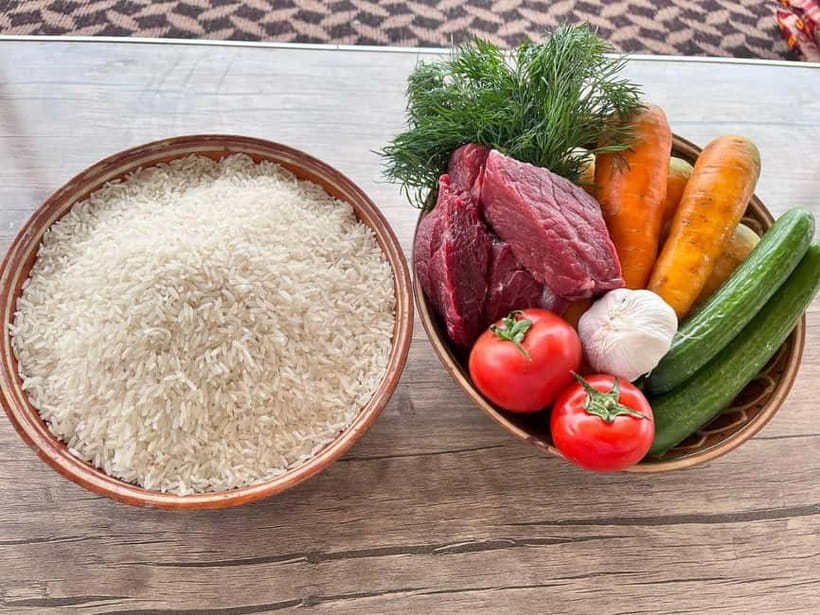
Many cooking classes place you at a long table with strangers and have an instructor perform each step. This experience takes a different route. You begin with Sarvar, then continue at his home, where his mother has cooked Plov for family and visitors alike.
That setting changes the tone. You are not only learning how to prepare a dish. You are seeing how food connects with family life in Khiva. The meal is served in the home, and the visit includes conversation about local culture and history. You might spend as much time talking over tea and fruit as you do handling ingredients.
The setup is especially appealing if you want contact with local life without committing to a full day away from Khiva’s monuments. The activity lasts 2.5 hours, with the cooking portion listed at about two hours. That gives you enough time for the market, preparation, eating, and conversation without turning lunch into an all-day project.
Sarvar is the English-speaking instructor and host. His mother is part of the cooking experience, and his brothers may also be present. That family involvement is one of the strongest reasons to choose this over a standard restaurant meal.
More cooking with locals in Khiva:
- Master Class – Uzbek Bread (Khiva)
★ 3.5 · 4 reviews - Samarkand: Village Tour with Plov Cooking Class & Home Visit
★ 5.0 · 29 reviews - Tashkent: Cultural Exploration & Pottery Masterclass
★ 5.0 · 24 reviews
Starting at Khiva’s local market
Your pickup can be arranged from several points around Khiva, including Polvon Darvoza, the Stone Gate at the south side of Itchan Kala, Bakcha Darvoza, and the west gate. From there, Sarvar takes you to a local market to select the ingredients.
This is not just a shopping stop. Sarvar shows you how locals choose fresh produce, explains what goes into the meal, and helps with price discussions. If you are staying inside Itchan Kala, the market visit also gives you a look at daily life beyond the famous walls and tiled monuments.
The market is useful for another reason: it gives you a clearer sense of what the final dish requires. Instead of arriving at a kitchen where every bowl has already been measured, you see the ingredients before they become lunch. You can ask about the produce, seasoning, and the role each item plays in the finished dish.
For many people, the shopping may be the most eye-opening part of the outing. Khiva’s grand architecture draws you in, but a market shows you the practical side of the city. Sarvar can help you navigate the unfamiliar stalls and explain local shopping customs, which is harder to do on your own if you do not speak Uzbek or Russian.
Keep your expectations sensible. The market visit is part of a short cooking activity, not a long food tour. You are going there to buy the items needed for lunch and learn along the way, rather than spending hours sampling every stall.
Choosing between Plov and Shivit Oshi
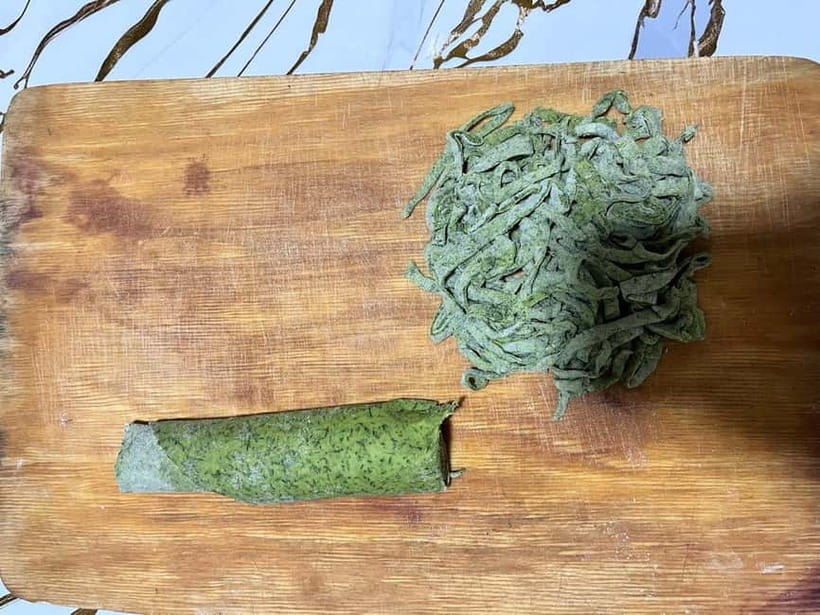
The central cooking choice is between Plov and Shivit Oshi. Plov is the better-known Uzbek dish, built around rice and the careful cooking of its ingredients. Shivit Oshi is a Khorezm specialty made with green noodles, and it gives the class a distinctly local angle.
If you have already eaten Plov several times in Uzbekistan, Shivit Oshi may offer something new. If this is your first serious introduction to Uzbek food, Plov gives you a familiar national classic and a chance to see why preparation matters so much to the final taste.
The activity description allows for both dishes, but the exact choice may depend on the arrangement for your visit. If you have a strong preference, ask Sarvar before booking or at the start of the class. The supplied details do not specify whether every group cooks both dishes, so you should not assume you will prepare a full serving of each.
You should also expect to help with the process rather than simply watch. Sarvar explains the cooking methods and family techniques, while you take part in preparing the meal. The class is designed to be hands-on, but the exact tasks can vary depending on the dish and the pace of the group.
Inside Sarvar’s family kitchen
The home visit is the heart of the experience. Sarvar’s mother shows you how the Plov is prepared, and you learn the small decisions that do not always appear in a printed recipe. Timing, texture, and the order of cooking are often as important as the ingredient list.
That personal instruction is valuable because Uzbek food can look simple on paper. Rice, vegetables, meat, and seasoning do not explain the judgment involved in getting the dish right. A family cook can show you what to look for as the food changes during preparation.
The class also gives you a chance to ask questions in a relaxed setting. You can talk with Sarvar about Khiva, food traditions, and everyday life in Uzbekistan while the meal cooks. The conversation is not an extra lecture added to the schedule. It is part of the home visit.
Previous bookings have particularly praised the food served by Sarvar’s mother, including Plov and homemade pickles. Pickles are not listed as a formal inclusion, so do not treat them as guaranteed, but you may encounter extra family dishes or produce during the meal. The core inclusions are the cooked food, traditional Uzbek tea, seasonal fruit, and recipes to take home.
The family’s garden also adds a pleasant touch when seasonal fruit is available. Melons and watermelons were served during summer visits, and the fruit was described as especially sweet. Since the fruit is seasonal, the exact selection will change with the time of year.
A few more things worth doing in Khiva
- Tashkent: City Tour with Pro Photography, Lunch & Dinner
★ 4.7 · 16 reviews - Beyond the Walls: Countryside Tour with Transport and Lunch
★ 5.0 · 13 reviews - Samarkand Ancient Silk Road City Tour w/ Pickup & Lunch Option
★ 5.0 · 9 reviews - Tadjikistan 7 Lakes Day Trip from Samarkand with Lunch
★ 5.0 · 5 reviews
Lunch with tea, fruit, and conversation
After cooking, you sit down to eat in the home. This is where the activity moves from lesson to shared meal. You can taste the result of your work, ask final questions, and enjoy the pace of a home lunch rather than being moved along by a restaurant timetable.
Traditional Uzbek tea is included. Seasonal fruit is served for dessert, with melons and watermelons mentioned as examples from summer visits. If you enjoy food as a way to understand place, this part is as important as the recipe itself. You are learning how a meal is offered and shared, not only how it is made.
The setting may also suit you if you prefer a quieter meal. The group is private, limited to up to three people, and hosted in a family home. That makes it a good choice for couples, close friends, or a small family group that wants direct conversation.
It may be less suitable if you want a formal cooking school with professional equipment, a printed schedule, or a polished demonstration kitchen. The appeal here is the home setting and personal contact. Some of the charm comes from the fact that it is not designed like a restaurant class.
What the $150 group price really buys
The price is $150 per group of up to three people. For three people, that works out to $50 each. For two, it is $75 per person, and for one person, the full group price applies unless another arrangement is offered.
That price includes more than lunch. You receive hotel pickup and drop-off, a guided market visit, fresh ingredients, the cooking class, tea, seasonal fruit, and recipes. You are also paying for a private English-language experience with access to a local family home.
For a group of three, I consider the price reasonable because transport, food, instruction, and a personal cultural visit are combined in one short outing. It also saves you the trouble of finding the market and arranging a home visit independently.
For a solo visitor, the value is harder to judge. The experience remains special, but $150 for one person is a substantial amount for a 2.5-hour activity. Solo visitors who care most about personal contact and a private setting may still find it worthwhile. If your priority is simply eating inexpensive local food, a restaurant will cost much less.
The strongest value comes when you view the activity as a cultural visit with food at its center. You are not buying only a cooking lesson. You are buying time with Sarvar and his family, market guidance, transport, and a meal prepared together.
Transport, timing, and practical rules
Hotel pickup and drop-off are included. The vehicle is described as a white sedan with registration 156NAA. Pickup and return points include the main gates around Itchan Kala, so confirm the exact meeting point when you book.
The listed duration is 2.5 hours, while the cooking class itself is listed as two hours. The remaining time covers the market and the movement between locations. Starting times depend on availability, so check the schedule for your date.
The clothing rules matter. Shorts and sleeveless shirts are not allowed, so wear modest clothing suitable for entering a family home. Backpacks are also not allowed. Baby strollers and baby carriages are not permitted, and smoking, alcohol, drugs, and audio recording are prohibited.
The no-audio-recording rule is worth noting if you like to record cooking instructions. You can take the recipes home, but you should not plan to make an audio recording during the class. Ask about photographs before taking them inside the home, especially when family members are present.
Free cancellation is available up to 24 hours before the activity for a full refund. You can also reserve now and pay later, which helps if your Khiva schedule is still changing.
Who will enjoy this experience most
I would choose this class if you want to meet local people and prefer a home meal to a restaurant setting. It suits couples and small groups particularly well because the private price is shared by up to three people.
It is also a good fit for food-focused visitors who want to understand the difference between a famous Uzbek dish and a local Khorezm specialty. Ask for Shivit Oshi if you want to focus on a dish tied closely to the region, or choose Plov if you want the classic Uzbek cooking lesson.
Families should check the rules before booking. Baby strollers and carriages are not allowed, and the private home setting may require children to follow the same clothing and behavior expectations as adults. The provided information does not give an age range or accessibility details, so ask Sarvar directly if those points affect your plans.
This is less suitable if you dislike home visits, need full control over ingredients, or want a large professional kitchen. The class is built around personal hospitality, family participation, and conversation. That is its strength, but it also means the experience will feel informal rather than standardized.
Should you book the Khiva cooking class?
Book it if you want the most personal food experience in Khiva and can share the $150 rate with one or two companions. The market visit gives the class a useful start, while Sarvar’s home, his mother’s cooking, Uzbek tea, fruit, and recipes make the outing feel connected to real daily life.
I would especially recommend it for anyone who has already seen the main sights of Itchan Kala and wants a different side of Khiva. Choose Plov for the classic introduction, or ask about Shivit Oshi for a more distinctly Khorezm meal.
Skip it if you only want a cheap lunch, a formal culinary school, or a flexible drop-in activity. The clothing rules and no-backpack policy also require a little planning. For the right visitor, though, this is a warm, compact way to turn a meal into a genuine connection with Khiva.
FAQ
How long does the Khiva cooking experience last?
The full activity lasts 2.5 hours. The cooking class itself is listed as two hours, with the rest of the time used for the market visit and transport.
What dishes can I cook?
You can cook Plov or Shivit Oshi. Ask about your preferred dish when arranging the experience, since the available information does not confirm that every group prepares both.
Is the cooking class private?
Yes. It is offered as a private group experience for up to three people.
How much does the experience cost?
The price is $150 per group of up to three people.
Is hotel pickup included?
Yes. Hotel pickup and drop-off are included. Pickup and return locations include Polvon Darvoza, the Stone Gate at the south gate of Itchan Kala, Bakcha Darvoza, and the west gate of Itchan Kala.
What vehicle is used for pickup?
Pickup is listed with a white sedan, registration 156NAA.
Is the class taught in English?
Yes. The instructor language is English, and Sarvar leads the experience.
Are ingredients included?
Yes. Fresh ingredients for the cooking class are included.
What else is served with the meal?
Traditional Uzbek tea and seasonal fruit are included. Melons and watermelons are examples of fruit served during summer visits.
Can I cancel for a refund?
Yes. You can cancel up to 24 hours in advance for a full refund. Reserve now and pay later is also available.
Just added in Khiva
- Uzbekistan 6 Days Private Tour Khiva-Bukhara-Samarkand by Train★ 5.0 · 4 reviews
- Old Khiva Stories with Your Local Guide★ 5.0 · 5 reviews
- Master Class – Uzbek Bread (Khiva)★ 3.5 · 4 reviews
- Aral Sea – Extended trip (3 days)★ 5.0 · 5 reviews
- A Night In The Kyzylkum Desert [2] From Khiva★ 4.5 · 3 reviews
- Khorezm Fortress and KyzylKum Desert Private Tour★ 5.0 · 3 reviews
- Best of Khiva: Exclusive Private Tour!★ 5.0 · 3 reviews
- Daytrip From Khiva To Ancient Fortresses★ 4.6 · 60 reviews
Cooking Classes, compared.
Village Tour with Plov Cooking Class & Home Visit
Read our review →
Uzbek Culture, Food, Crafts & Pottery Masterclass
Read our review →
Cooking class in Samarkand with local life experience
Read our review →
Private Samarkand Cooking Class with Market Tour & Transfers
Read our review →
Legends and Crafts: Suzani Masterclass & Cultural Immersion
Read our review →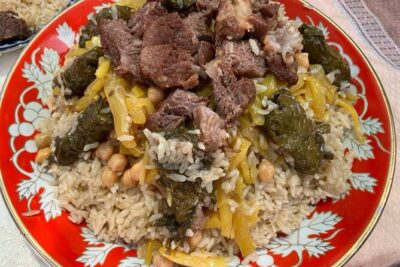
Cooking Class in the Village with Local Family in Samarkand
Read our review →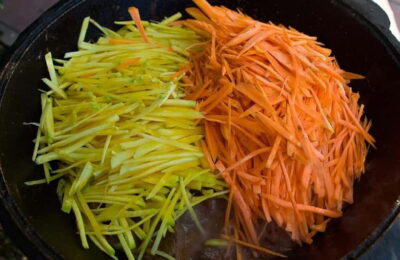
Browse the lists this tour appears in