
Reviewed · CITY TOURS
Bukhara Full Day Old City Private Tour
Bukhara’s old center works best on foot, and this private tour gives you a full day among its mosques, madrasas, trading domes, and fortress walls. The city can feel like a storybook, but a good guide keeps it grounded with dates, local customs, legends, and the daily life behind the grand facades.
I like the private format, since you can slow down for a favorite courtyard or ask one more question without holding up a busload of strangers. I also like the range: the Kalon complex and Ark provide the headline sights, while the synagogue, market domes, and neighborhood squares add human detail. The main drawback is the pace. Fourteen stops in 5 to 7 hours means plenty of walking and some brief visits.
Key points to know before booking
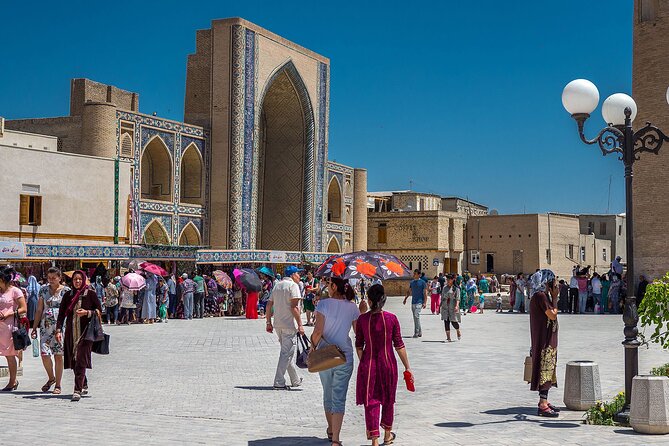
- Fourteen major sights in one walking day: You cover Bukhara’s best-known monuments, from the fifth-century Ark to the trading domes and synagogue.
- Your guide shapes the experience: Guides including Shakhnoza, Maksad, Sunny, Guli, Malika, Sitora, and Bekhruz have been praised for local knowledge, language skills, patience, and flexibility.
- A true private tour: Only your group participates, so you can adjust the pace, ask questions, and spend more time where your interests lie.
- Most entrance fees are covered: Monument tickets and taxes are included, while museum photo charges of about $1 per site are paid directly.
- Plan for walking and a food break: Lunch is not included, so ask your guide to pause for food or coffee rather than trying to power through the entire route.
- Check the return plan: The stated end point is the starting meeting point, but confirm this with your guide at the beginning.
Why Bukhara makes a private walking tour worthwhile
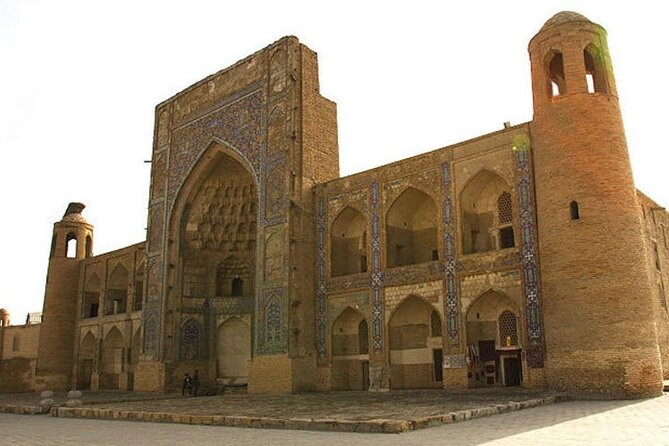
Bukhara is not a city you understand by ticking off one grand building at a time. Its old center is a linked web of religious schools, market passages, courtyards, water ponds, and narrow routes once used by merchants crossing Central Asia.
That is where a private guide earns the $85 price. You are not simply looking at blue tiles. You can ask why a madrasa was built, how a mosque fit into the city’s daily life, or which parts belong to history and which belong to local legend. Guides such as Shakhnoza and Maksad are especially noted for adjusting the day to personal interests, while Bekhruz is praised for knowing Bukhara as a local rather than presenting it as a museum set.
The tour is listed at roughly 5 to 7 hours, though some people finish sooner when they move quickly. That range matters. You might spend a full hour at the Ark or trading domes, then shorten a stop that interests you less. The schedule is best treated as a framework, not a military timetable.
Other city tours in Bukhara:
- City Tour Around Bukhara
★ 5.0 · 55 reviews - Bukhara Historical City Highlights Guided Walking Tour
★ 4.5 · 16 reviews - Khiva: Historical City Highlights Guided Walking Tour
★ 4.8 · 156 reviews
Starting at the Kalon Minaret and Po-i-Kalyan
The Great Minaret of the Kalon is the natural opening act. It is one of Bukhara’s most recognizable landmarks, and the 30-minute visit gives your guide time to explain the minaret, its place in the Po-i-Kalyan complex, and the city’s religious architecture.
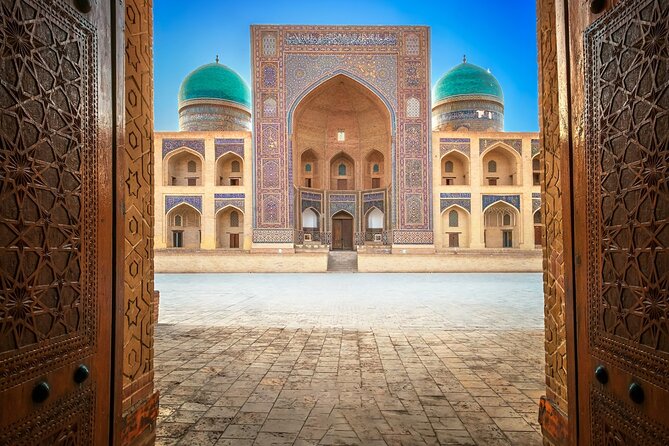
The nearby Mir-i-Arab Madrasa adds a second layer. Its tiled exterior and broad hall share a courtyard with a mosque, creating the kind of close architectural relationship that is easy to miss when you walk past alone. You’ll want to look up and around here, not just toward the main entrance.
The Poi Kalyan Mosque follows with a shorter 20-minute stop. Since the minaret, mosque, and madrasa form one connected religious complex, seeing them together helps you read the site as a whole. The short time can feel tight if you want detailed photographs or extended explanations, but the private format gives you a chance to ask your guide which details matter most.
Photo and video charges are not included. Museums may charge about $1 per site, paid directly, so keep small cash available.
Chor Minor and the city’s smaller surprises
Chor Minor Madrasah is a welcome change from the large central monuments. This historic gatehouse once served a madrasa that no longer survives. Its four small towers give it an unusual profile, and the 30-minute stop helps break up the larger complexes.
This is one of the tour’s useful features: it does not limit you to the most famous postcard views. You get a sense of how Bukhara’s religious buildings varied in size and purpose. The grand Kalon complex explains the city’s public power. Chor Minor feels more intimate and architectural.
The route is entirely on foot according to the practical details and one detailed account. That makes comfortable shoes important. Most people can participate, but you should still expect a long day of walking, standing, and moving between monuments.
One hour inside the Ark of Bukhara
The Ark deserves the longest single stop, at about an hour. This massive fortress was first built and occupied around the fifth century AD, making it one of the places where Bukhara’s long political story becomes easiest to grasp.
Inside, your guide can help separate the fortress’s many layers. The Ark was not merely a defensive wall. It was a seat of power, a place tied to rulers and dynasties, and a symbol of the city’s political life. Without explanation, its scale can seem blunt and hard to read. With context, the walls become a map of authority.
An hour is a sensible amount of time, though it will not cover every corner in great detail. If your interests lean toward architecture, rulers, or local legends, tell your guide early. This is one of the stops most likely to reward extra questions.
A few more things worth doing in Bukhara
- Best of Bukhara: All Day Private Old Town Tour
★ 5.0 · 66 reviews - Best of Bukhara: All Day Private Old Town Tour
★ 4.9 · 62 reviews - Full Day Private Tour in Seven Lakes from Samarkand
★ 5.0 · 94 reviews - Amirsoy, Chimgan & Charvak Full-Day Adventure
★ 4.9 · 82 reviews
Bolo Haouz Mosque and the view across from the citadel
The Bolo Haouz Mosque is a shorter 15-minute stop, but it fills an important gap in the day. Built in 1712 opposite the Ark in the Registan district, it gives you a chance to compare a working religious setting with the fortress across from it.
The visit is brief, so do not expect a long pause. Instead, use it to notice the relationship between mosque, citadel, and open city space. The mosque is also part of the UNESCO-listed historic area, along with other major sites in Bukhara.
Lyab-i-Hauz, Nodir Devon Begi, and Nasreddin
Lyab-i-Hauz is one of the most atmospheric sections of the route. Its ensemble brings together the Kukeldash Madrasa, a khanaka, and the Nodir Divan-begi buildings around a traditional water pond. The 30-minute stop is enough to take in the setting and hear why water was so important in a dry region.
The nearby Nodir Devon Begi Madrasasi adds a more lively note. Its ornate, mosaic-covered gate opens toward a courtyard with shops and folk dance shows. Depending on the timing, you might find this more commercial than the quieter religious monuments. That is not necessarily a flaw. It shows how old buildings continue to serve city life, craft sales, and entertainment.
The Monument to Hodja Nasreddin sits beside the Lyab-i-Hauz complex. The bronze figure, installed in 1979, brings humor to an old setting. The 15-minute stop is free and easy, and it offers a lighter moment after the formal architecture. Your guide may also connect Nasreddin’s stories with local ideas about wit, foolishness, and social criticism.
The trading domes and Bukhara’s merchant past
The trading domes receive about an hour, and they are among the most useful places for understanding Bukhara as a commercial center. Four domes remain in the old city, positioned along a north to south route.
These covered market buildings are not just shopping stops. They show how trade was organized and how merchants, craftspeople, and buyers once moved through the city. Today, you may find shops selling local arts and products, so this is the natural point to browse or buy something.
The private format helps here. If you want to shop, say so. If you are more interested in the building itself, ask your guide to explain the layout and the old trade route. One guide, Guzel, is specifically praised for allowing time for shopping and a coffee break, a good example of how the schedule can bend to your interests.
Abdulaziz-Khan and Ulugbek madrasas
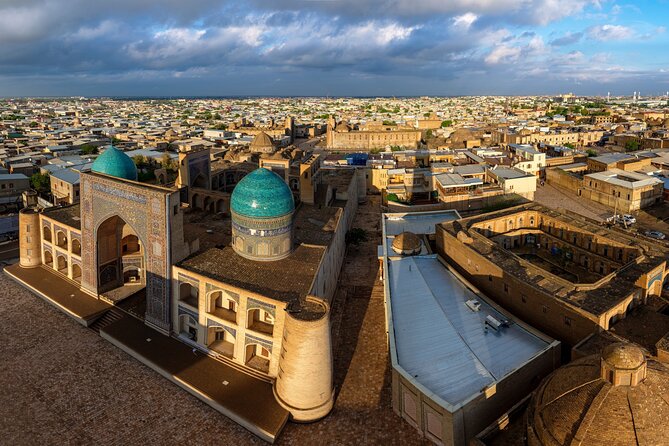
The Abdulaziz-Khan Madrasa and Ulugbek Madrasa bring the route back to scholarship and tilework. The first receives about 20 minutes, followed by another 20 minutes at Ulugbek Madrasa.
Ulugbek was both a ruler and a scholar, and his first madrasa in Bukhara was built in 1417. The later building, completed in 1420, includes exterior tiles, a fluted dome, stained windows, and old tombs. These stops are close enough in theme that a guide’s comparison is valuable. You can look for changes in decoration, design, and religious education rather than treating each entrance as another isolated photo opportunity.
Twenty minutes per madrasa is enough for a clear introduction. It may not satisfy you if you want to study every tile or inscription. Tell your guide if architecture is your main interest, since guides have shown a willingness to adjust the route and add sites when time allows.
Maghak-i Attari Mosque and the Bukhara Synagogue
Maghak-i Attari Mosque receives about 20 minutes and forms part of the Lyab-i-Hauz religious area. Its place in the old city gives your guide a chance to explain how different religious and civic buildings sat close together.
The Bukhara Synagogue is especially worthwhile because it broadens the story beyond Islamic monuments. Bukhara’s Jewish community contributed to Central Asian and Silk Road civilization, and the 30-minute visit gives that history a place in the day rather than leaving it as a footnote.
This is one of the tour’s strongest choices. A route made only of grand mosques and madrasas would give you a narrow picture of Bukhara. The synagogue helps you see the city as a meeting point for communities, trade, faith, and languages.
What the guides add to the day
Guide quality matters more than any single monument on this route. The strongest guide accounts describe clear explanations, local pride, patience, and the ability to answer questions without rushing you.
Shakhnoza is repeatedly praised for her English, preparation, warmth, and detailed knowledge of the city where she was born and lives. She has also helped visitors find extra places to explore after the tour. Maksad is described as highly informed and flexible, with a talent for making the sights understandable while allowing breaks.
Other guides bring their own strengths. Sunny has helped with practical needs such as finding cash and arranging food. Sitora is a good fit if you care about history, legends, archaeology, anthropology, and architecture. Malika is praised for explaining both the monuments and the people, religion, and culture connected with them.
The guide assigned to you may vary, so do not assume you will receive one particular person. You can improve the experience by stating your interests at the start: architecture, religion, local food, Jewish history, legends, shopping, or photography.
Price, timing, and practical value
At $85 per person, this is not the cheapest way to walk around Bukhara, but it can be good value if you want interpretation and structure. The price includes a fully licensed guide, taxes, and entrance tickets to all listed monuments. A private half-day guide for a major historic city also saves you the work of sorting out what each building is and how the sites connect.
The cost feels less compelling if you only want quick exterior photographs. You could walk through parts of the old city independently, though you would lose the explanations and the flexible question time that make this experience useful.
Pickup is offered, and the stated meeting point is Hotel Malika-Bukhara on Gavkushon Road 25. The activity is meant to end back at that meeting point. Since one account describes a guide ending in a square instead, confirm the return arrangement when you meet.
No lunch is included. Ask for a food or coffee break before you become too tired to enjoy the last half of the route. Several guides have helped with lunch suggestions, and some have extended the day with a meal or additional local advice, but this should not be treated as part of the fixed package.
Free cancellation is available until 24 hours before the local start time. Changes or cancellations inside that window are not accepted for a refund.
Who should book this Bukhara tour?
I would choose this tour if you have one full day in Bukhara and want the old city explained rather than simply photographed. It suits first-time visitors, people interested in architecture and religion, and anyone who enjoys asking questions as they walk.
It is also a strong choice for couples, families, or small groups with different interests. One person can linger over tilework, another can ask about local life, and the guide can usually keep the day moving without the rigid feel of a large group.
You may want a shorter or more focused visit if heat, long walks, or fourteen stops sound tiring. The schedule is full, and the 5 to 7 hour range can feel long without a planned break. You should also budget for photo fees, food, drinks, and tips.
Should you book it?
Book this tour if you want a well-rounded first look at Bukhara and value a local guide who can connect the Kalon Minaret, Ark, trading domes, synagogue, and smaller monuments into one story. The private setup, included admissions, and flexible pacing make the $85 price reasonable for a full day.
Skip it if you prefer exploring alone, shopping at your own speed, or visiting only two or three monuments. For everyone else, especially visitors with limited time, this is a practical way to meet Bukhara’s grand buildings and its more personal details in the same walk.
FAQ
How long does the Bukhara Old City tour last?
The tour lasts approximately 5 to 7 hours. The exact length can depend on walking speed, questions, breaks, shopping time, and how long you spend at each monument.
Is this a private tour?
Yes. Only your group participates, rather than joining a shared group.
Are entrance tickets included?
Yes. Entrance tickets to all listed monuments, along with all fees and taxes, are included. Photo and video charges at museums are extra and may cost about $1 per site.
Where does the tour start and finish?
The stated meeting point is Hotel Malika-Bukhara at Gavkushon Road 25 in Bukhara. The activity is scheduled to end back at the meeting point. Confirm this with your guide at the start.
Is lunch included?
No. Lunch is not included. You can ask your guide to arrange a break or suggest a place to eat.
Can I cancel for a full refund?
Yes, if you cancel at least 24 hours before the experience starts, based on local time. Cancellations or changes made less than 24 hours before the start are not refunded.
Just added in Bukhara
- 9 Days Private Guided Tour to Uzbekistan★ 5.0 · 3 reviews
- 2 – Days Guided Tour of Samarkand and Bukhara from Tashkent★ 5.0 · 5 reviews
- Bukhara: Walking Tour with a Small Group★ 5.0 · 10 reviews
- Bukhara: Private Guided Walking Tour with Hotel Pickup★ 5.0 · 11 reviews
- Bukhara Traditional Men’s Hammam / Bath XVI Century★ 3.9 · 11 reviews
- Bukhara Countryside Private Tour with Transport★ 5.0 · 6 reviews
- 2 Days Private Safari Tour from Bukhara★ 4.5 · 6 reviews
- Private Bukhara-Khiva Transfer via Ancient Fortresses★ 4.5 · 8 reviews
City Tours, compared.
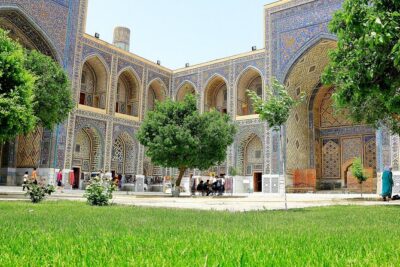
Private Samarkand City Tour With Transportation
Read our review →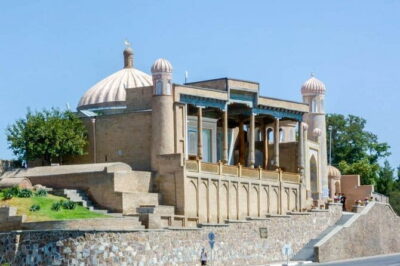
A City Tour Of Samarkand: The Pearl Of The East
Read our review →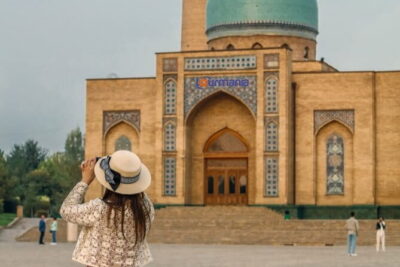
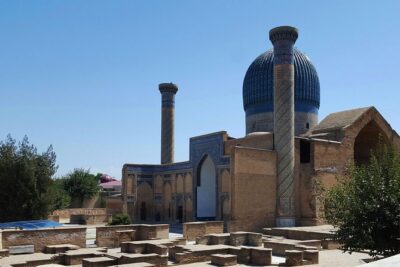
Private Guided Tour Samarkand city history and culture
Read our review →
Samarkand City Tour with a Professional Photographer
Read our review →
Browse the lists this tour appears in